In 2001, the Asian/Pacific American Librarians Association (APALA) and the Chinese American Librarians Association (CALA) partnered to host the first and only National Conference on Asian/Pacific American Librarians. It was held before the American Library Association’s (ALA) Annual Conference in San Francisco with programming running from June 13–15. The theme, Shared Visions: Heritages, Scholarship, Progress, was chosen “with a sincere commitment to representing the rich diversity of East, South and Southeast Asian and Pacific American ethnicities, cultures and communities.”[1]
The conference was years in the works, a “labor of love by many members of the [APALA] and [CALA].”[2] Planning committee co-chair Ken Yamashita would note that he gained inspiration after seeing the success of the Black Caucus of the ALA and REFORMA’s conferences.[3] Solid plans started to take shape during the 1998 ALA Midwinter Meeting, when members from CALA and APALA met with ALA’s Office for Literary and Outreach Services. Originally the group had hoped to hold the conference in 1999, alongside the ALA Annual Conference in New Orleans but decided to push the date to 2001.[4]
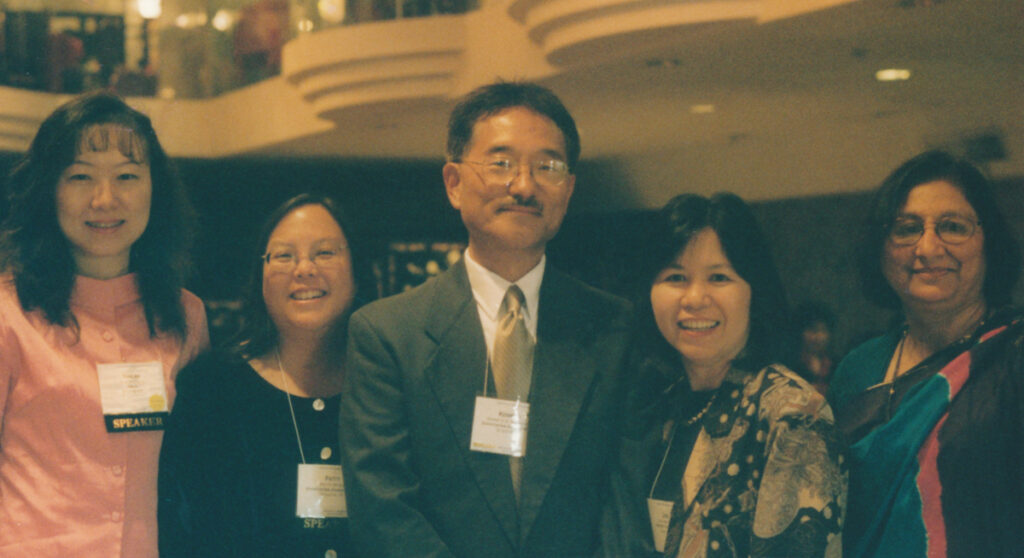
California warmly received the conference with letters from the California State Library, the governor, the Chinese American International School, and the Institute for Teaching Chinese Language and Culture extending their welcome. The conference had also received a Library Services and Technology grant that was administered by the State Library which provided support for the facilities, equipment, and speakers. And the San Francisco Public Library hosted attendees at a welcome reception with entertained provided by performer Charlie Chin.[5]
Preconference sessions were held the day before the opening ceremony. Viewed as one of the highlights of the conference, a Leadership Institute was held, presented by J.D. Hokoyama, president of Leadership Education for Asian Pacifics, and Maureen Sullivan, a consultant and trainer on leadership and management and past president of the Association of College and Research Libraries. The session provided a space for attendees to talk about their strengths and it set a positive tone leading into the conference.[6]
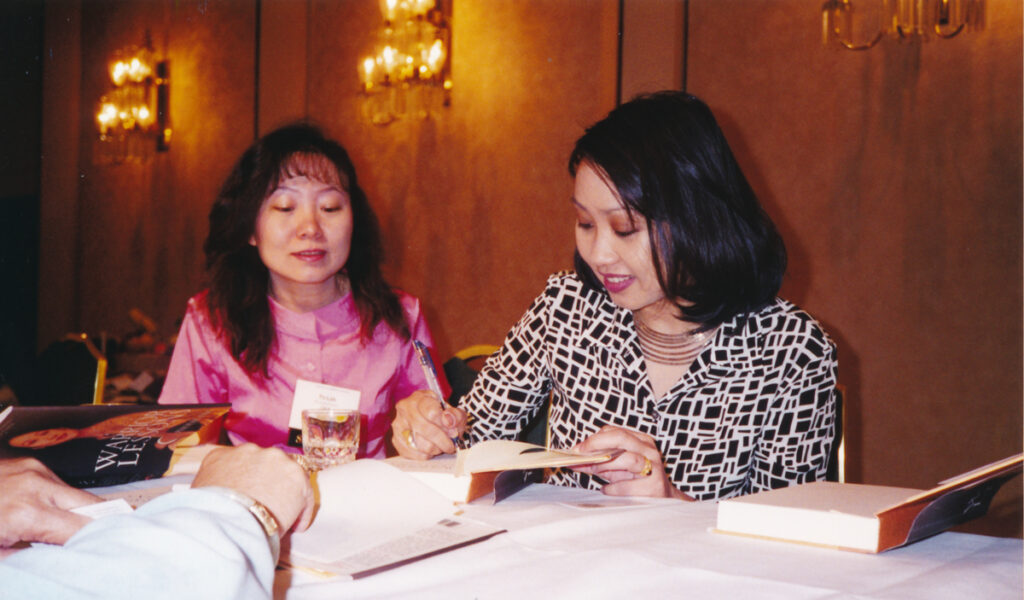
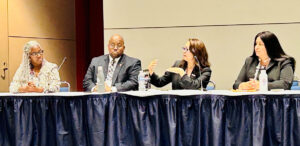
The opening ceremony featured keynote speaker Phoebe Eng, author of “Warrior Lessons: An Asian American Woman’s Journey to Power.” During her speech Eng declared to her audience “We have arrived!”, kicking off the conference.[7] Along with concurrent education sessions, the conference boasted an exhibit that featured more than 20 vendors, 12 authors held book signings, poster sessions, and a luncheon with author Emil Guillermo. A banquet and awards gala was held at the New Asia Restaurant with an address from Yvonne Lee of the U.S. Commission on Civil Rights, alongside the presentation of awards, the honoring of legacy leadership from APALA and CALA, and generous spread of food. The conference bookended with Eugenie Prime, manager of the Hewlett-Packard Labs Research Library and motivational speaker, as the keynote speaker during the closing ceremony.
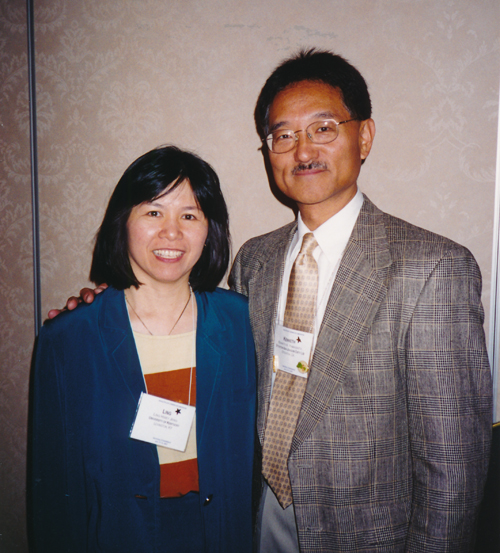
While there was only one National Conference on Asian/Pacific American Librarians, it was viewed as a success and feedback from attendees was positive.[8] The conference sought to bring together many diverse voices within the Asian/Pacific American librarian community, a challenge that the Planning Committee embraced. Committee co-chair, Ling Hwey Jeng, noted that the event had exceeded expectations and that she felt proud of the accomplishment, saying, “We came out much, much stronger. People felt empowered.”[9]
Sources
[1] National Conference on Asian Pacific American Librarians Program Book, 2001, Gordon Flagg Papers, 1985-2007, Record Series 13/6/21, Box 1, Folder: National Conference on Asian Pacific American Librarians, 2001, American Library Association Archives.
[2] Ibid.
[3] Ken Yamashita to Gordon Flagg, Interview Notes, 2001, Gordon Flagg Papers, 1985-2007, Record Series 13/6/21, Box 1, Folder: National Conference on Asian Pacific American Librarians, 2001, American Library Association Archives.
[4] Harriet Ying, “President’s Message,” CALA Newsletter, no. 73 (June 1998): 1. https://digital.library.illinois.edu/items/d9491c70-9474-0138-729a-02d0d7bfd6e4-4
[5] National Conference on Asian Pacific American Librarians Program Book, 2001.
[6] Ling Hwey Jeng to Gordon Flagg, Interview Notes, 2001, Gordon Flagg Papers, 1985-2007, Record Series 13/6/21, Box 1, Folder: National Conference on Asian Pacific American Librarians, 2001, American Library Association Archives.
[7] Janet Ng, “APA Librarians Share Vision and Knowledge,” AsianWeek (June 21, 2001): 16.
[8] Ken Yamashita to Gordon Flagg.
[9] Ling Hwey Jeng to Gordon Flagg.