In March 2022, the American Library Association (ALA) announced a new project in partnership with the Association for Rural & Small Libraries, under ALA’s Libraries Transforming Communities (LTC) initiative, to expand support for hundreds of small and rural libraries across the country.
Patricia “Patty” Wong, 2021–2022 ALA President, said that “Libraries Transforming Communities: Accessible Small and Rural Communities represents an important next step in ALA’s commitment to serving small and rural libraries as well as emphasizing the essential connection between accessibility and our work in spreading the values of equity, diversity, and inclusion.”
The initiative announced its final round of grantees in April 2026, and since the initial announcement four years ago, four rounds of LTC: Accessible Small and Rural Communities have distributed $14 million to 836 public, academic, tribal, and school libraries in all 50 states and the Northern Mariana Islands. Sixteen libraries received funding in all four rounds of the grant.
All selected libraries received grants of $10,000 and $20,000 to increase the accessibility of facilities, services, and programs to better serve people with disabilities. In the final round, 73% of libraries serve communities of less than 5,000 people.
Some new projects proposed from this final batch of selected libraries include:
- Morgan (Utah) High School teaches 14 students with disabilities who do not have access to the school library because of a lack of quiet space, automatic doors, comfortable seating, and assistive technology. The library remains one area of the school that lacks infrastructure to facilitate important peer-to-peer interactions. As a first-time LTC grantee, the library will use $20,000 to purchase book collections for all reading levels, an automatic door, new lighting, and paint to create a calming space with a sensory wall, adaptive furniture, and assistive technology.
- Having received all four rounds of LTC: Access funding, Cambridge Springs (Penn.) Public Library has achieved making the library physically accessible for patrons with disabilities by adding six automatic door openers. Now that more patrons can access the library, they will use round four funds to increase accessibility inside the library with new high contrast signs, page magnifiers, and assistive technology.
Over the years, projects have taken shape across the nation, reaching even the smallest communities, including some with populations in the double digits. Many of these libraries never thought this type of funding would be a reality.
The outcomes of LTC: Access will not only impact communities but also the library workers who wrote the grant, planned community conversations, and implemented their projects. LTC: Access has been a catalyst for ongoing disability access—teaching library workers the fundamentals of accessibility and guiding improvements to their library’s services across the board.
Below are just a few stories from the hundreds of LTC: Access libraries. For more, read the full case studies, written by Knology, on the ALA website.
The first library in Montana to install a hearing loop
North Lake County Public Library in Polson, Montana (pop. 5,100) has used LTC funding to make significant progress toward accessibility by becoming the first library in Montana to install a hearing loop, a technology that uses underground copper wires to transmit sounds from a microphone through the telecoils (t-coils) in hearing aids and cochlear implants. When installed in public venues, hearing loops improve clarity and understanding by amplifying speech and reducing background noise.
With a second LTC grant, the library purchased a Lucynt projector, which offers access to over 160 games that promote social interaction, physical activity, and mental stimulation for people with dementia and other cognitive disabilities.
These new assistive technologies have made the library more accessible to individuals with hearing loss and dementia. Library staff have also learned that they have a lot to offer others in the Montana library community. By sharing their experiences with adding assistive technologies and services, the library is looking to continue playing a leading role in expanding access and services to people with disabilities.
“We are the only place for people to meet in this town”
In the five years since its opening, the Jarrell Community Library and Resource Center in Texas (pop. 5,000) has transformed from a “building of books” into a bonafide community center.
“We are the only place for people to meet in this town,” says library director Susan Gregurek. “We’re always listening to what our community needs and have tried to touch on a lot of issues in our community.”
The library’s patrons include families with neurodivergent children, adults caring for parents with dementia, older adults with auditory and vision-related disabilities, and military families coping with traumatic experiences.
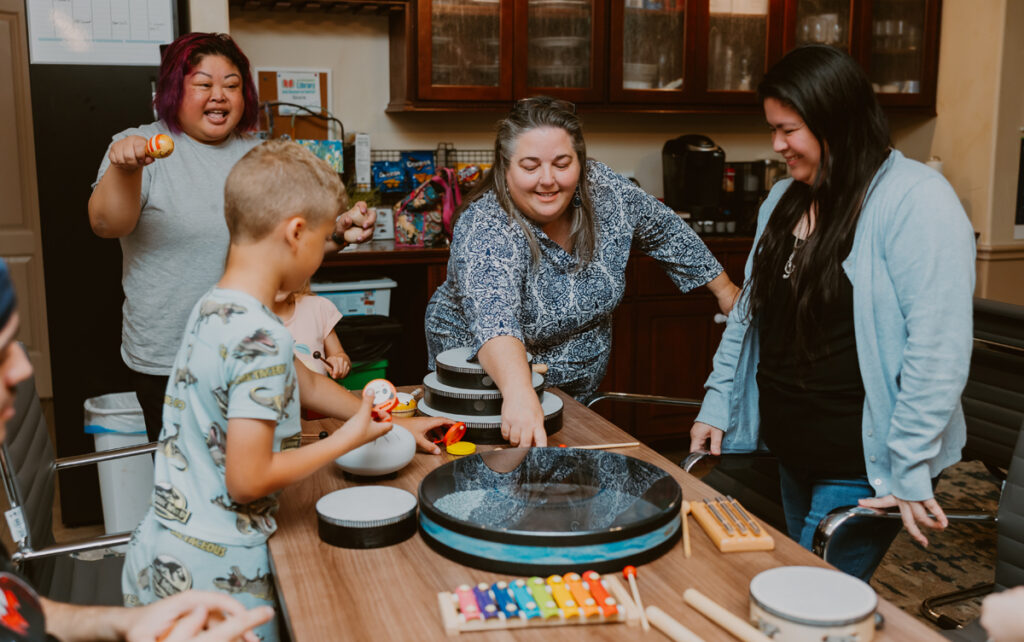
Funding from LTC: Access has been especially critical. As Gregurek puts it: “The ALA grant has been a lifesaver to us as a small library.” The library runs a number of mental wellness programs — including a play and support group for neurodivergent youth and their families, an arts and crafts group, a music program, and a dementia caregivers support network.
Through its unique approach to programming, Jarrell Community Library and Resource Center is showing that by leveraging community members’ skills and expertise, libraries can become more accessible to patrons along a number of different fronts. By arising directly out of needs and opportunities identified by community members, such an approach maximizes the relevance and responsiveness of libraries’ accessibility efforts.
ASL training for staff
Belén (N.M.) Public Library is one of several municipal buildings in the center of the city of Belén (population 7,360). “It’s a small town, so we don’t have a lot of services,” says library director Kathleen Pickering.
Pickering first became aware of the LTC Access initiative in 2023, just as the library was working on a new strategic plan. At the time, she recalls, accessibility “wasn’t really being discussed in our city in general.” With LTC funding, the library installed large, high-contrast signs throughout the building—including in the stacks. These signs have received positive feedback from patrons, who feel empowered to explore the library’s collection. The library also purchased software that provides screen magnification, screen reading, and visual enhancements, and an optical magnifier that can be used on books, photos, games, and other everyday objects.
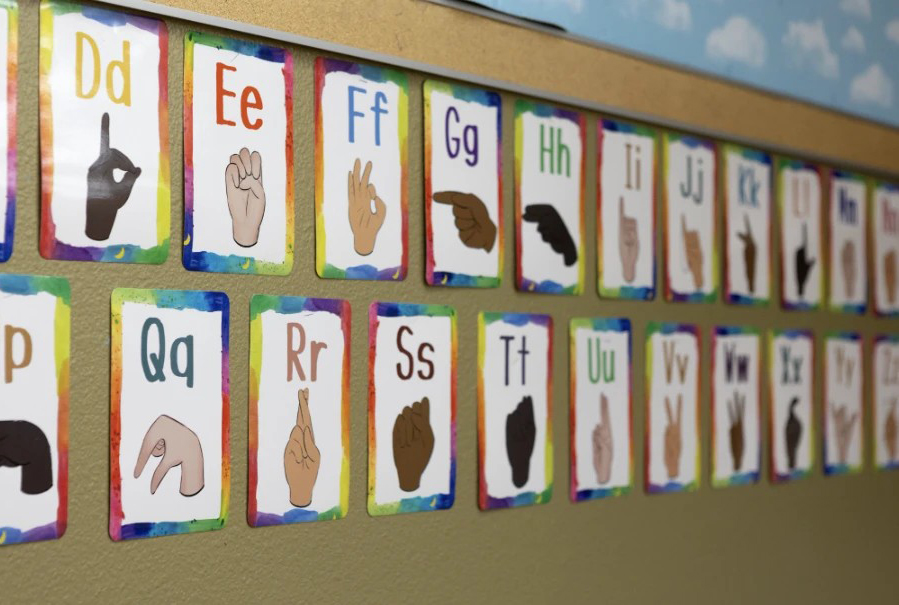
As the library’s experience with assistive technologies indicates, the process of becoming more accessible has facilitated considerable organizational learning. To help staff learn and keep up to speed, the library used LTC funds to invest in resources like Transparent Languages, which staff members have used to complete ASL training. The ASL alphabet is now posted in the children’s area, where there is an ASL for Toddlers program. And as staff have become more comfortable with signing, more people from the Deaf community have begun showing up.
For more information on Libraries Transforming Communities: Accessible Small and Rural Communities, please visit ALA.org/LTCAccess.