150 YEARS STRONG

Madam President

Before women were allowed to vote in U.S. elections, the American Library Association (ALA) found its leadership in Theresa West Elmendorf. In 1911, more than 30 years after the founding of ALA, Elmendorf was elected the first female president of the Association.

Elmendorf started her career in Milwaukee where she worked as the deputy librarian of Milwaukee Public Library, then as the librarian after an embezzlement scandal led to the arrest of her predecessor. After she married, Elmendorf and her husband relocated to Buffalo, New York, where Elmendorf focused on editing and authoring professional publications. She became the vice-librarian of Buffalo Public Library after her husband’s death in 1906 and would continue to work there until her retirement in 1926.[1]
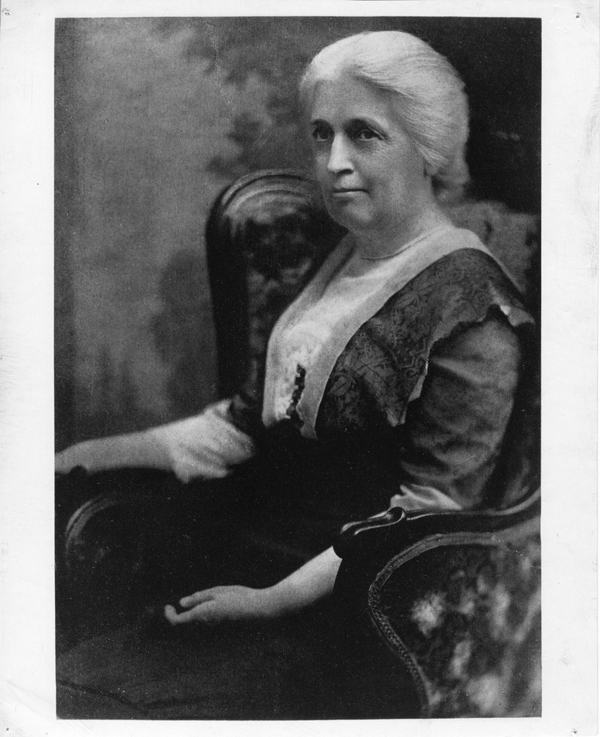
Theresa West Elmendorf
Theresa West Elmendorf. Photo courtesy of the ALA Archive.

At the 33rd Annual Conference, Elmendorf was elected president with 115 votes. According to the “Papers and Proceedings of the Thirty-Third Annual Conference,” Elmendorf was not present when the official announcement was made. Instead, she sent a telegram to express her gratitude and her first words as ALA’s president: “Thank you.  Say to the association, ‘Now is the time for all good men and true to come to the aid of the party.’”

Frank P. Hill, a former president of ALA himself, responded, “Madam President, the good men and true will come to her aid.” [2]

Elmendorf would preside over the 34th Annual Conference in Ottawa the following year. She would speak to the members of ALA about a topic she was passionate about, public libraries and serving the public in her address, “The Public Library: ‘A Leaven’d and Preparéd Choice.’”

In her address, she asked her colleagues about the best ways to serve the public and how to make them aware of the resources of libraries: “Books are the medium of appeal, the stuff of human knowledge, experience and wisdom stored by means of the printed leaf. The extent to which each individual shares in the stored treasure of the race-mind, is, in its sum, the measure of public safety and happiness and the starting point for service. How show, how make known the attraction and stored power of books?” [3]

With such a distinguished career and passion for her work, it is of little surprise that Elmendorf inspired enough confidence in her fellow ALA members to be elected as their president.


Sources:

1 – “Elmendorf, Theresa Hubble West (1855-1932),” Dictionary of American Library Bibliography (Littleton: Libraries Unlimited, 1978), 159-160;  “Mrs. Elmendorf Retires from Library Work,” Buffalo Courier-Express, (September 17, 1926), Librarians Photographs, Record Series 99/1/13, Box 1, American Library Association Archives at the University of Illinois.

2 – Papers and Proceedings of the Thirty-Third Annual Meeting of the American Library Association, (Chicago, 1911), pg. 195, Record Series 5/1/2, American Library Association Archives at the University of Illinois.

3 – Papers and Proceedings of the Thirty-Fourth Annual Meeting of the American Library Association, (Chicago, 1912), pg. 71, Record Series 5/1/2, American Library Association Archives at the University of Illinois.


This story first appeared on the ALA Archives blog on May 6, 2013.
150 YEARS STRONG

THE OFFICIAL ANNIVERSARY BLOG

Detail of letter from Lynn Blaylock to the Intellectual Freedom Committee.

‘Nothing Could Have Astonished Me More’: The Challenge of Consumer Reports

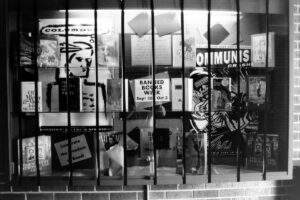
Due to communist hysteria before and after World War II, many organizations and publications were under suspicion of being affiliated with or promoting the Communist party, including Consumers Union, publisher of Consumer Reports, the product testing and consumer advocacy magazine. As a result, Ohio schools banned the use of Consumer Reports in the classroom. While the ban was short-lived, the questions about it were not and the ALA Intellectual Freedom Committee noticed the attempts to ban the publication.

A detail from the Library Bill of Rights, 1967.

The History of the LeRoy C. Merritt Humanitarian Fund

To financially support librarians who have been denied employment rights or discriminated against on the basis of gender, sexual orientation, race, color, creed, religion, age, disability, or place of national origin or denied employment rights because of their defense of intellectual freedom, ALA created the LeRoy C. Merritt Humanitarian Fund, named in honor of a staunch defender of intellectual freedom and editor of ALA’s Newsletter on Intellectual Freedom.

A Seat at the Table feature graphic

A Seat at the Table: Reflections from Eight ALA Trailblazers

For 150 years, the American Library Association has shaped the landscape of libraries and the profession itself—but its leadership has often reflected the racial and gender biases of society at large. American Libraries spoke with eight barrier-busting Association leaders about their struggles, triumphs, breakdowns, and breakthroughs. The stories and lessons they share reveal how diversity fuels and transforms the power of libraries everywhere.

The School of Economy at Columbia College in New York City, class of 1888. Photo: ALA Archives

55 Moments That Redefined Librarianship

As the American Library Association (ALA) celebrates 150 years, we’re drawing inspiration from key events since its 1876 founding: from the first conventions and library schools, through wartime and the fight for civil rights, to seismic technological advancements and the existential threats of the current moment. Though not a comprehensive timeline of library history, the milestones collected here demonstrate lasting impact and how libraries and the profession are intertwined with the American story itself—as repositories of memory, arenas of debate, and enduring instruments of democratic life.

Keynote speaker and author Phoebe Eng signing books

Shared Visions: The National Conference on Asian/Pacific American Librarians

In 2001, the Asian/Pacific American Librarians Association and the Chinese American Librarians Association partnered to host the first and only National Conference on Asian/Pacific American Librarians. The theme, Shared Visions: Heritages, Scholarship, Progress, was chosen “with a sincere commitment to representing the rich diversity of East, South and Southeast Asian and Pacific American ethnicities, cultures and communities.”