Advocacy for libraries has been at the heart of the American Library Association’s (ALA) mission for 150 years. A new publication by ALA’s Public Policy and Advocacy office highlights milestones and key accomplishments from ALA’s history. The resulting laws and initiatives have made an indelible impact on America’s libraries and the people they serve.
Earliest days
ALA has engaged with government officials from its very beginning. John Eaton, the U.S. Commissioner of Education—predecessor to today’s Secretary of Education—was among the leaders who called for a conference of librarians to held in 1876, where ALA would be founded. Ainsworth Rand Spofford, the Librarian of Congress at the time, attended the 1876 conference and was named a vice president of ALA at its founding.
The Library of Congress
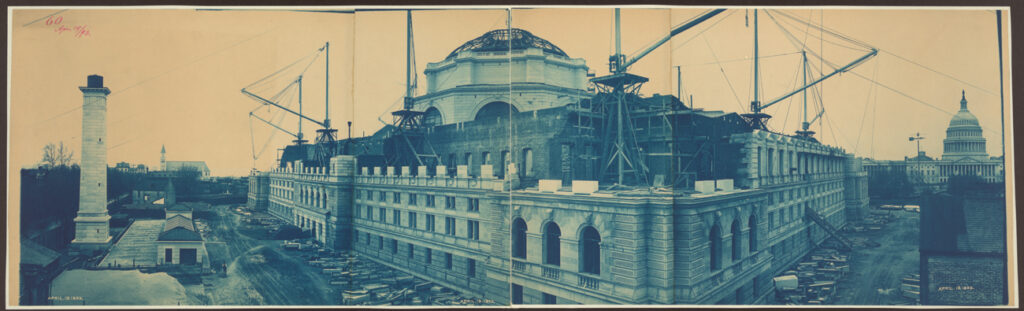
ALA’s close relationship with the Library of Congress has continued throughout its history. Early ALA leaders advocated for a new building to house the Library, a goal that was achieved when the Thomas Jefferson Building opened in 1897. One such advocate was Herbert Putnam, who served twice as ALA President and became Librarian of Congress in 1899.
Two other ALA Presidents have since been appointed Librarian of Congress: Quincy Mumford in 1954, and Dr. Carla Hayden in 2016, who was the first woman and first African American to serve in that role.
Serving those who serve
During our nation’s greatest military mobilizations, ALA mobilized librarians and volunteers to provide books and library service. ALA established the Library War Service in World War I, which sent trained librarians to 75 military hospitals and millions of books to servicemembers around the globe. During World War II, the Victory Book Campaign collected 17 million books for servicemembers.
From mail to email
In 1928, after decades of advocacy by ALA, Congress created a reduced postage rate for libraries sending books by mail, known today as Library Mail. The discount helped libraries expand interlibrary loans and provide library materials by mail to homebound individuals and rural households.
As technology has changed, ALA has advocated for policies to enable libraries to serve users in modern ways. In 1996, the Telecommunications Act created the E-Rate program, a result of ALA’s advocacy. E-Rate helps make telecommunication services affordable for public libraries and schools, and free internet access became a ubiquitous service in public libraries in the following years. ALA continues to defend E-Rate: this year, in response to threats to the program, ALA launched the Save Our E-Rate campaign.
Libraries for all
Over its history, ALA has advocated for policies to make library service accessible to people with disabilities. In 1931, in response to ALA’s advocacy, Congress created a program to provide blind Americans with books in accessible formats like braille and audio, the predecessor to today’s National Library Service for the Blind and Print Disabled.
The reach of ALA’s advocacy has been global. In 2013, the Marrakesh Treaty to Facilitate Access to Published Works for Persons Who Are Blind, Visually Impaired or Otherwise Print Disabled was adopted. ALA advocated for the treaty, which allows libraries to share books in accessible formats across international borders without needing special permission from copyright holders.
Funding for libraries
Advocacy for library funding has been a centerpiece of ALA’s efforts for decades. In 1934, ALA developed “A National Plan for Libraries,” which outlined models for state and national level support of libraries and called for the establishment of a federal library agency. The Library Services Act of 1956 created the first system of federal funding for libraries at a time when 26 million Americans lacked public library access. The Library Services and Construction Act of 1964 expanded the program. In 1996, the Museum and Library Services Act created the Institute of Museum and Library Services (IMLS) as an independent federal agency to administer the program and provide national leadership.
ALA remains a dedicated advocate for library funding. In 2025, when the Trump Administration attempted to dismantle IMLS and unilaterally revoke its funding, ALA fought back in court. ALA’s litigation won a temporary restraining order that prevented the mass layoff of nearly all IMLS employees days before it was scheduled to take effect. In a parallel case, a coalition of states won a ruling that permanently blocked the administration’s attempt to dismantle IMLS; and ALA reached a settlement of its case that extended the effect of that ruling nationwide.
Advocacy and public awareness
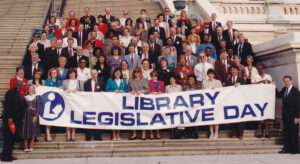
These successes were made possible by ALA’s continued investment in advocacy infrastructure. In 1945, ALA established its Washington Office, today called the Public Policy and Advocacy office. The office organized the first National Library Legislative Day in 1973, bringing library supporters and leaders to the Capitol to meet with their members of Congress to champion public policies benefiting libraries. The next National Library Legislative Day is scheduled for February 24-25, 2027.
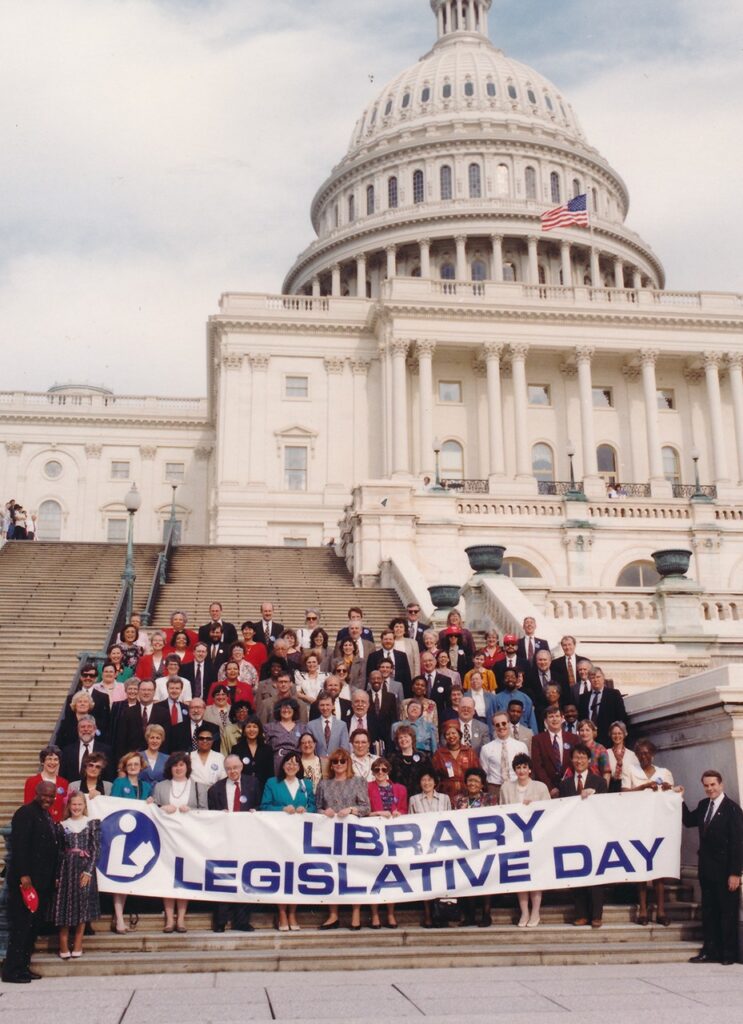
Over the decades, ALA has also partnered with public officials on its initiatives to encourage public awareness and use of libraries. In 1958, President Eisenhower issued a proclamation recognizing the first National Library Week. ALA endorsed the National Library Symbol, which depicts a book and reader, in 1982; in 1985, the Federal Highway Administration accepted the symbol for use on public road signs to indicate the location of a library. In 1987, U.S. Secretary of Education William Bennett stated, “Every child should obtain a library card and use it,” leading ALA to launch a national outreach campaign that continues today as Library Card Sign-Up Month.
Fighting for the future of libraries
The Public Policy and Advocacy office’s new publication explores these milestones and other key achievements impacting school libraries, access to government information, copyright, civic engagement, library workers, the freedom to read, and more.
These policies and initiatives enable the work of libraries thousands of times a day across the country. Today, as we confront new threats, your support as a member, donor, and advocate is crucial to defending these policies and laying the foundation for the next 150 years.