
150 YEARS STRONG

Libraries During the Great Depression

The Works Progress Administration (later called the Works Projects Administration, or WPA) was created in May 1935 as part of the New Deal to provide jobs to the unemployed during the Great Depression. In addition to building public roads and supporting community arts projects, the WPA, with help from the ALA Library Extension Board, supported public libraries by sponsoring bookmobiles and providing workers for demonstration projects that extended library services to rural communities.
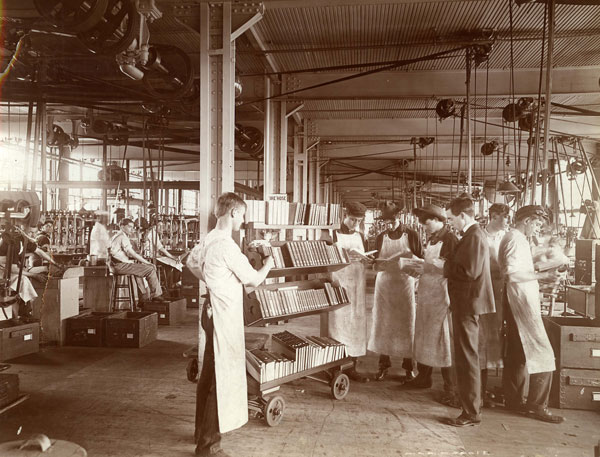
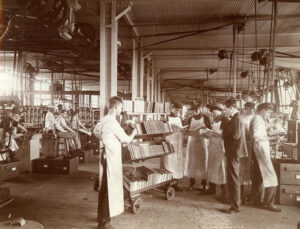
National Cash Register Company Rolling Library, Dayton, Ohio, circa 1915. From the ALA Archives.

One of the WPA’s most idealistic goals was to send books and librarians to areas where there were none. To this end, the WPA sponsored not only bookmobiles to rural areas, but also built tiny log cabin libraries and supported small libraries in general stores and other public places.

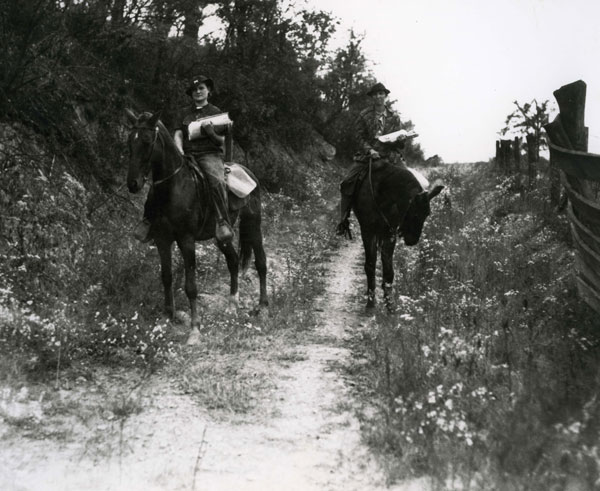
Perhaps most innovative was the employment of pack-horse librarians, most of whom were women, who served remote rural areas of Appalachia. The Tennessee Valley Authority also cooperated with local libraries and cut across state lines to provide service to rural populations.

Tennessee Valley Authority Pack Horse Library, circa 1938. From the ALA Archives.

Despite these advances in rural outreach, the distribution of library services was by no means uniform across the nation. In “Books Where There are No Books,” published in the October 15, 1939 ALA Bulletin, Harriet C. Long wrote that public library service was still only available to 26% of rural people, compared with 92% living in urban areas.


This article first appeared on the ALA Archives blog, October 24, 2012.

150 YEARS STRONG

THE OFFICIAL ANNIVERSARY BLOG

National Cash Register Company Rolling Library, Dayton, Ohio, circa 1915. From the ALA Archives.

Libraries During the Great Depression

During the Great Depression, the WPA—with help from the ALA Library Extension Board—supported public libraries by sponsoring bookmobiles and providing workers for demonstration projects that extended library services to rural communities.

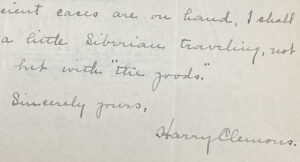
Harry Clemons signature.

Harry Clemons: The ALA in Siberia

During World War I, most ALA-operated libraries were stationed in U.S.-based military camps. However, a small number of librarians were sent overseas to help distribute books and run libraries. Harry Clemons was one such librarian.

Colleen Barbus, librarian and archivist for the ALA Library in Chicago. Photo: Lauren Ehle

A Library for Librarians

Since ALA headquarters moved in 2020 to its present location at Chicago’s 225 North Michigan Avenue, ALA Librarian Colleen Barbus has presided over a completely reimagined in-house library.