
This is the story of a group of American Library Association (ALA) members who had the audacity to suggest that the list of Core Values of the profession should be amended.
Building on the work of the ALA Task Force on the Environment (formed in 1989) and the momentum of the Sustainability Round Table (formed in 2013), ALA Council passed the Resolution on the Importance of Sustainable Libraries in 2015. The resolution was a call to action, recognizing “the important and unique role libraries play in wider community conversations about resiliency, climate change, and a sustainable future” and signaling a shift toward thinking more intentionally about the economic, environmental, and socially equitable impacts of our decisions.
At that time, many of us had recognized that climate change had reached a dangerous tipping point. It was clear that if we did not take both personal and professional responsibility, we would have failed the next generation.
The resolution suggested the beginning of a “new era.” That was a bold statement—and once it made, it called for action. Fortunately, the right leadership was in place at the right time.
In 2017, the ALA Executive Board formed the ALA Special Task Force on Sustainability. My co-chair, Rene Tanner, and I quickly realized that we would not get far without a shared vocabulary. We began by asking a simple question: What do we mean by “sustainability”? Ask three people and you might get three different answers—some thought of it as going green, others through a financial lens, and still others in terms of institutional longevity. Without a shared understanding, meaningful progress would be difficult.
The task force ultimately adopted the “triple bottom line” framework of sustainability to guide our work: To be truly sustainable, an organization or community must embody practices that are threefold: environmentally sound, economically feasible, and socially equitable.
This framework had been adopted by the Sustainable Libraries Initiative (SLI), which helped ground out work. Having been involved in both SLI and ALA efforts, I can say with confidence that agreeing on this definition was a turning point. Sustainability is a complex, systemic issue, but once we could express it in a clear and relatable way, it began to resonate. You could see the shift as more people connected to the concept.
To move this work forward, the task force listened to the profession. We hosted four online forums and conducted a perceptions survey, engaging more than 600 ALA members. These efforts informed 52 recommendations, but in truth, many of them hinged on one critical step: amending the Core Values to include sustainability. Without that foundation, sustainability risked becoming a checklist rather than a guiding principle.
What followed was a sustained advocacy effort. We spoke individually with more than half of ALA Councilors, attended Council Forums to answer tough questions, and built a campaign to engage members across the association. We asked people to connect with the Councilors they had elected and advocate for this change. It was, in every sense, a full-court press.
And it paid off.
On January 27, 2019 in Seattle, ALA Council adopted the Resolution for the Adoption of Sustainability as a Core Value. The resolution did four key things:
- Adopted the triple bottom line definition of sustainability;
- Established sustainability as a Core Value of Librarianship;
- Mandated that accreditation standards for library school programs be evolved to ensure the topic of sustainability be taught; and
- Directed ALA to provide education and resources to inspire and support leadership in applying this new core value to “guide decisions for the future of our society.”
This was a watershed moment—one that has shaped our profession over the past several years.
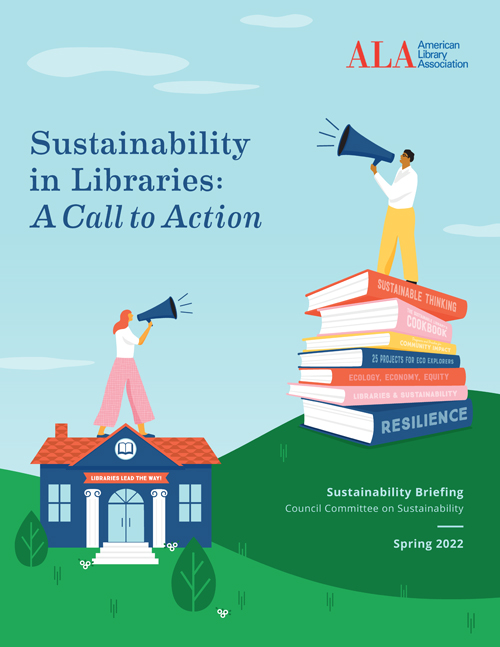
The Sustainability Round Table became the fastest-growing round table in ALA. In 2022, ALA released “Sustainability in Libraries: A Call to Action” to support early adopters. Library schools began integrating sustainability into their curricula, and textbooks now include topics such as climate adaptation and community resilience. Funders recognized this momentum, supporting initiatives like the “Resilient Communities” initiative and expanding access to sustainability training for ALA members through the SLI-ALA Sustainable Librarianship eCourse.
ALA staff also began examining how to practice what was being promoted. Drawing on the task force’s recommendations, they took a closer look at reducing the carbon footprint of conferences, sourcing materials more responsibly, and making everyday operational decisions that model sustainable practices.
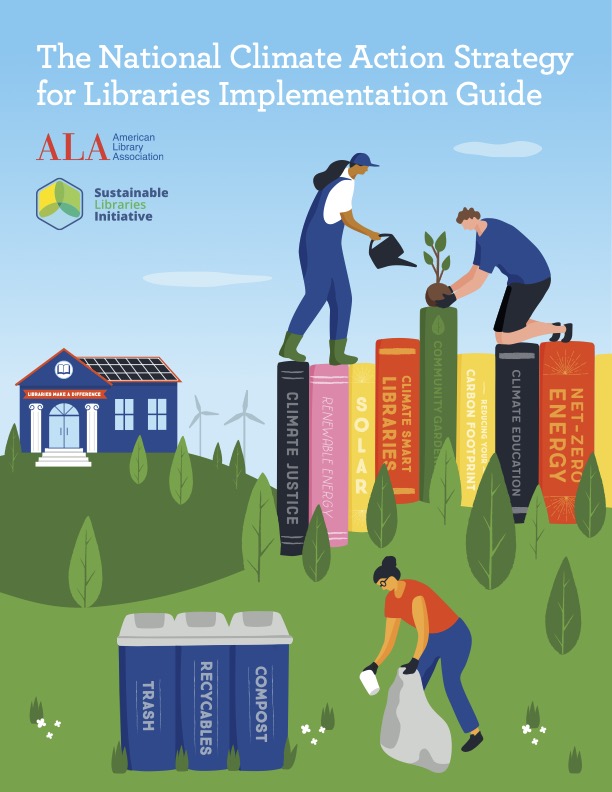
Most recently, ALA partnered with the Sustainable Libraries Initiative to develop the National Climate Action Strategy for Libraries, a roadmap for deliberate, collective action across the profession focused on accelerating climate mitigation and adaptation efforts through the lens of climate justice.
Across this country it is now commonplace for libraries to adopt sustainability as a core value in local strategic plans; to build healthier buildings for library workers and patrons using sustainable design principles; to see libraries on the front lines of disaster prevention and recovery efforts in communities; and to see libraries of all types held up as the model for how to accelerate action to build community resilience. More than 70 public, academic and school libraries have become certified “Sustainable Libraries” through the Sustainable Libraries Initiative’s Sustainable Library Certification Program with more than 100 libraries in the pipeline to follow suit. Libraries are emerging as clear leaders on the topic of sustainability, making smart decisions with the resources entrusted to them and leveraging collections, programs, partnerships, and technology to partner with others to find solutions in face of one of the grandest challenges of our generation: climate change.
In January 2024, ALA Council took action to refine the list of core values. We are proud to say that sustainability remains among them:
- access,
- equity
- intellectual freedom and privacy
- the public good, and
- sustainability
Through ALA, we connect with others moving in the same direction, using library service as a platform to make a positive impact in the world. The adoption of sustainability as a core value shows what’s possible when dedicated members take the time to listen, learn, evolve, and chart a new path forward, strengthening our ability to remain relevant and responsive for another 150 years.
To read the full story of the ALA Special Task Force on Sustainability, check out this article written by members of the task force, “Libraries as Sustainability Leaders: ALA’s Special Task Force.”
Rebekkah Smith Aldrich, MLS, LEED AP, cSBA is Executive Director of the Mid-Hudson Library System in New York; Co-chair, ALA Special Task Force on Sustainability; Inaugural chair, ALA Council Committee on Sustainability; Co-Founder & Board President, Sustainable Libraries Initiative; and Principal Author, National Climate Action Strategy for Libraries.