
150 YEARS STRONG

The History of School Library Month

April is School Library Month, when school librarians across the U.S. are encouraged to host activities to help their school and local community celebrate the essential role that strong school libraries play in transforming learning. For more than 40 years, School Library Month has highlighted the vital role school libraries play in the lives and education of our nation’s youth. It has a fascinating history.

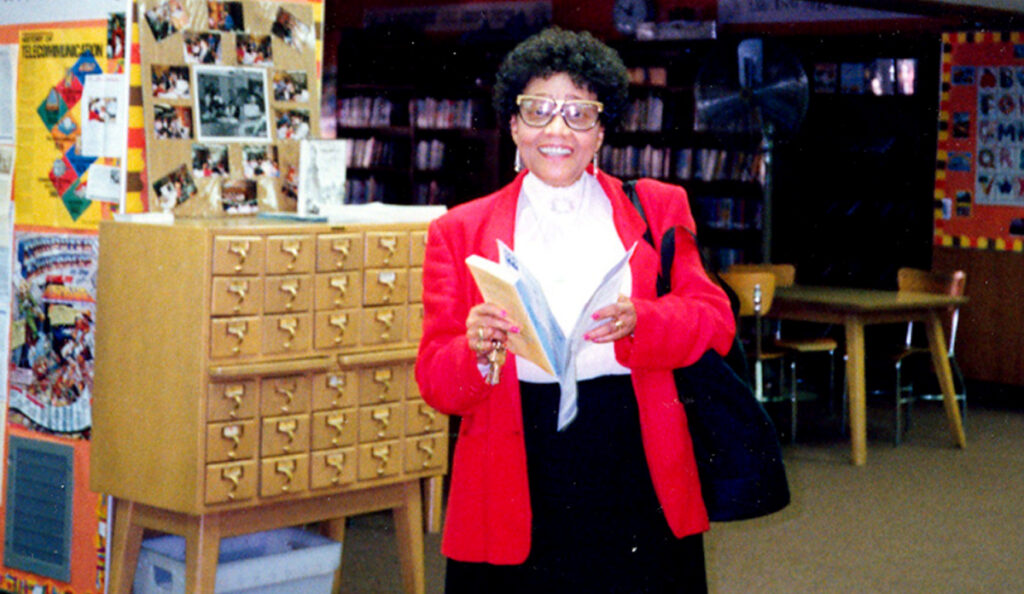
The American Association of School Librarians’ (AASL) efforts for a national School Library Month were spearheaded by Lucille Cole Thomas, chair of the School Library Media Month Committee. Thomas began her career as a librarian at Brooklyn Public Library, and she went on to serve with the New York City Board of Education as librarian (1956-1968), supervisor of library services (1968-1977), and as assistant director of the office of library, media and telecommunications (1977-1983). In 1974, April 30 was designated by New York Governor Malcom Wilson as “New York State School Library Media Day” thanks to Thomas’s efforts.

Lucille Cole Thomas
Lucille Cole Thomas

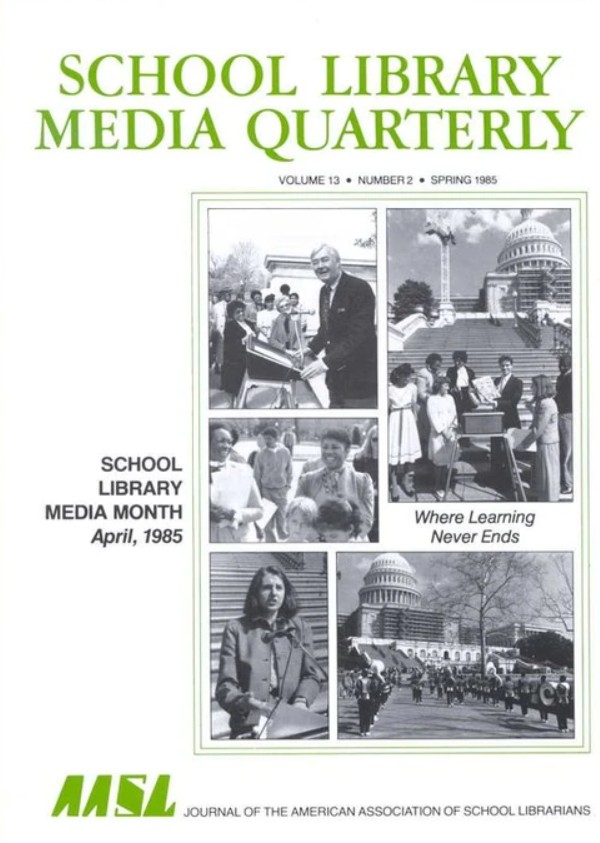
Thomas was appointed to the School Library Media Month Committee by AASL President Judy King in 1983. She and her committee diligently gathered ideas from previous state and local celebrations for school libraries and compiled a 52-page handbook for the first national observance. On April 1, 1985, their work culminated with the official start of School Library Media Month, which kicked off at a ceremony on the west steps of the U.S. Capitol. The theme of the first national observance was “Where Learning Never Ends: The School Library Media Center.”

Senator Daniel Patrick Moynihan (D-N.Y.) delivered the keynote address at the inaugural event.

“I want to thank you for what you do,” Moynihan told the school librarians gathered at the Capitol. “I hope you know how important your work is. You change lives for the better. You touch people while they can still be touched.”

The Spring 1985 issue of School Library Media Quarterly. The cover shows photos from the first national observance of School Library Month.

In 2010, the name of the celebration was changed to School Library Month after the Board of Directors voted to readopt the professional title “school librarian,” from the former “school library media specialist.”

Listen to a 2012 interview with Lucille Cole Thomas about the founding of School Library Month below.

The above was excerpted and adapted from “AASL Celebrates First National School Library Media Month,” which appeared in the Spring 1985 issue of School Library Media Quarterly (p. 83-84), and other sources.

150 YEARS STRONG

THE OFFICIAL ANNIVERSARY BLOG

An index card tracking an ALA conference exhibition hall exhibitor from 1924-1947.

The Heartbeat of the Hall: 150 Years of Exhibitors Who Shaped Our Conference

Every year as the doors of ALA’s Annual Conference and Exhibition swing open, the exhibition hall comes alive. It is a ritual that has been repeated, refined, and reimagined throughout ALA’s 150-year history. And at the center of it all, providing the innovations, solutions, and partnerships that have propelled our profession forward, are the exhibitors. To mark this milestone, we look back at the rich history of exhibitors at the conference—where it began, how it grew, and why, 150 years on, the exhibition floor remains one of the most vital spaces in our professional world.

Librarian at the Reference Desk in Camp Johnston Library, from the ALA Archives.

Charles R. Green at Camp Johnston: ‘We Can Find Such a Man’

During the summer of 1918, Charles Green, a librarian from the Massachusetts Agriculture College, served as the Acting Librarian for Camp Johnston in Jacksonville, Florida. While his tenure was brief, the Charles R. Green Papers in the American Library Association (ALA) Archives reveal Green’s rapid appointment and promotion. It also shows how quickly circumstances could change within the ALA’s Library War Service and the adaptability of its volunteers.

Detail of letter from Lynn Blaylock to the Intellectual Freedom Committee.

‘Nothing Could Have Astonished Me More’: The Challenge of Consumer Reports

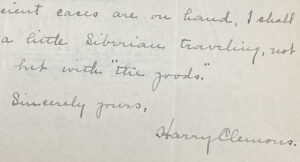
Due to communist hysteria before and after World War II, many organizations and publications were under suspicion of being affiliated with or promoting the Communist party, including Consumers Union, publisher of Consumer Reports, the product testing and consumer advocacy magazine. As a result, Ohio schools banned the use of Consumer Reports in the classroom. While the ban was short-lived, the questions about it were not and the ALA Intellectual Freedom Committee noticed the attempts to ban the publication.

A detail from the Library Bill of Rights, 1967.

The History of the LeRoy C. Merritt Humanitarian Fund

To financially support librarians who have been denied employment rights or discriminated against on the basis of gender, sexual orientation, race, color, creed, religion, age, disability, or place of national origin or denied employment rights because of their defense of intellectual freedom, ALA created the LeRoy C. Merritt Humanitarian Fund, named in honor of a staunch defender of intellectual freedom and editor of ALA’s Newsletter on Intellectual Freedom.

A Seat at the Table feature graphic

A Seat at the Table: Reflections from Eight ALA Trailblazers

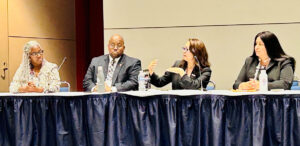
For 150 years, the American Library Association has shaped the landscape of libraries and the profession itself—but its leadership has often reflected the racial and gender biases of society at large. American Libraries spoke with eight barrier-busting Association leaders about their struggles, triumphs, breakdowns, and breakthroughs. The stories and lessons they share reveal how diversity fuels and transforms the power of libraries everywhere.