
150 YEARS STRONG

Posters of Progress: Mapping ALA’s History Through Library Poster Art

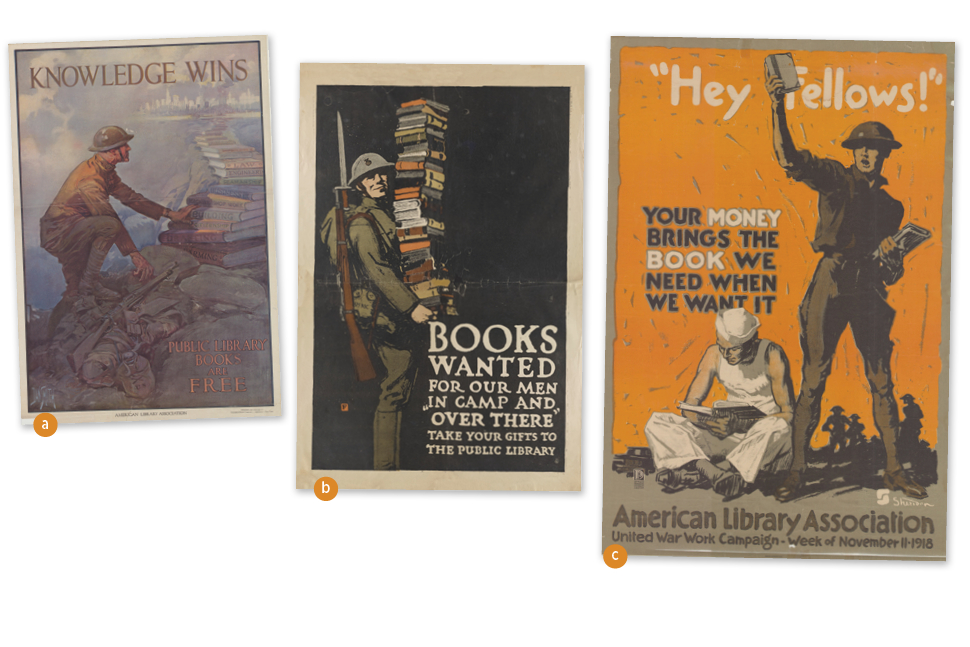
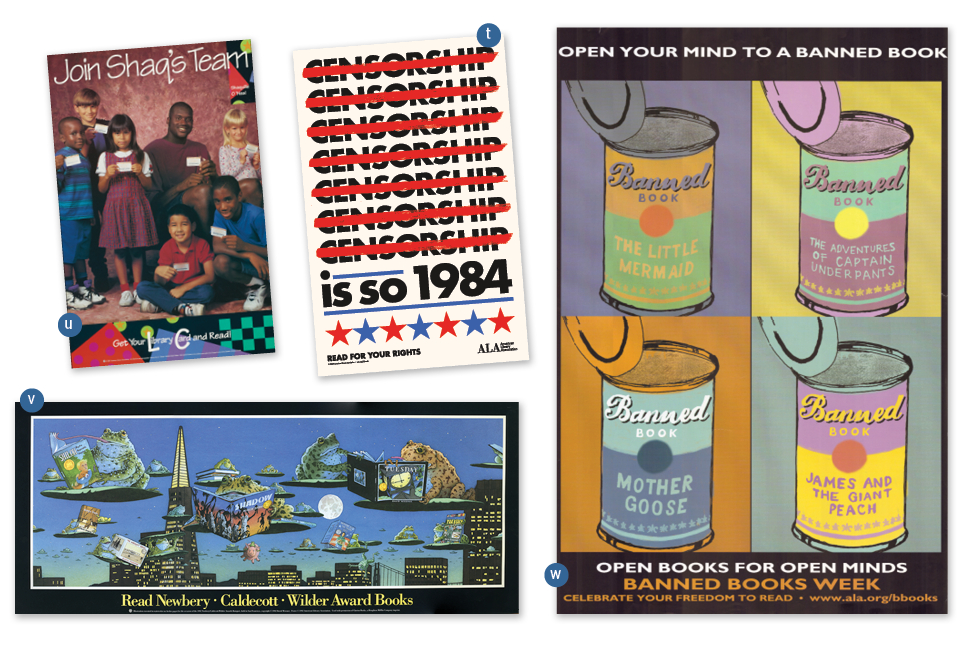
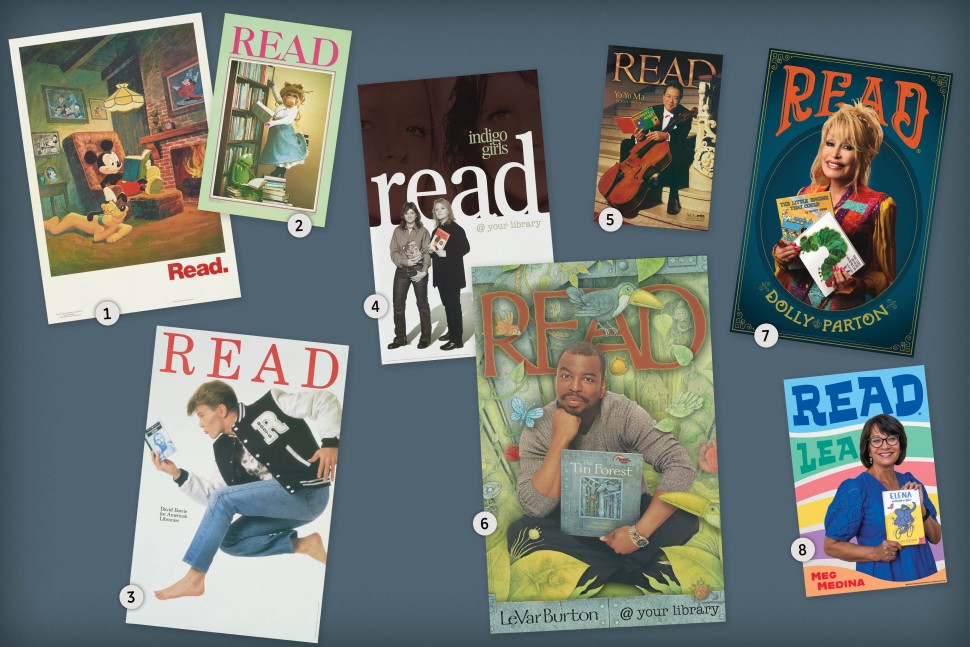
From wartime appeals to celebrity-studded reading campaigns, library posters have long captured the evolving role of libraries in American life. This feature traces the American Library Association’s (ALA) history through some of its most iconic visuals—the patriotic mobilization of ALA’s Library War Service, the pop-culture energy of its READ posters, the spirited encouragement of the “Wake Up and Read” campaign (in partnership with the publishing community), and the fearless advocacy of Banned Books Week. Together, these images chart a story of the profession’s unflinching ideals of access, literacy, and intellectual freedom, showcasing how libraries continue to reimagine their place in public life.

1917–1919

World War I and Library War Service

a. Knowledge Wins (1918) b. Books Wanted (1918) c. “Hey Fellows!” (1918)

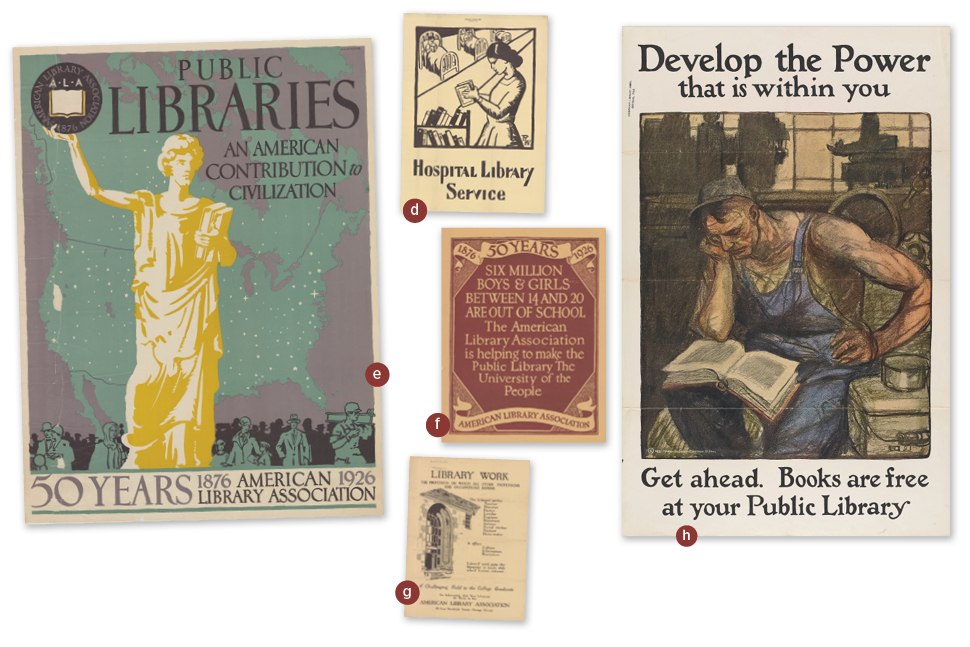
1920–1939

ALA’s 50th anniversary and early promotional posters

d. Hospital Library Service (1925) e. Public Libraries: An American Contribution to Civilization (1926) f. 50 Years: The University of the People (1926) g. Library Work: The Profession on Which All Other Professions Depend (1925) h. Develop the Power That Is within You (1921)

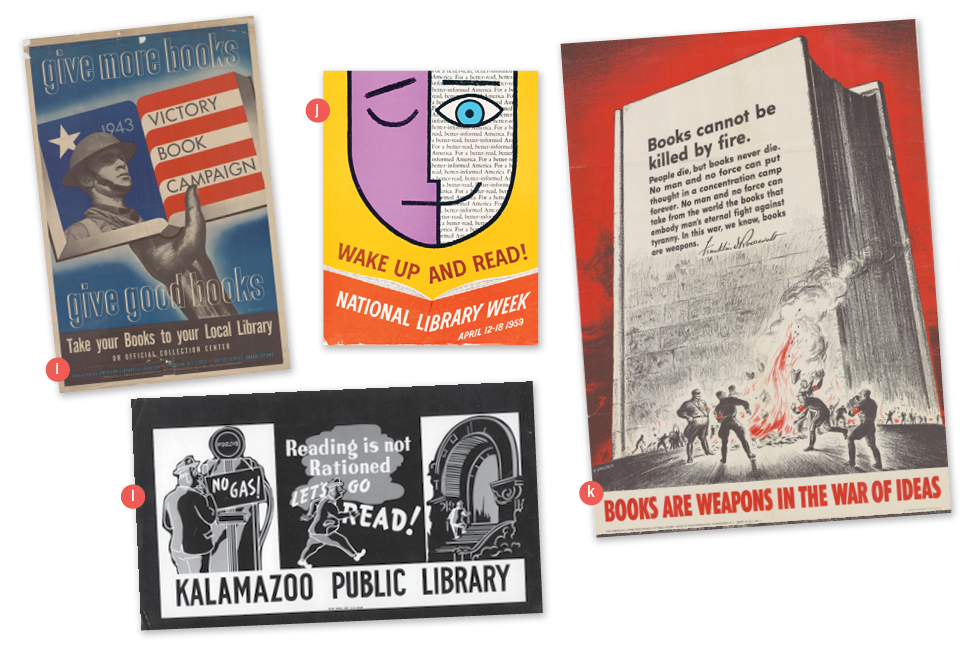
1940–1959

World War II and tools for democracy

i. Give More Books, Give Good Books: Victory Book Campaign (1943) j. Wake Up and Read! (1959) k. Books Are Weapons in the War of Ideas (1942) l. Reading Is Not Rationed (1943)

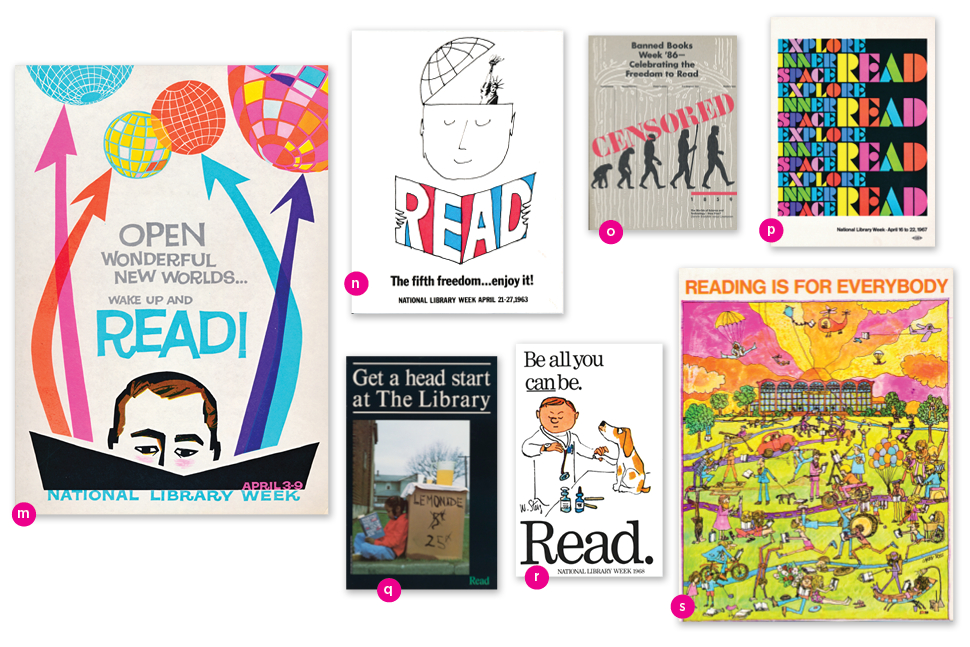
1960–1989

Literacy campaigns, banned books, community engagement

m. Open Wonderful New Worlds: Wake Up and Read! (1960) n. Read: The Fifth Freedom …. Enjoy It! (1963) o. Banned Books Week (1986) p. Explore Inner Space: Read (1967) q. Get a Head Start (1985) r. Be All You Can Be. Read. (1968) s. Reading Is for Everybody (1970)

1990–Present

The modern era

t. Censorship Is So 1984 (2025) u. Join Shaq’s Team (1994) v. Read Newbery-Caldecott-Wilder Award Books (1992) w. Open Your Mind to a Banned Book


Famous READers through the Years

1. Mickey Mouse (1978) 2. Miss Piggy (1980) 3. David Bowie (1986) 4. Indigo Girls (2002) 5. Yo-Yo Ma (2001) 6. LeVar Burton (2002) 7. Dolly Parton (2023) 8. Meg Medina (2023)


This story first appeared in the May 2026 issue of American Libraries.

150 YEARS STRONG

THE OFFICIAL ANNIVERSARY BLOG

A Long Legacy

While ALA’s founding is technically in October, the staff at American Libraries put on their party hats early to celebrate ALA’s 150th year with a plethora of Association and library history-related stories in the magazine’s May 2026 issue.

ALA posters

Posters of Progress: Mapping ALA’s History Through Library Poster Art

From wartime appeals to celebrity-studded reading campaigns, library posters have long captured the evolving role of libraries in American life. This feature traces ALA’s history through some of its most iconic visuals. Together, these images chart a story of the profession’s unflinching ideals of access, literacy, and intellectual freedom, showcasing how libraries continue to reimagine their place in public life.

An index card tracking an ALA conference exhibition hall exhibitor from 1924-1947.

The Heartbeat of the Hall: 150 Years of Exhibitors Who Shaped Our Conference

Every year as the doors of ALA’s Annual Conference and Exhibition swing open, the exhibition hall comes alive. It is a ritual that has been repeated, refined, and reimagined throughout ALA’s 150-year history. And at the center of it all, providing the innovations, solutions, and partnerships that have propelled our profession forward, are the exhibitors. To mark this milestone, we look back at the rich history of exhibitors at the conference—where it began, how it grew, and why, 150 years on, the exhibition floor remains one of the most vital spaces in our professional world.

Librarian at the Reference Desk in Camp Johnston Library, from the ALA Archives.

Charles R. Green at Camp Johnston: ‘We Can Find Such a Man’

During the summer of 1918, Charles Green, a librarian from the Massachusetts Agriculture College, served as the Acting Librarian for Camp Johnston in Jacksonville, Florida. While his tenure was brief, the Charles R. Green Papers in the American Library Association (ALA) Archives reveal Green’s rapid appointment and promotion. It also shows how quickly circumstances could change within the ALA’s Library War Service and the adaptability of its volunteers.

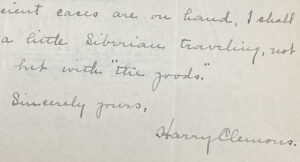
Detail of letter from Lynn Blaylock to the Intellectual Freedom Committee.

‘Nothing Could Have Astonished Me More’: The Challenge of Consumer Reports

Due to communist hysteria before and after World War II, many organizations and publications were under suspicion of being affiliated with or promoting the Communist party, including Consumers Union, publisher of Consumer Reports, the product testing and consumer advocacy magazine. As a result, Ohio schools banned the use of Consumer Reports in the classroom. While the ban was short-lived, the questions about it were not and the ALA Intellectual Freedom Committee noticed the attempts to ban the publication.