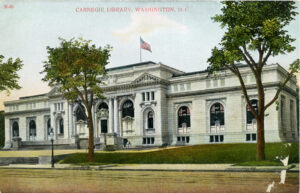
Every year as the doors of the American Library Association’s (ALA) Annual Conference and Exhibition swing open, the exhibition hall comes alive—booths, banners, and brilliant minds all gathered in one place. It is a ritual that has been repeated, refined, and reimagined throughout ALA’s 150-year history. And at the center of it all, providing the innovations, solutions, and partnerships that have propelled our profession forward, are our exhibitors.
To mark this extraordinary milestone, we look back at the rich history of exhibitors at the ALA Annual Conference and Exhibition—where it began, how it grew, and why, 150 years on, the exhibition floor remains one of the most vital spaces in our professional world.
The Early Days: A Modest Beginning
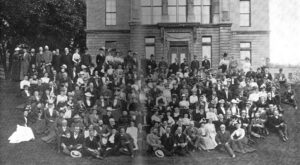
When ALA held its very first Annual Conference in the 1870s, the idea of an “exhibition” was far simpler than what we know today. A handful of vendors and suppliers alongside the professional sessions, offering tools, publications, and equipment relevant to the work of our members.
These early exhibitors were pioneers. They saw in our gathering a community—one hungry for knowledge, improvement, and tools to do their work better. The relationship between our members and our exhibitors was personal from the start: Exhibitors knew attendees by name, understood their challenges firsthand, and tailored their offerings accordingly.
“The exhibition was never just commerce. From the very beginning, it was conversation — between makers and practitioners, between problems and solutions.”
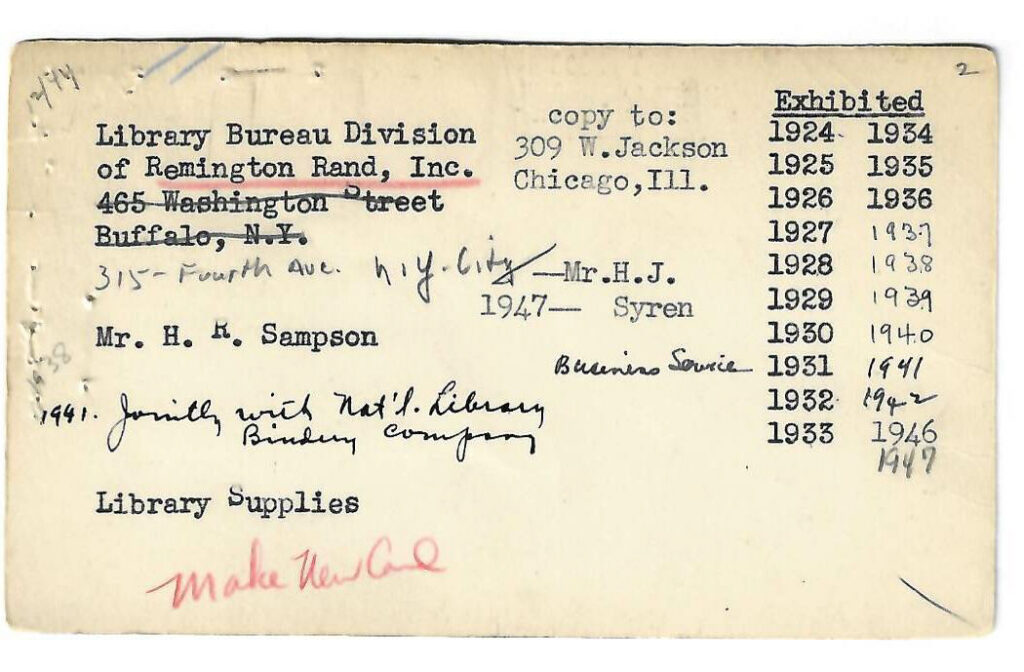
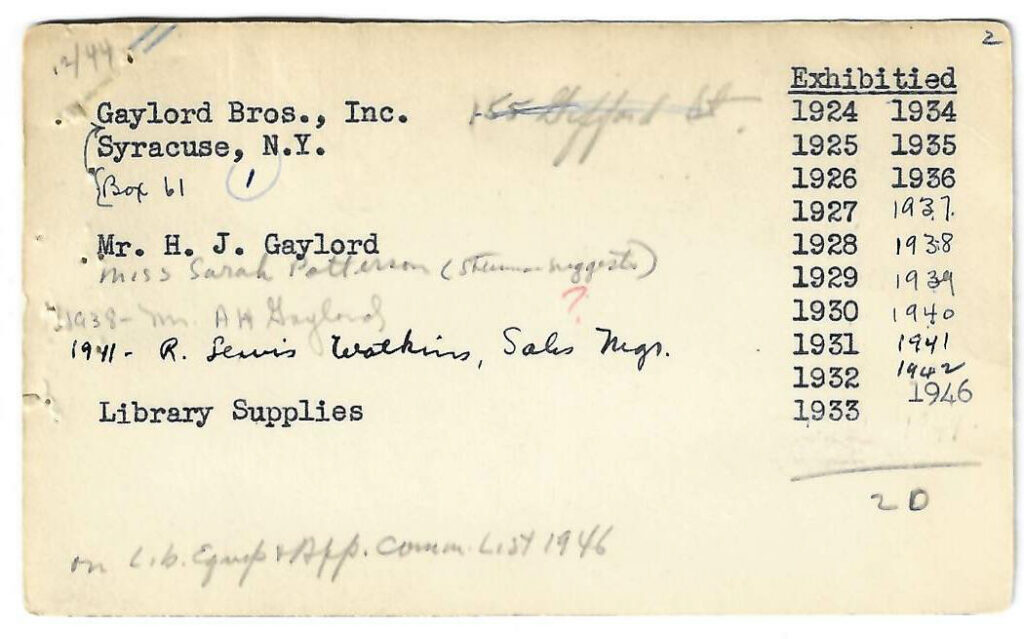
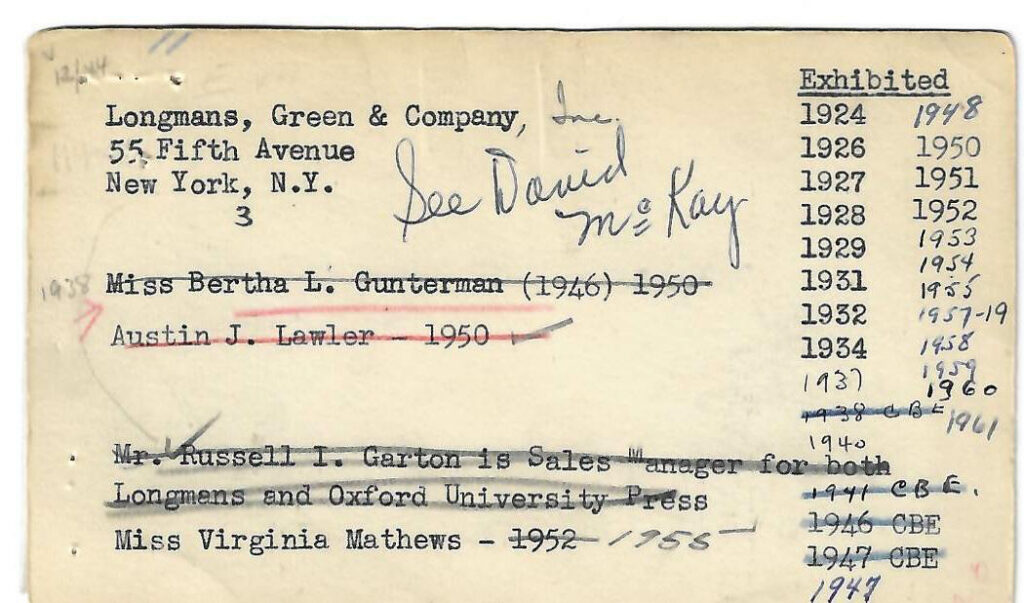
Although Conference directories from the early years mention that attendees should visit the exhibit hall, records on who exhibited early on are scarce. Index cards recording sales records indicate the companies exhibiting in 1924 at the Annual Conference include:
- Charles W. Clark, Co. Inc.
- R. Bowker, Co.
- New Method Book Bindery (later Bound to Stay Bound Books)
- Rand McNally
- W. Wilson
- F. Quarrie & Co. (World Book Encyclopedia)
- Oxford University Press
- The Macmillan Company
- Little, Brown & Co.
- B. Lippincott Company
- Library Bureau Division of Remmington-Rand Inc.
- The H.R. Huntting Company
- Gaylord Bros., Inc.
- Longman, Green & Company (British publishing house founded in 1724, making it one of the oldest in the UK, purchased by Pearson in the 1960’s)
Growth Through the Decades: Reflecting the Profession
One of the most remarkable things about the history of our exhibition is how faithfully it has mirrored the evolution of our field. In each decade, the exhibitors who filled our hall told the story of where our profession was heading.
The 1930s brought leaner times—fewer exhibitors, smaller booths—but the conference endured, and so did the commitment of longtime exhibitors who saw the conference as a partner, not merely a venue.
The postwar boom of the 1950s and 1960s ushered in an era of expansion. New companies, new technologies, and new categories of products transformed the exhibition hall into something genuinely exciting. ALA attendance swelled, exhibitor counts grew, the exhibition was carefully curated by Christopher Hoy. Known for an even hand in the management of the exhibition, he dedicated his career to building relationships and counted exhibitors as his friends. This era established many of the structural traditions—booth assignments, floor plans, programming alongside exhibits—that continue to shape our conference today.
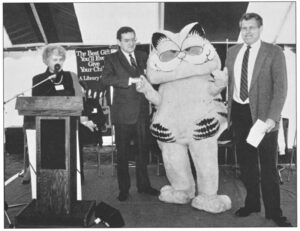
The 1970s and 80s introduced another wave of transformation, as computerization began to infiltrate every corner of professional practice. Exhibitors who had never existed before arrived on the scene with software, systems, and devices that seemed almost futuristic. Our exhibition became a place where members came not just to buy, but to learn—to witness firsthand what was coming next.
The exhibitors were not just a source of revenue for ALA, as members of the Exhibits Round Table (ERT), they were integrated into the day-to-day functioning and leadership of the association. ERT helped develop guidelines that kept the exhibit floor a balanced showcase of products and services. Their contributions included management of the silent auction, dedicated to the memory of Chris Hoy through an annual scholarship to help students attend the conference.
The Digital Revolution and the Modern Exhibition
No era reshaped the nature of exhibiting more dramatically than the digital revolution of the 1990s and 2000s. From CD-ROM’s to online resources and maker spaces to graphic novels exhibitors at our conference were at the vanguard of helping our members navigate growth and change, mirroring the change happening in their workplaces.
Booths became experiences. Product demonstrations grew more sophisticated. Exhibitors invested not just in floor space, but in programming — hosting workshops, sponsoring sessions, funding research, and partnering with our association in ways that went far beyond a simple transaction. The relationship between exhibitor and attendee matured into something more collaborative, more educational, and more enduring.
“The best exhibitors don’t just sell to our members — they learn from them, invest in them, and grow alongside them. That partnership is what has kept the association vibrant for 150 years.”
Today, our exhibition features hundreds of exhibitors representing every corner of our industry, from global corporations to innovative startups making their first appearance on our floor. Many of our longest-tenured exhibitors have been with us for decades, their presence at our conference as much a part of the tradition as the opening reception or opening general session.
Why Exhibitors Matter: More Than a Marketplace
It would be easy to describe the exhibition hall purely in economic terms — as a marketplace where supply meets demand, where vendors reach buyers. But that framing misses what our members and our exhibitors know to be true: the exhibition is something richer than a market.
Our exhibitors fund scholarships that support the next generation of professionals. They sponsor sessions that bring world-class speakers to our members. They conduct research in partnership with our association that advances the field. They provide tools and resources that practitioners rely on every day. And they show up—year after year—to our conference, because they believe in this community and its mission.
For many members, especially those early in their careers, the exhibition hall is where they first encounter the full landscape of their profession. It is where they discover tools they didn’t know existed, meet companies that will become long-term partners, and begin to understand the ecosystem in which they work. For veterans of the field, it is a place to reconnect with trusted partners and discover what’s new on the horizon.
For exhibitors, our conference offers something no other platform can: direct, meaningful access to a concentrated community of engaged professionals who are eager to learn, to adopt, and to advance. The relationships forged on our exhibition floor have resulted in products designed specifically for our members’ needs, innovations shaped by direct feedback, and partnerships that have lasted for generations.
This year, more than 650 organizations will exhibit at the Annual Conference; from databases to publishers and advocacy groups to zines and makerspaces, the exhibits will represent a true picture of what is happening in libraries today and in the future.
Voices from the Floor: Our Exhibitors Reflect
As we mark 150 years, we asked some of our long-standing exhibitors to reflect on what the conference means to them. Their words speak to a shared sense of purpose that goes well beyond the transactional.
“We’ve been exhibiting at this conference for over 30 years. In that time, we’ve watched our industry change completely — and this conference has been the place where we’ve both witnessed and driven that change alongside our customers. There’s nowhere else like it.”
“The conversations we have on this exhibition floor are irreplaceable. We leave every year with a clearer understanding of what our customers truly need. Our product roadmap has been shaped, again and again, by what we’ve heard in this hall.”
These sentiments echo across our exhibitor community. The conference is not simply a sales event. It is a forum—one that happens to have a floor full of products and innovations—where the future of our profession is actively being debated, demonstrated, and decided.
Looking Ahead: The Next 150 Years
As we celebrate this landmark anniversary, the exhibition hall continues to evolve. Sustainability has become a guiding value in how we design and manage the exhibition experience. New categories of exhibitors, in areas like data science, artificial intelligence, and emerging technologies, are joining longtime partners in shaping what the floor looks like today and will look like tomorrow.
But the core of what makes our exhibition exceptional has not changed: it is the people. The exhibitors who believe enough in this community to invest in it year after year. The members who walk the floor with curiosity and purpose. The conversations, the connections, and the collaborations that begin in our hall and ripple outward into our profession for years to come.
Here’s to 150 more years of innovation, partnership, and possibility—on the floor, and beyond it.
This post is part of our 150th Anniversary Series, celebrating the history, people, and milestones that have shaped our Annual Conference & Exhibition. The 2026 ALA Annual Conference and Exhibition will be held June 25-29 in Chicago.