150 YEARS STRONG

For 150 Years

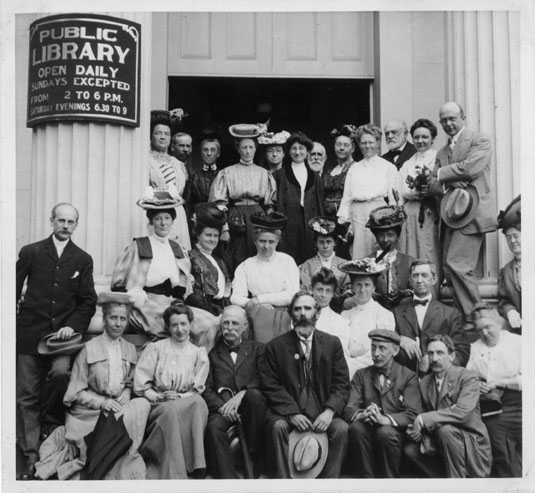
Librarians in Nantucket, Massachusetts, 1906. From the F. W. Faxon Collection in the ALA Archives.

For 150 years, the American Library Association (ALA) has stood as a guardian of knowledge, a champion of access, and a beacon for democracy. Founded in 1876 by visionary library workers who understood the transformative power of books and information, ALA has fostered a profession committed to collections, but also to communities, equity, and the promise of lifelong learning. Our history is filled with moments of courage, innovation, and advocacy that remind us how central libraries are to the fabric of American life.

Libraries have been, and remain, places of hope and possibility. They have carried books to soldiers in wartime, provided refuge and learning to children across every neighborhood, and adapted boldly in the face of societal and technological change. From hosting public lectures in the 19th century to offering digital literacy programs and community technology access today, libraries have continually evolved to meet the needs of their communities. They are spaces where every person, regardless of background, income, or circumstance, can encounter new ideas, challenge their assumptions, and engage with the world in informed, meaningful ways.

As we celebrate 150 years, we are called not only to reflect but to act. Our century-and-a-half legacy is a testament to the resilience and ingenuity of librarians and library workers everywhere. It reminds us that the work we do connects people with information, defends the freedom to read, and advocates for open and meaningful access to opportunity. Our work is vital now more than ever. Libraries serve as both repositories of knowledge and as active participants in civic life, fostering understanding, dialogue, and empathy in communities of all sizes.

This anniversary is an invitation: to imagine the libraries of tomorrow, to advocate fiercely for open access to knowledge, and to invest in the infrastructure, both digital and human, that makes libraries a foundation of thriving communities. Each of us has a role in shaping this next chapter, whether through innovation in our services, mentorship within our profession, or action in support of intellectual freedom. By embracing both tradition and transformation, we ensure that libraries remain vibrant centers of learning, creativity, and connection.

Together, we can ensure that libraries continue to transform lives, strengthen democracy, and serve as the heart of communities for generations to come. For 150 years, ALA has illuminated the path. Now, let us step forward with courage, compassion, and an unwavering commitment to the power of libraries. Let us embrace this milestone as a call to action: to protect access, to nurture curiosity, and to celebrate the extraordinary impact of libraries and the people who make them possible. The story of ALA is not just a rich and deep history; it is a living mission. It belongs to every member, every library, and every community we serve. And together, we will write the next 150 years.

ALA President Sam Helmick

Sam Helmick (they/them) is the 2025-2026 president of the American Library Association.
150 YEARS STRONG

Agenda for the Children’s Librarians Section on June 27, 1922, including the first presentation of the John Newbery Medal.

Newbery: The First Medal

In 1921, Frederic Melcher, a publisher, bookseller, and chairman of the Children’s Book Week Committee, proposed the idea of a medal to be awarded in recognition of children’s literature and for it to be named after John Newbery, an 18th century British bookseller and children’s books publisher. With a growing audience for children’s books, more librarians being trained in children services, and the emergence of children’s book departments in publishing companies, the time seemed right for such an award and the idea gained traction.

Caldecott Award Seal

The Caldecott Medal: ‘A Hasty Idea Thrown Out’

The Caldecott Medal is of one of the most prestigious children’s book awards in the world. Established in 1937 to recognize the most distinguished American picture book for children, the first medal was awarded in 1938 to Dorothy P. Lathrop for the book, “Animals of the Bible.” However, the idea was first presented in 1935 in a letter by Frederic G. Melcher.

Left: Effie Power with Newbery medal, Los Angeles, 1930. Right: Rachel Field and Milton J. Ferguson. Ferguson announced to Field that “Hitty” was chosen to receive the Newbery Medal. Los Angeles Conference, 1930.

Celebrating the Newbery: ‘Publicity of the Best Kind’

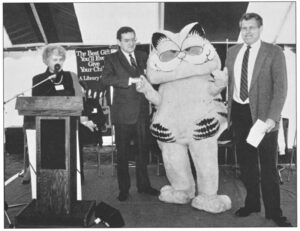
Publicity around the Newbery Medal has drummed up excitement amongst librarians, readers, and the public for the past century. Often this has meant events, press releases, newsletters, radio programming, television broadcasts, and newspaper and magazine articles. However, some publicity ideas were more daring than press conferences and radio programs.

Keynote speaker E.J. Josey speaking at the Martin Luther King, Jr. Holiday Observation and Sunrise Celebration at the 2000 ALA Midwinter Meeting in San Antonio.

‘The Spiritual High Point’: The Dr. MLK Holiday Observation and Sunrise Celebration

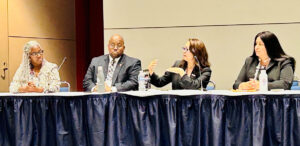
The Dr. Martin Luther King, Jr. Holiday Observation and Sunrise Celebration celebrates the life and legacy of Dr. King, featuring a keynote speaker, representatives from National Associations of Librarians of Color, the ALA President, and the singing of “We Shall Overcome.” The celebration started in 2000, but efforts to observe the MLK Jr. Holiday during ALA’s Midwinter Meeting started long before.

Sibert Medal

Twenty-Five Years of the Sibert Medal

As the American Library Association celebrates its 150th birthday this year, one of the Association’s prestigious book awards also reaches a milestone anniversary. For 25 years, the Robert F. Sibert International Book Medal has been awarded annually to the author(s) and illustrator(s) of the most distinguished non-fiction informational book published in the United States in English during the preceding year.

Present at the Creation

The first “congress of librarians” and the beginning of the American Library Association