On May 14, 1969, Carrie Coleman Robinson, a Black school librarian in Alabama, brought a landmark case to the U.S. District Court. After being passed over for a promotion, Robinson sued Alabama’s Department of Education alleging that she had been denied equal protection as a department employee because of her race. Robinson’s case, and long career as a librarian, reveals much about the Jim Crow South and librarianship in the civil rights era.
Carrie Coleman Robinson was born in Mississippi in 1906 and began her career as a librarian serving Black schools in South Carolina, Georgia, and Louisiana before settling in Alabama.[1] In 1946, she decided to continue her professional education. Unable to be admitted to the University of Alabama library school due to her race, Robinson enrolled in the University of Illinois master’s degree program in 1948. She returned to Illinois in 1953 to obtain a doctorate, but family issues and an advisor insisting she write her dissertation on a white school program in de facto segregated Indianapolis forced her back to Alabama.[2]
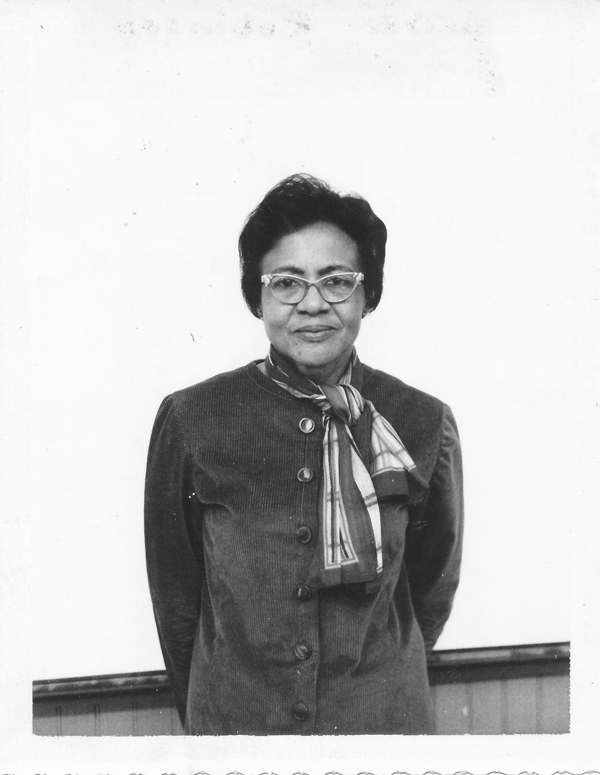
In 1962, Robinson was hired as Negro School Library Supervisor in Alabama’s Department of Education. In 1966, while serving in this position, federal funds became available to improve secondary school libraries across the nation. Alabama’s Department of Education list of viable candidates for a supervisor position excluded Carrie Robinson, despite her high qualifications, and the position went to an underqualified white person. It was later found that department officials routinely failed to advertise and recruit for applications from Black people compared to similarly situated white people.[3]
On May 14, 1969, she filed a complaint in the U.S. District Court, alleging that she had been denied equal protection as a department employee because of her race. On December 23rd of that year, the National Education Association (NEA) and the Alabama State Teachers Association filed a class action suit against the department on Robinson’s behalf. It was the first time the NEA filed a racial discrimination suit against a state department of education, and the only time it supported a school librarian.[4]
At the January 1970 American Library Association (ALA) Midwinter Meeting, a resolution commending NEA for its support of Robinson was introduced, and a notice of this resolution was sent to various library publications.[5] Neither the ALA nor the American Association of School Librarians (AASL) offered any further support, despite the urging of membership. On October 6, 1970, both parties in the Robinson case reached an agreement: Robinson was promoted to a higher-ranking role and received a salary increase, while the state agreed to pay all her legal fees.
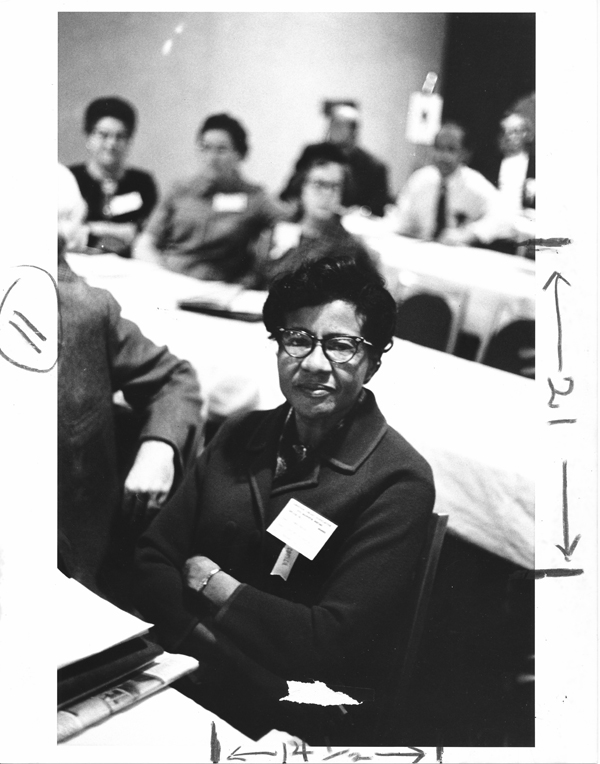
In 1969, Robinson was faced with another challenge, this time from AASL. The state of Alabama had received ESEA (Elementary and Secondary Education Act) funding and was planning on hosting a program about a Library Learning Center project at Jacksonville schools. AASL president, John Rowell, suggested the program instead occur at AASL’s annual conference. Three months into planning, AASL executive secretary, Lu Ouida Vinson, contacted Robinson asking her to serve on the, then all white, committee. Despite having regular contact with and being more qualified to speak on the issue than other committee members, this was the first she had heard of the program. Robinson refused the invitation and stated, “there is no school library development in Alabama that merits national recognition.” Due to her objections, AASL did not continue plans to host the program.[6]
Robinson also made waves in the library world through her support of free speech and social justice issues. She was one of the founding trustees of the Freedom to Read Foundation, a founder of the Alabama Association of School Librarians which supported Black school librarians during segregation, and served as a member of the ALA Council and the AASL Board of Directors. Despite this, Robinson has remained an obscured figure in library history. Robinson retired in 1975 and passed away in 2008, at age 102.[7]
This story first appeared on the ALA Archives blog on March 3, 2026.
[1] [1] Wayne A. Wiegand, “Separate—and Unequal: Carrie C. Robinson’s Story of Challenging Racism Still Resonates,” American Libraries, October 6, 2020. https://americanlibrariesmagazine.org/2020/10/06/separate-and-unequal-carrie-c-robinson-librarian-challenging-racism/
[2] [2] Wayne A. Wiegand, In Silence or Indifference: Racism and Jim Crow Segregated Public School Libraries, University Press of Mississippi, 2024, 176.
[3] Wiegand, In Silence or Indifference, 178.
[4] Ibid.
[5] “AASL Supports Carrie Robinson,” 1969, series 20/2/6, Box 4, Folder: Robinson, Mrs. Carrie, 1969-70, American Library Association Archives.
[6] “Carrie Robinson to Lu Ouida Vinson,”, October 22, 1969, series 20/2/6, Box 19, Folder: Joint Alabama-AASL Program at Detroit (cancelled), 1970, American Library Association Archives.
[7] Weigand, “Separate—and Unequal,” American Libraries, October 6, 2020.