

150 YEARS STRONG

ACRL: ALA’s First Division and a Home for Academic Library Workers

The Association of College and Research Libraries (ACRL) is the higher education association for academic libraries and library workers. In 1940, it also became the American Library Association’s (ALA) first formal division. But the road to unlocking division status was longer and more winding than you might imagine.

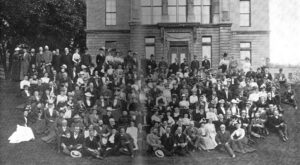
The journey started in 1889 when a group of 13 college librarians caucused at the ALA Annual Conference in St. Louis and recommended that an ALA group representing college libraries be formed. The following year, at the 1890 Annual Conference in the White Mountains of New Hampshire, 15 librarians representing most of the major colleges of the Eastern Seaboard, including Harvard, Yale, Columbia, the Massachusetts Institute of Technology, and Brown, held the first meeting of the ALA College Library Section. The new section was a small, relatively informal discussion group with meetings that were mostly attended by administrators who could afford long-distance travel. The annual meetings of the section, the precursor to the current ACRL Conference, provided a forum for the presentation and discussion of papers on such topics as reference work, cataloging, departmental collections, union lists, and so on.

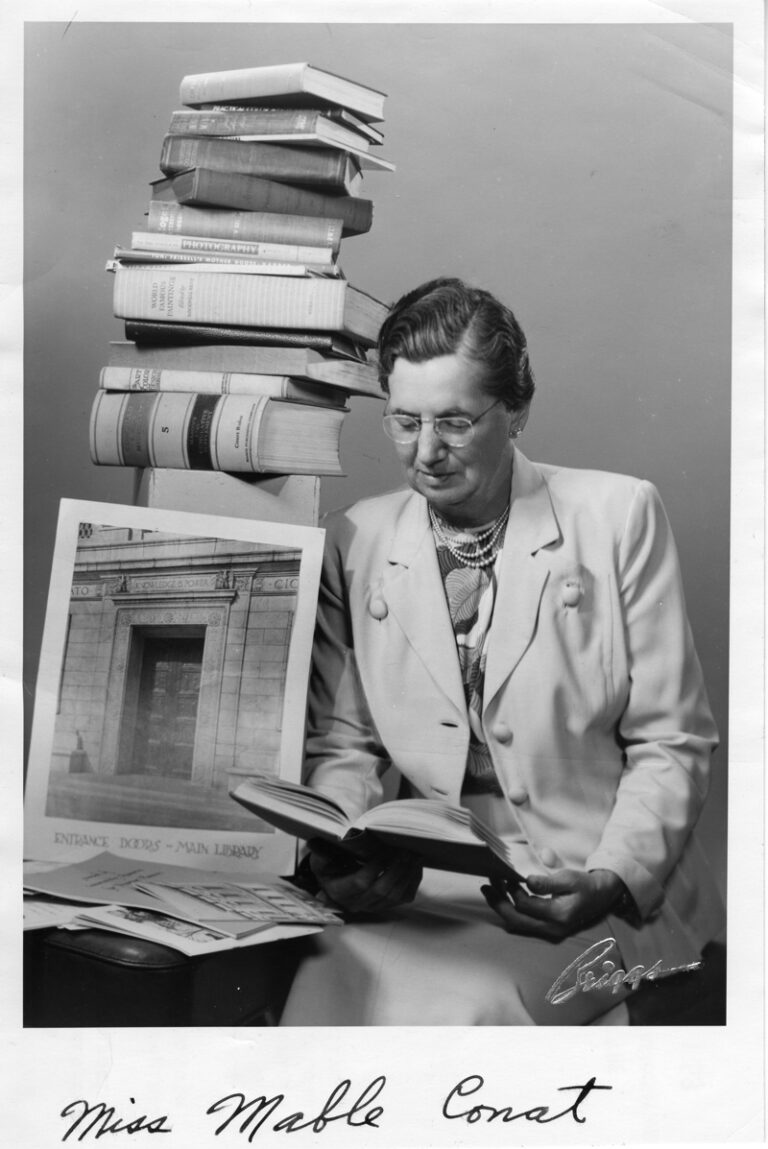
Mabel L. Conat, ACRL president in 1942-1943
Mabel L. Conat, ACRL president in 1942-1943, from the ALA Archives.

In 1897, the section acquired a new name, the College and Reference Library Section, to recognize the participation of reference librarians. By 1923, the section took a step toward becoming a more formal entity with the adoption of its own bylaws. The new bylaws established a Board of Management with three officers to conduct the business of the section between in-person meetings and provided for the levying of annual membership dues of 50 cents. During the 1920s, attendance at section meetings grew from 90 in 1923 to 240 in 1926 and peaked at 800 in 1928. 

In the 1920s and 1930s, pressure began to build in the academic library profession for the creation of a stronger professional organization capable of undertaking a broad range of activities, programs, research, and publications. The occasion for a radical restructuring of the section came in the mid-1930s when ALA roundtables representing teachers, college librarians, and junior college librarians expressed the desire to affiliate with the College and Reference Library Section. In 1936, the chair of the section appointed a Committee on Reorganization to develop plans for restructuring. The final report of the committee in 1938 recommended the adoption of new bylaws that would transform the section into an Association of College and Reference Libraries with full autonomy over its own affairs. The new bylaws provided for the creation of subsections for college libraries, junior college libraries, teachers college libraries, university libraries, and other groups that might wish to affiliate.

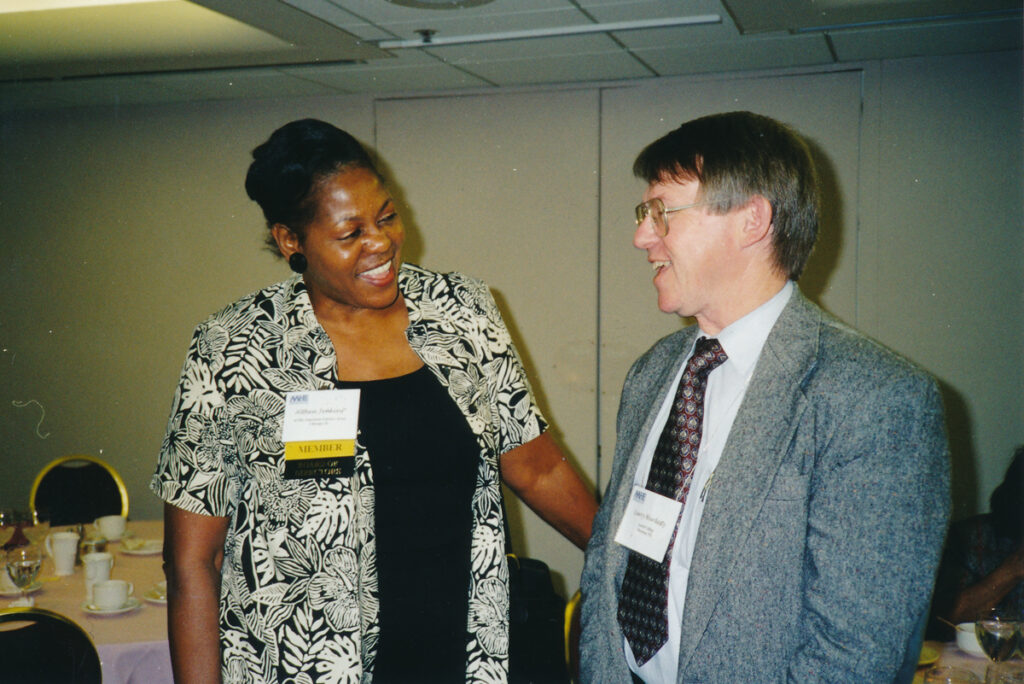
From left: Althea Jenkins, ACRL Executive Director, and Larry Hardesty, ACRL President, at the ACRL/American Association of Higher Education (AAHE) Provost's Forum, held during the AAHE National Conference in Anaheim, California in 2001.
From left: Althea Jenkins, ACRL Executive Director, and Larry Hardesty, ACRL President, at the ACRL/American Association of Higher Education (AAHE) Provost's Forum, held during the AAHE National Conference in Anaheim, California in 2001. From the ALA Archives.

The section approved the proposed bylaws in June 1938 and officially became the Association of College and Reference Libraries by the end of the year. The ALA Council responded by ratifying a new ALA constitution that made provision for the creation of self-governing divisions within ALA. The Association of College and Reference Libraries swiftly prepared a new constitution to meet the conditions for division status, and the ALA Council recognized the Association of College and Reference Libraries as ALA’s first division on May 31, 1940.

The Association of College and Reference Libraries embarked on this new life with six subsections: Agricultural Libraries Section, College Libraries Section, Junior College Libraries Section, Librarians of Teacher Training Institutions Section, Reference Libraries Section, and University Libraries Section. When the Reference Libraries Section departed to join ALA’s newly formed Library Reference Services Division in 1956, ACRL substituted “Research” for “Reference” in its name and became the now-familiar ACRL.

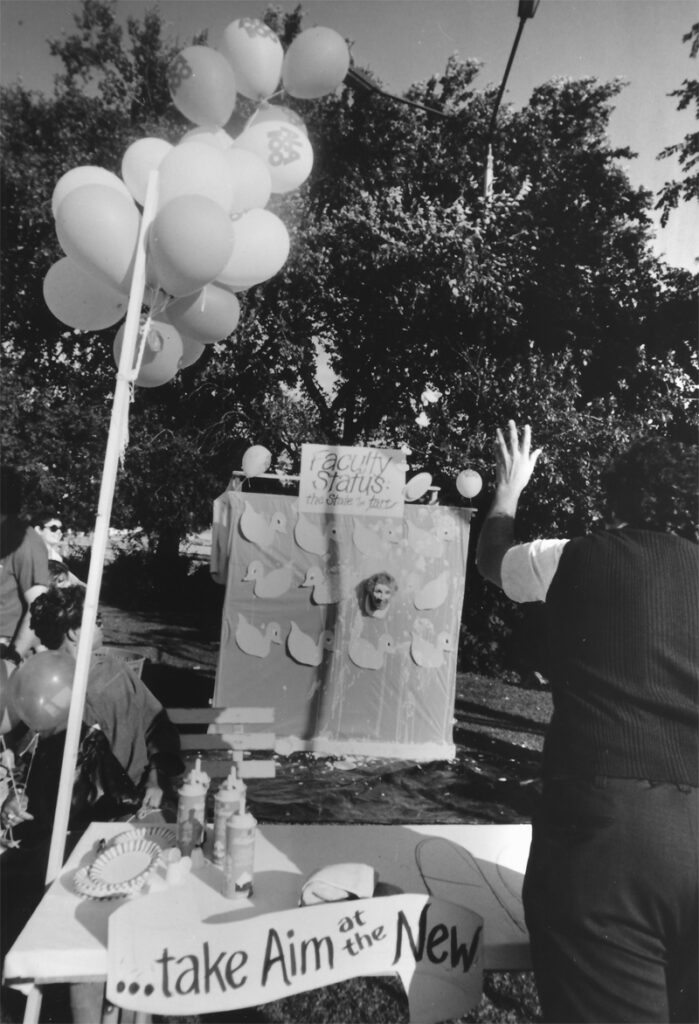
Former ACRL president, Norm Tanis, at a pie throwing booth for ACRL's booth at the 1976 Annual Conference.
Former ACRL President Norm Tanis at an ACRL pie-throwing booth at the 1976 ALA Annual Conference. From the ALA Archives.

From these humble origins, ACRL has grown by leaps and bounds to represent all types of academic library workers and libraries—community and junior college, college, and university—as well as specialized research libraries. There have been many changes over the years, including the naming of ACRL’s first executive secretary in 1947 and the founding of the Choice publishing unit in 1963, but the division stays true to its founding mission by evolving and adapting to meet the needs of the academic library community.


This post is adapted from “ACRL and Choice History,” published on the ACRL website.

150 YEARS STRONG

THE OFFICIAL ANNIVERSARY BLOG

1907 postmarked postcard of the Chicago Public Library

Why Chicago? ALA Headquarters, 1909

Ask most ALA members why the Association’s headquarters is in Chicago, they’re likely to guess “center of the country.” Not so. ALA headquarters is in Chicago because in 1909 a group of Midwest librarians representing the interests of small public libraries outmaneuvered eastern librarians representing large library interests to wrest control of the Association the latter had held since 1876.

oral histories at the ala archive graphic

Oral Histories at the ALA Archives

Alongside written records, photographs, and publications, the American Library Association Archives also holds more than 150 interviews of librarians and library workers. These stories provide context to their lives and careers, how their experiences and education shaped their librarianship, and how certain events shaped their personal and professional lives.

Detail from National Climate Action Strategy

How Sustainability Became a Core Value of ALA

The adoption of sustainability as a core value shows what’s possible when dedicated ALA members take the time to listen, learn, evolve, and chart a new path forward, strengthening our ability to remain relevant and responsive for another 150 years.

Theresa West Elmendorf. Photo courtesy of the ALA Archive.

Madam President

Before women were allowed to vote in U.S. elections, the American Library Association (ALA) found its leadership in Theresa West Elmendorf. In 1911, more than 30 years after the founding of ALA, Elmendorf was elected the first female president of the Association.

How I Library podcast with Wayne Wiegand

Explore ALA and Library History with Wayne Wiegand

In a special episode of ALA’s “How I Library” podcast, show host and I Love Libraries editor Phil Morehart speaks with library historian and author Wayne Wiegand about the beginnings of ALA as the Association celebrates its 150th anniversary.

Carrie Robinson

ALA Hidden Figures: Carrie Robinson

On May 14, 1969, Carrie Coleman Robinson, a Black school librarian in Alabama, brought a landmark case to the US District Court. After being passed over for a promotion, Robinson sued Alabama’s Department of Education alleging that she had been denied equal protection as a department employee because of her race. Robinson’s case, and long career as a librarian, reveals much about the Jim Crow South and librarianship in the civil rights era.