As the American Library Association (ALA) celebrates its 150th birthday this year, one of the Association’s prestigious book awards also reaches a milestone anniversary.
For 25 years, the Robert F. Sibert Informational Book Medal has been awarded annually to the author(s) and illustrator(s) of the most distinguished non-fiction informational book published in the United States in English during the preceding year.
Informational books are those written and illustrated to present, organize, and interpret verifiable, factual material for children. There are no limitations as to the character of the book, although poetry and traditional literature are not eligible.
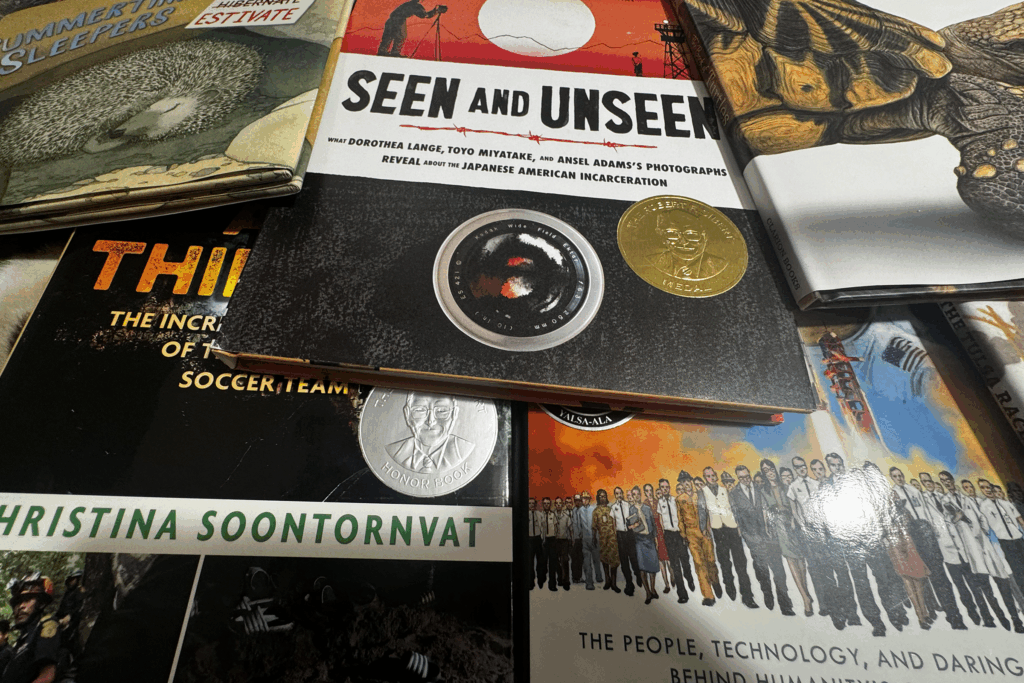
The first Sibert Medal was awarded in 2001 to “Sir Walter Ralegh and the Quest for El Dorado” by Marc Aronson. The following years have seen a plethora of important books awarded and honored, including:
“Black Potatoes: The Story of the Great Irish Famine, 1845-1850” by Susan Campbell Bartoletti, in 2002
“The Voice that Challenged a Nation: Marian Anderson and the Struggle for Equal Rights” by Russell Freedman, in 2005
“Team Moon: How 400,000 People Landed Apollo 11 on the Moon” by Catherine Thimmesh, in 2007
“We Are the Ship: The Story of Negro League Baseball” by Kadir Nelson, in 2009
“Balloons over Broadway: The True Story of the Puppeteer of Macy’s Parade” by Melissa Sweet, in 2012
“The Right Word: Roget and His Thesaurus,” written by Jen Bryant, illustrated by Melissa Sweet, in 2015
“March: Book Three, written by John Lewis and Andrew Aydin,” and illustrated by Nate Powell, in 2017
“Fry Bread: A Native American Family Story,” written by Kevin Noble Maillard and illustrated by Juana Martinez-Neal, in 2020
“Seen and Unseen: What Dorothea Lange, Toyo Miyatake, and Ansel Adams’s Photographs Reveal About the Japanese American Incarceration,” written by Elizabeth Partridge and illustrated by Lauren Tamaki, in 2023
“Life after Whale: The Amazing Ecosystem of a Whale Fall,” written by Lynn Brunelle and illustrated by Jason Chin, in 2025
The Sibert Medal is administered by the Association for Library Service to Children (ALSC), a division of ALA, and is announced every January during ALA’s Youth Media Awards, one of the most prestigious events in the world of publishing, honoring authors and illustrators of books for young readers annually.
Who Was Sibert?
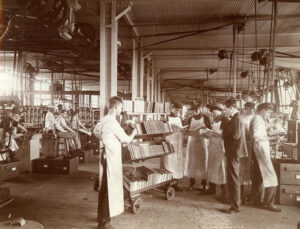
The Sibert Award is named in honor of Robert F. Sibert, the long-time president of Bound to Stay Bound (BTSB) Books, Inc. of Jacksonville, Illinois. Robert F. Sibert distinguished himself within ALA through his early work in establishing standards for book binding.
Making informational books available for young readers was a passionate cause for Sibert.
“Informational books are absolutely essential for school and public libraries as they help young people explore the world around them,” said Sibert. “It is only fitting that there be an award that encourages excellence in these types of books.”
In addition to the medal, Sibert’s support of the library profession—and library education in particular—lives on through the BTSB Scholarship. The annual scholarship, sponsored by BTSB and established in 1984, provides financial assistance in the form of annual awards for the education of individuals who intend to pursue an MLS or advanced degree and who plan to work in the area of library service to children.
Sibert’s son, Robert “Bob” L. Sibert, the third-generation leader of the family-owned library binding company, says the medal is a continuation of his father’s lifelong work.
“My father lived, breathed and dreamed children’s books,” says Bob Sibert. “I can’t think of a tribute he would have been prouder of than to have his name forever associated with the great authors who I know will win this award.”
You can learn more about the award and browse a full list of award winners and honor books here.