150 YEARS STRONG

For 150 Years

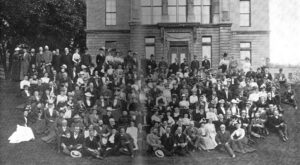
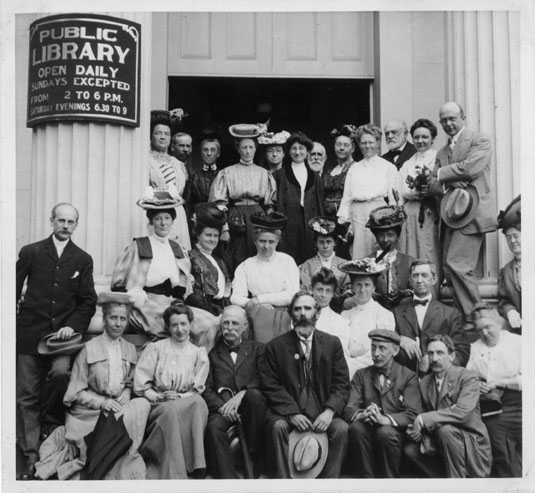
Librarians in Nantucket, Massachusetts, 1906. From the F. W. Faxon Collection in the ALA Archives.

For 150 years, the American Library Association (ALA) has stood as a guardian of knowledge, a champion of access, and a beacon for democracy. Founded in 1876 by visionary library workers who understood the transformative power of books and information, ALA has fostered a profession committed to collections, but also to communities, equity, and the promise of lifelong learning. Our history is filled with moments of courage, innovation, and advocacy that remind us how central libraries are to the fabric of American life.

Libraries have been, and remain, places of hope and possibility. They have carried books to soldiers in wartime, provided refuge and learning to children across every neighborhood, and adapted boldly in the face of societal and technological change. From hosting public lectures in the 19th century to offering digital literacy programs and community technology access today, libraries have continually evolved to meet the needs of their communities. They are spaces where every person, regardless of background, income, or circumstance, can encounter new ideas, challenge their assumptions, and engage with the world in informed, meaningful ways.

As we celebrate 150 years, we are called not only to reflect but to act. Our century-and-a-half legacy is a testament to the resilience and ingenuity of librarians and library workers everywhere. It reminds us that the work we do connects people with information, defends the freedom to read, and advocates for open and meaningful access to opportunity. Our work is vital now more than ever. Libraries serve as both repositories of knowledge and as active participants in civic life, fostering understanding, dialogue, and empathy in communities of all sizes.

This anniversary is an invitation: to imagine the libraries of tomorrow, to advocate fiercely for open access to knowledge, and to invest in the infrastructure, both digital and human, that makes libraries a foundation of thriving communities. Each of us has a role in shaping this next chapter, whether through innovation in our services, mentorship within our profession, or action in support of intellectual freedom. By embracing both tradition and transformation, we ensure that libraries remain vibrant centers of learning, creativity, and connection.

Together, we can ensure that libraries continue to transform lives, strengthen democracy, and serve as the heart of communities for generations to come. For 150 years, ALA has illuminated the path. Now, let us step forward with courage, compassion, and an unwavering commitment to the power of libraries. Let us embrace this milestone as a call to action: to protect access, to nurture curiosity, and to celebrate the extraordinary impact of libraries and the people who make them possible. The story of ALA is not just a rich and deep history; it is a living mission. It belongs to every member, every library, and every community we serve. And together, we will write the next 150 years.

ALA President Sam Helmick

Sam Helmick (they/them) is the 2025-2026 president of the American Library Association.

150 YEARS STRONG

THE OFFICIAL ANNIVERSARY BLOG

ALA posters

Posters of Progress: Mapping ALA’s History Through Library Poster Art

From wartime appeals to celebrity-studded reading campaigns, library posters have long captured the evolving role of libraries in American life. This feature traces ALA’s history through some of its most iconic visuals. Together, these images chart a story of the profession’s unflinching ideals of access, literacy, and intellectual freedom, showcasing how libraries continue to reimagine their place in public life.

An index card tracking an ALA conference exhibition hall exhibitor from 1924-1947.

The Heartbeat of the Hall: 150 Years of Exhibitors Who Shaped Our Conference

Every year as the doors of ALA’s Annual Conference and Exhibition swing open, the exhibition hall comes alive. It is a ritual that has been repeated, refined, and reimagined throughout ALA’s 150-year history. And at the center of it all, providing the innovations, solutions, and partnerships that have propelled our profession forward, are the exhibitors. To mark this milestone, we look back at the rich history of exhibitors at the conference—where it began, how it grew, and why, 150 years on, the exhibition floor remains one of the most vital spaces in our professional world.

Librarian at the Reference Desk in Camp Johnston Library, from the ALA Archives.

Charles R. Green at Camp Johnston: ‘We Can Find Such a Man’

During the summer of 1918, Charles Green, a librarian from the Massachusetts Agriculture College, served as the Acting Librarian for Camp Johnston in Jacksonville, Florida. While his tenure was brief, the Charles R. Green Papers in the American Library Association (ALA) Archives reveal Green’s rapid appointment and promotion. It also shows how quickly circumstances could change within the ALA’s Library War Service and the adaptability of its volunteers.

Detail of letter from Lynn Blaylock to the Intellectual Freedom Committee.

‘Nothing Could Have Astonished Me More’: The Challenge of Consumer Reports

Due to communist hysteria before and after World War II, many organizations and publications were under suspicion of being affiliated with or promoting the Communist party, including Consumers Union, publisher of Consumer Reports, the product testing and consumer advocacy magazine. As a result, Ohio schools banned the use of Consumer Reports in the classroom. While the ban was short-lived, the questions about it were not and the ALA Intellectual Freedom Committee noticed the attempts to ban the publication.

A detail from the Library Bill of Rights, 1967.

The History of the LeRoy C. Merritt Humanitarian Fund

To financially support librarians who have been denied employment rights or discriminated against on the basis of gender, sexual orientation, race, color, creed, religion, age, disability, or place of national origin or denied employment rights because of their defense of intellectual freedom, ALA created the LeRoy C. Merritt Humanitarian Fund, named in honor of a staunch defender of intellectual freedom and editor of ALA’s Newsletter on Intellectual Freedom.