150 YEARS STRONG

The Sesquicentennial

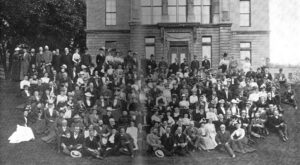
During the Centennial Exposition in Philadelphia in 1876, 103 librarians (90 men and 13 women) responded to a call for a “Convention of Librarians,” held October 4-6 at the Historical Society of Pennsylvania. The aim of the Association, in that resolution, was “to enable librarians to do their present work more easily and at less expense.” Attendees came from as far west as Chicago and even from England, and those who signed the register at the end of the two-day conference became charter members of the newly-formed American Library Association.

Now that we are firmly in the 21st century, and looking towards commemorating ALA’s sesquicentennial anniversary, we are given the opportunity to revisit and reflect on the many moments in ALA history that have impacted librarianship. ALA has been at the forefront of the library profession, and has also fallen short of the ideals of its mission. The Sesquicentennial is a space to revisit ALA’s history and to explore the potential directions of its future. It will host both updates on upcoming anniversary projects, and deep-dives into ALA’s history.

Now that we are firmly in the 21st century, and looking towards commemorating ALA’s sesquicentennial anniversary, we are given the opportunity to revisit and reflect on the many moments in ALA history that have impacted librarianship. 

Stay tuned to The Sesquicentennial for 150th commemoration updates and highlights from ALA’s long and impactful history. If you would like us to explore a specific moment or topic of ALA’s history in a future post, please email us.
150 YEARS STRONG

THE OFFICIAL ANNIVERSARY BLOG

1907 postmarked postcard of the Chicago Public Library

Why Chicago? ALA Headquarters, 1909

Ask most ALA members why the Association’s headquarters is in Chicago, they’re likely to guess “center of the country.” Not so. ALA headquarters is in Chicago because in 1909 a group of Midwest librarians representing the interests of small public libraries outmaneuvered eastern librarians representing large library interests to wrest control of the Association the latter had held since 1876.

oral histories at the ala archive graphic

Oral Histories at the ALA Archives

Alongside written records, photographs, and publications, the American Library Association Archives also holds more than 150 interviews of librarians and library workers. These stories provide context to their lives and careers, how their experiences and education shaped their librarianship, and how certain events shaped their personal and professional lives.

Detail from National Climate Action Strategy

How Sustainability Became a Core Value of ALA

The adoption of sustainability as a core value shows what’s possible when dedicated ALA members take the time to listen, learn, evolve, and chart a new path forward, strengthening our ability to remain relevant and responsive for another 150 years.

Theresa West Elmendorf. Photo courtesy of the ALA Archive.

Madam President

Before women were allowed to vote in U.S. elections, the American Library Association (ALA) found its leadership in Theresa West Elmendorf. In 1911, more than 30 years after the founding of ALA, Elmendorf was elected the first female president of the Association.

How I Library podcast with Wayne Wiegand

Explore ALA and Library History with Wayne Wiegand

In a special episode of ALA’s “How I Library” podcast, show host and I Love Libraries editor Phil Morehart speaks with library historian and author Wayne Wiegand about the beginnings of ALA as the Association celebrates its 150th anniversary.

Carrie Robinson

ALA Hidden Figures: Carrie Robinson

On May 14, 1969, Carrie Coleman Robinson, a Black school librarian in Alabama, brought a landmark case to the US District Court. After being passed over for a promotion, Robinson sued Alabama’s Department of Education alleging that she had been denied equal protection as a department employee because of her race. Robinson’s case, and long career as a librarian, reveals much about the Jim Crow South and librarianship in the civil rights era.