150 YEARS STRONG

Call for a Library Conference: The 1876 ALA Conference

In March 1876, an anonymous letter was sent to the London publication, Academy, noting that it was strange “that no attempt should have been make to convene a Congress of librarians.” The letter was then reprinted in Publishers’ Weekly by Frederick Leypoldt and mentioned again in an issue of the Nation. From there the idea picked up momentum, drawing the attention of highly regarded librarians such as Melvil Dewey.

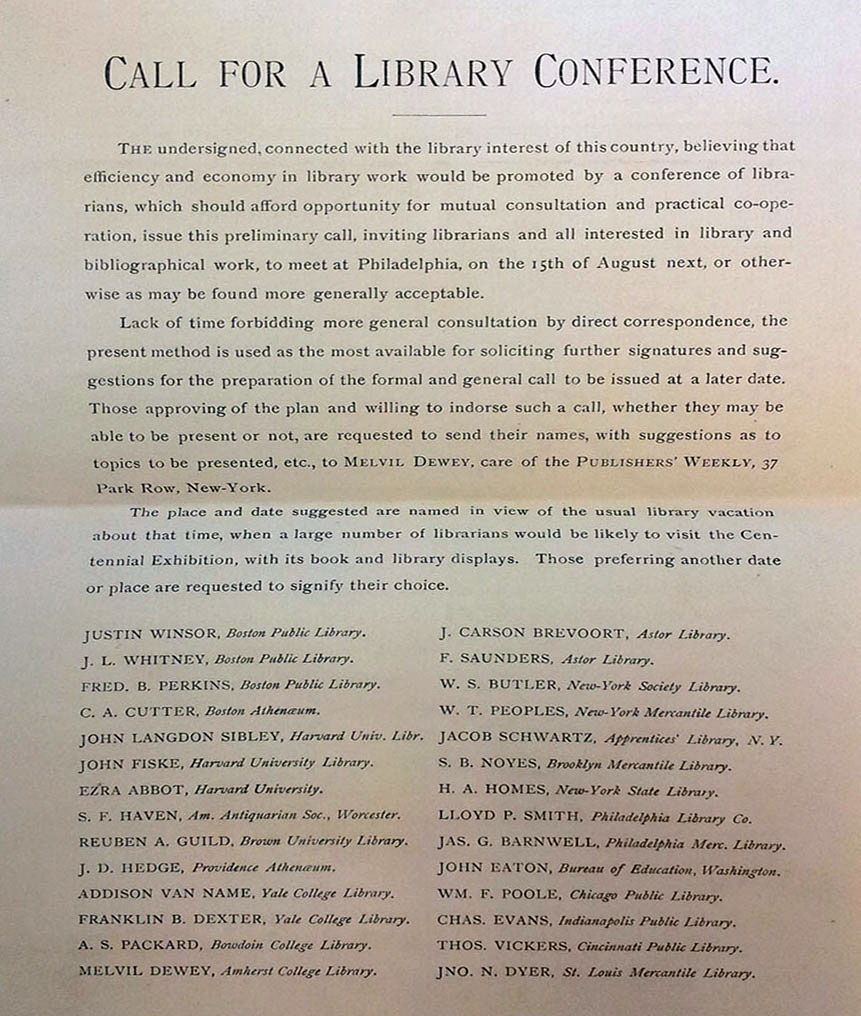
Conference organizers placed a “Call for a Library Conference” in various journals. Although the first call was met with varying degrees of support, by the time a second call was circulated in July, the idea garnered more enthusiasm and prominent librarians – initially hesitant to add their names – threw in their support.

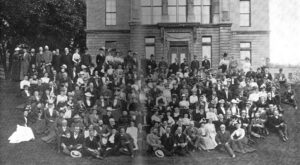
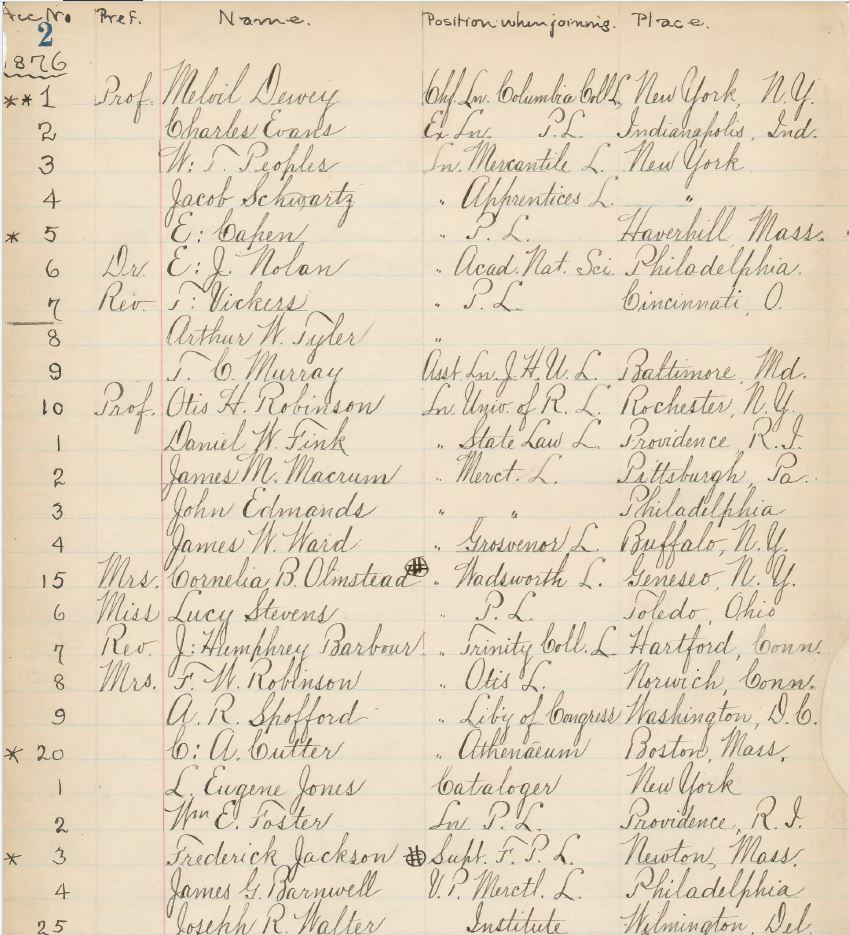
The conference was held October 4-6, 1876, at the Historical Society of Pennsylvania in Philadelphia. Hosted during Philadelphia’s Centennial Exposition, the conference boasted 103 librarians in attendance and provided an opportunity for librarians to exchange ideas. Dewey introduced his cataloging system, Samuel S. Green advocated for closer relationships between librarians and the public, and Lloyd P. Smith lauded the qualifications of a librarian, “A librarian should be a veritable helluo librorum, a devourer of literature from his youth up, consumed by an insatiable thirst for knowledge, and interested in a wide range of subjects.”

“A librarian should be a veritable helluo librorum, a devourer of literature from his youth up, consumed by an insatiable thirst for knowledge, and interested in a wide range of subjects.”

A resolution was passed to form the American Library Association on the final day of the conference, and a Committee on Permanent Organization put forth a constitution for a permanent association. James Barnwell, director of the Mercantile Library Company of Philadelphia, motioned for the following preamble to be added to the constitution:

“For the purpose of promoting the library interests of the country, and of increasing reciprocity of intelligence and good-will among librarians and all interested library economy and bibliographical studies, the undersigned form themselves into a body to be known as the American Library Association.”

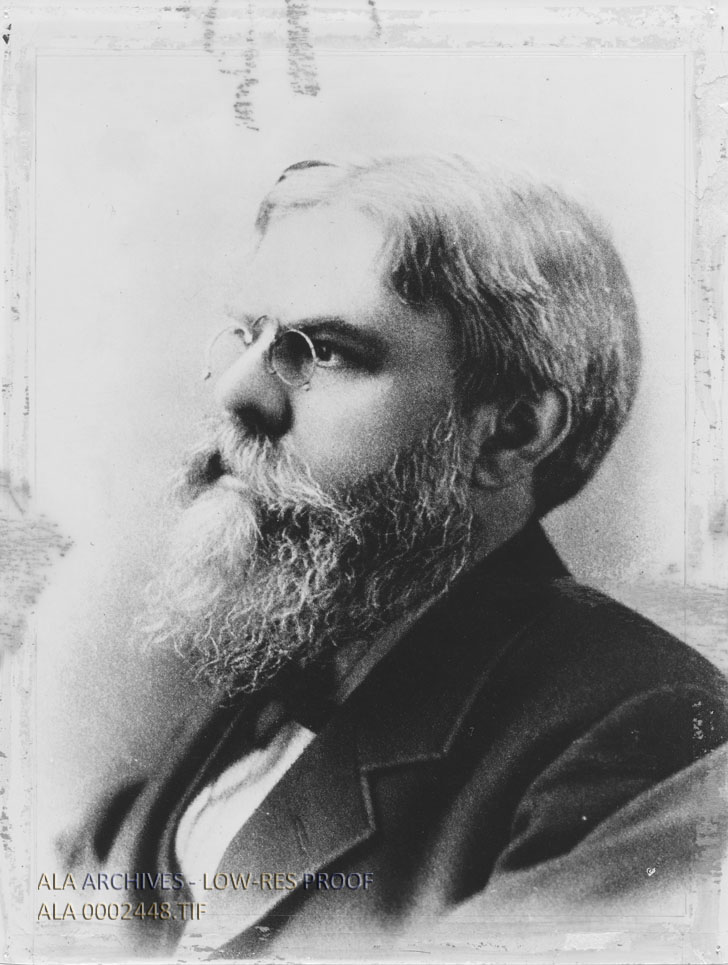
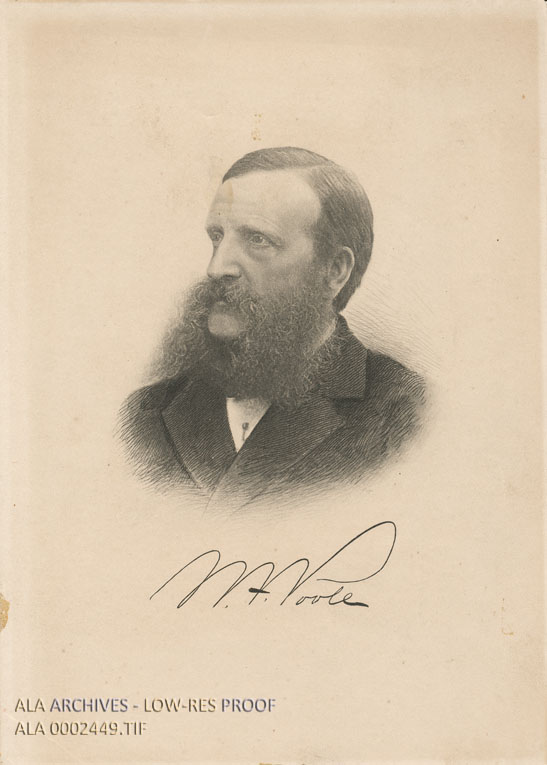
A list of officers was established for the new association, with Justin Winsor as the first ALA president; A.R. Spofford, William Poole, and Henry Homes as the vice-presidents; and Melvil Dewey was named as secretary and treasurer. Their primary function was to organize and call future meetings, though one of the first things Winsor did as president, on the behest of Dewey, was establish a Committee on the Size of Books.

The proceedings of the 1876 conference concluded with, “And thus ended, with pleasant words and good cheer, the Centennial Conference of Librarians.”[5] With this optimistic conclusion to the conference, the founding members of the ALA achieved what the attendees of the 1853 Librarians’ Convention had failed to do; create a permanent professional library association. Still, in 1876, these librarians could not have imagined the enormity of their actions or even that the association would persist 150 years later.

An unabridged version of this post is available on the ALA Archives blog, and was originally published on June 24, 2016.

150 YEARS STRONG

THE OFFICIAL ANNIVERSARY BLOG

Henry and Edith Carr

Henry and Edith Carr, ALA’s Golden Couple

With Valentine’s Day approaching, we remember possibly the most famous ALA couple of all time, Henry and Edith Wallbridge Carr. Married for 43 years and active in ALA for even longer, the Carrs were well-known within the library community of the late 19th and early 20th century. Where did their romance begin? At an ALA conference, of course!

detail of 1976 ALA conference program logo

A Short History of the ALA Logo

The first American Library Association (ALA) logo appeared as the Association launched its Library War Service during World War I, with many more iterations following over the course of almost 100 years.

detail of Richmond ALA COnference program

Librarians, Segregated: The 1936 ALA Annual Conference

Stanley J. Kunitz, editor of the Wilson Bulletin, called it the “The Spectre at Richmond” —but the racial discrimination at the 1936 American Library Association Annual Conference was no ghostly apparition

Detail of letter from Virginia Hamilton to Anne Izard, February 24, 1972.

Newbery: Letters from the Authors

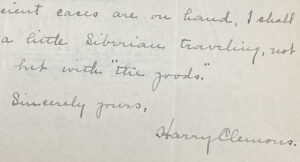
For more than a century, the American Library Association has honored children’s authors with the John Newbery Medal. From the earliest years of the award, its prestige was not lost upon the authors who received it. Letters written by awardees to the Newbery Medal Committee chairs reveal their excitement upon receiving the news.

Agenda for the Children’s Librarians Section on June 27, 1922, including the first presentation of the John Newbery Medal.

Newbery: The First Medal

In 1921, Frederic Melcher, a publisher, bookseller, and chairman of the Children’s Book Week Committee, proposed the idea of a medal to be awarded in recognition of children’s literature and for it to be named after John Newbery, an 18th century British bookseller and children’s books publisher. With a growing audience for children’s books, more librarians being trained in children services, and the emergence of children’s book departments in publishing companies, the time seemed right for such an award and the idea gained traction.

Caldecott Award Seal

The Caldecott Medal: ‘A Hasty Idea Thrown Out’

The Caldecott Medal is of one of the most prestigious children’s book awards in the world. Established in 1937 to recognize the most distinguished American picture book for children, the first medal was awarded in 1938 to Dorothy P. Lathrop for the book, “Animals of the Bible.” However, the idea was first presented in 1935 in a letter by Frederic G. Melcher.