150 YEARS STRONG

ALA Wants to Hear from You During Its 150th Anniversary

The American Library Association (ALA) is seeking website and podcast contributions from ALA members as it celebrates its 150th anniversary in 2026.

We want stories from members that reflect their experiences with ALA, its legacy, and its history to be featured here at ala150.org and for an ALA oral-history audio series that will be broadcast on ALA’s How I Library podcast. These should be stories about the people, policies, and pivotal moments that shaped the Association, its core values (Access, Equity, Intellectual Freedom and Privacy, Public Good, Sustainability), and our country’s libraries.

These can be personal memories and/or researched stories that reflect the following themes:

    • Pivotal people and moments in ALA history—past, present, or future
    • Policy and impact: What has changed for libraries or communities
    • Member milestones: How ALA shaped your work and vice versa
    • Lessons learned: A reckoning with constructive next steps for ALA and its future

Or perhaps you’d like to share something but aren’t quite sure where to begin. Consider these prompts to kickstart some ideas about your time at ALA and/or ALA’s past, present, and future.

    • What happened? Why did it matter? What changed?
    • Who was affected and how do we know?
    • What should future ALA members remember or do differently?
Share your chapter in ALA's 150-year history. Pictured

You’ve got your idea. Great! Now what?

Please email a brief story pitch (approximately one paragraph in length) detailing your idea, whether its for ala150.org or the podcast, sources (if applicable), and any other pertinent information to Phil Morehart (pmorehart@ala.org) at the American Library Association.

Will you acknowledge receiving my story idea?

Story ideas will be acknowledged upon receipt.

When will I hear if my idea is accepted?

Confirmation or rejection of story idea and next steps, if applicable, will follow in 1-2 weeks.

What is the website and podcast’s style? What are you looking for in regards to tone?

Informal, but informative. Your stories must be inviting, engaging, and readable/listenable, with all statements backed by responsible research, if applicable. The Chicago Manual of Style (15th ed.) supplemented by specific ALA style will be used in editing articles for publication on the website.

How much editing should I expect?

On accepted website stories, ALA will retain the right to make editorial revisions, deletions, or additions that in their opinion support the article’s focus. Editors will make every possible effort to review copy with the author prior to publication, especially regarding any proposed substantive changes.

For the podcast, How I Library producer/host Phil Morehart will work with submitters to craft an engaging audio segment.

How long should my ala150 story be?

Stories should be 600–1,500 words in length and will be published on the website’s blog during the course of ALA’s 150th celebration year.

Would you like images to accompany the story?

Yes! If possible, please submit large photos and/or artwork (at 72 dpi) to accompany each story.

Thanks! We look forward to hearing from you!
150 YEARS STRONG

Agenda for the Children’s Librarians Section on June 27, 1922, including the first presentation of the John Newbery Medal.

Newbery: The First Medal

In 1921, Frederic Melcher, a publisher, bookseller, and chairman of the Children’s Book Week Committee, proposed the idea of a medal to be awarded in recognition of children’s literature and for it to be named after John Newbery, an 18th century British bookseller and children’s books publisher. With a growing audience for children’s books, more librarians being trained in children services, and the emergence of children’s book departments in publishing companies, the time seemed right for such an award and the idea gained traction.

Caldecott Award Seal

The Caldecott Medal: ‘A Hasty Idea Thrown Out’

The Caldecott Medal is of one of the most prestigious children’s book awards in the world. Established in 1937 to recognize the most distinguished American picture book for children, the first medal was awarded in 1938 to Dorothy P. Lathrop for the book, “Animals of the Bible.” However, the idea was first presented in 1935 in a letter by Frederic G. Melcher.

Left: Effie Power with Newbery medal, Los Angeles, 1930. Right: Rachel Field and Milton J. Ferguson. Ferguson announced to Field that “Hitty” was chosen to receive the Newbery Medal. Los Angeles Conference, 1930.

Celebrating the Newbery: ‘Publicity of the Best Kind’

Publicity around the Newbery Medal has drummed up excitement amongst librarians, readers, and the public for the past century. Often this has meant events, press releases, newsletters, radio programming, television broadcasts, and newspaper and magazine articles. However, some publicity ideas were more daring than press conferences and radio programs.

Keynote speaker E.J. Josey speaking at the Martin Luther King, Jr. Holiday Observation and Sunrise Celebration at the 2000 ALA Midwinter Meeting in San Antonio.

‘The Spiritual High Point’: The Dr. MLK Holiday Observation and Sunrise Celebration

The Dr. Martin Luther King, Jr. Holiday Observation and Sunrise Celebration celebrates the life and legacy of Dr. King, featuring a keynote speaker, representatives from National Associations of Librarians of Color, the ALA President, and the singing of “We Shall Overcome.” The celebration started in 2000, but efforts to observe the MLK Jr. Holiday during ALA’s Midwinter Meeting started long before.

Sibert Medal

Twenty-Five Years of the Sibert Medal

As the American Library Association celebrates its 150th birthday this year, one of the Association’s prestigious book awards also reaches a milestone anniversary. For 25 years, the Robert F. Sibert International Book Medal has been awarded annually to the author(s) and illustrator(s) of the most distinguished non-fiction informational book published in the United States in English during the preceding year.

Present at the Creation

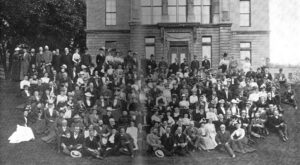
The first “congress of librarians” and the beginning of the American Library Association