
150 YEARS STRONG

A Short History of the ALA Logo

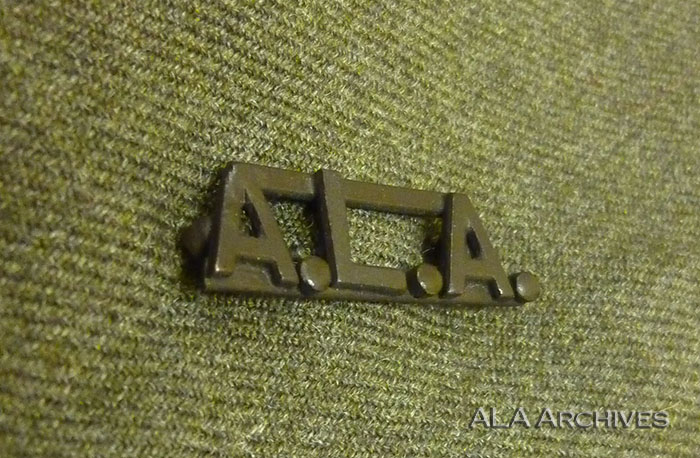
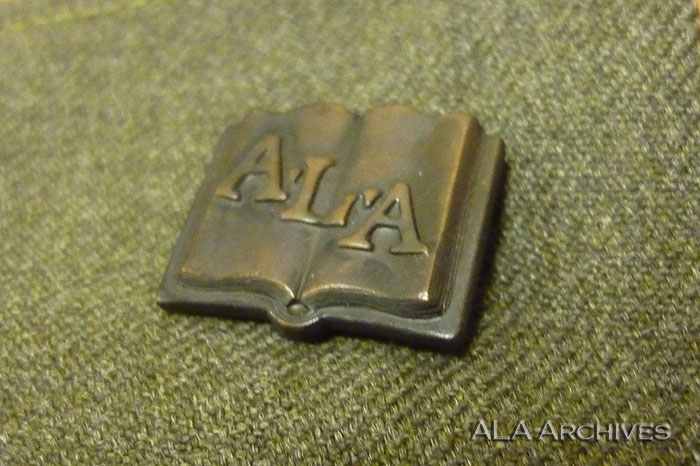
As the American Library Association (ALA) launched its Library War Service during World War I, the first of many ALA logos appears. Created for librarian uniforms, a simple A.L.A. insignia pin was used by camp librarians and representatives. In a March 1918 circular letter, Library War Service director, Herbert Putnam, announced the distribution of the bronze insignia pins for use.[1] By November of the same year, the simple A.L.A. design was replaced with an open book with “A.L.A.” inside.[2] Even after the war, this design would be used in ALA publications, conference programs, and letterhead for matters unconnected to the Library War Service. Even the ALA Board of Education for Librarianship would use the logo in its correspondence.

Original version of the pin, replaced by open-book style in 1918.
Final version of the official librarian pin used on uniforms.

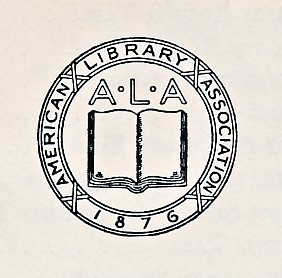
In 1923 and 1924, ALA investigated getting the insignia registered in the patent office.[3] However, it seems that nothing came of that venture and by 1926, ALA’s fiftieth anniversary, a new seal was created for the association. Reminiscent of its WWI origins, the new logo featured the same open book motif, but this time with the “A.L.A” above it instead of within. It was also encircled with the words “American Library Association 1876.” Unfortunately, the original drawings for the logo were unsigned and it is unknown who designed the seal. A 1934 letter from the ALA Editor of Publications speculates that “it must have been ordered through some printing house.”[4]

The ALA logo designed in 1926.

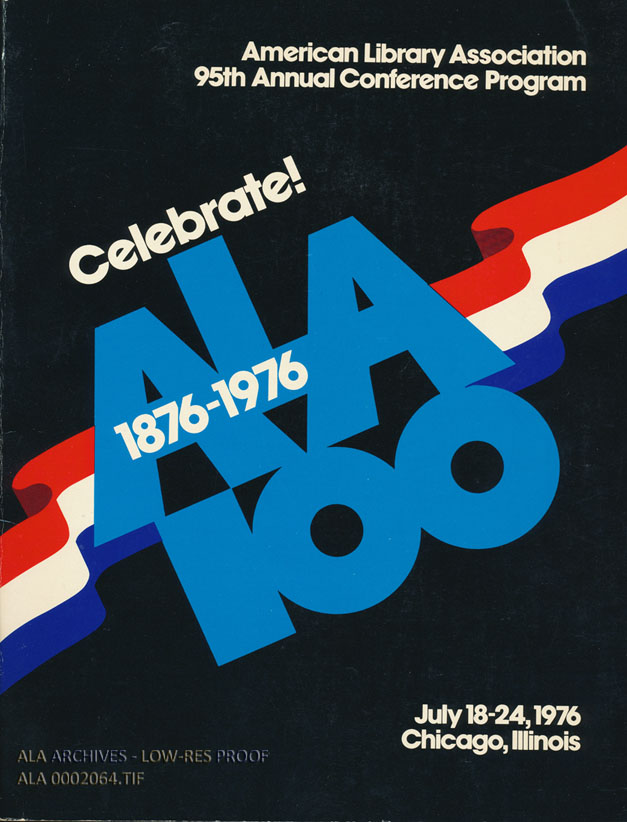
A special logo was designed for ALA’s centennial celebrations in 1976. The ALA Centennial Committee held a contest and in 1973, Sandra J. Beeson of Catholic University of America was declared the winner with her design selected. Beeson was awarded an expense-paid trip to that year’s annual conference in Las Vegas for the official unveiling of the logo. The logo was used widely in the branding for the celebration and featured prominently on the conference program for the centennial conference in Chicago.

1976 ALA Conference – 100th Anniversary

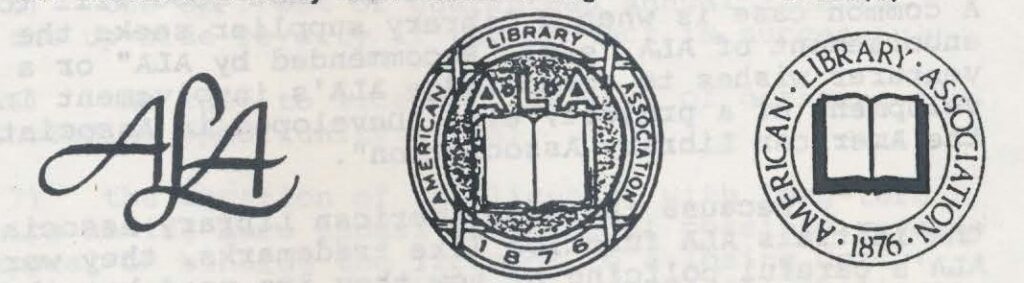
Besides the centennial logo, the 1926 seal remained in continuous use, though in 1980, a stylized “ALA” logo started to appear in publications and letterhead. However, the 1926 seal would still appear on official ALA letterhead and items up into the 1990s. By 1990, a simplified version of the 1926 logo came into circulation, appearing in the 1990-1991 Handbook of Organization and Member Directory. It still contained the open book motif used back during WWI, but it dropped the “A.L.A.” above the open book.

The 1980s, 1926, and 1990s ALA logos.

In the late 1990s, the bolded ALA followed by “American Library Association” text logo started appearing within Handbooks of Organization and Member Directories. By 2010, the enduring seal logo was officially phased out, and the text logo has been in use ever since.[5]


[1] Herbert Putnam, March 16, 1918, War Service Correspondence, 1917-1923, Record Series 89/1/5.

[2] George Utley, November 20, 1918, War Service Correspondence, 1917-1923, Record Series 89/1/5.

[3] Meeting of the Executive Board, December 31, 1923 and Meeting of the Executive Board, June 29, 1924, Transcripts of Proceedings, 1909-46, 1951-2002, Record Series 2/1/1, Box 1, Volume 2, page 378 and 440.

[4] Emily V. D. Miller to Miriam Roe, October 29, 1934, Executive Director Subject File, 1904-2017, Record Series 2/4/6, Box 2, Folder: American Library Association – Miscellaneous, 1920-1936.

[5] American Library Association, “Flashback Friday,” Instagram photo, January 16, 2026, https://www.instagram.com/p/DTlqYcxjGDl/.

150 YEARS STRONG

THE OFFICIAL ANNIVERSARY BLOG

detail of 1976 ALA conference program logo

A Short History of the ALA Logo

The first American Library Association (ALA) logo appeared as the Association launched its Library War Service during World War I, with many more iterations following over the course of almost 100 years.

detail of Richmond ALA COnference program

Librarians, Segregated: The 1936 ALA Annual Conference

Stanley J. Kunitz, editor of the Wilson Bulletin, called it the “The Spectre at Richmond” —but the racial discrimination at the 1936 American Library Association Annual Conference was no ghostly apparition

Detail of letter from Virginia Hamilton to Anne Izard, February 24, 1972.

Newbery: Letters from the Authors

For more than a century, the American Library Association has honored children’s authors with the John Newbery Medal. From the earliest years of the award, its prestige was not lost upon the authors who received it. Letters written by awardees to the Newbery Medal Committee chairs reveal their excitement upon receiving the news.

Agenda for the Children’s Librarians Section on June 27, 1922, including the first presentation of the John Newbery Medal.

Newbery: The First Medal

In 1921, Frederic Melcher, a publisher, bookseller, and chairman of the Children’s Book Week Committee, proposed the idea of a medal to be awarded in recognition of children’s literature and for it to be named after John Newbery, an 18th century British bookseller and children’s books publisher. With a growing audience for children’s books, more librarians being trained in children services, and the emergence of children’s book departments in publishing companies, the time seemed right for such an award and the idea gained traction.

Caldecott Award Seal

The Caldecott Medal: ‘A Hasty Idea Thrown Out’

The Caldecott Medal is of one of the most prestigious children’s book awards in the world. Established in 1937 to recognize the most distinguished American picture book for children, the first medal was awarded in 1938 to Dorothy P. Lathrop for the book, “Animals of the Bible.” However, the idea was first presented in 1935 in a letter by Frederic G. Melcher.

Left: Effie Power with Newbery medal, Los Angeles, 1930. Right: Rachel Field and Milton J. Ferguson. Ferguson announced to Field that “Hitty” was chosen to receive the Newbery Medal. Los Angeles Conference, 1930.

Celebrating the Newbery: ‘Publicity of the Best Kind’

Publicity around the Newbery Medal has drummed up excitement amongst librarians, readers, and the public for the past century. Often this has meant events, press releases, newsletters, radio programming, television broadcasts, and newspaper and magazine articles. However, some publicity ideas were more daring than press conferences and radio programs.