
150 YEARS STRONG

A Short History of the ALA Logo

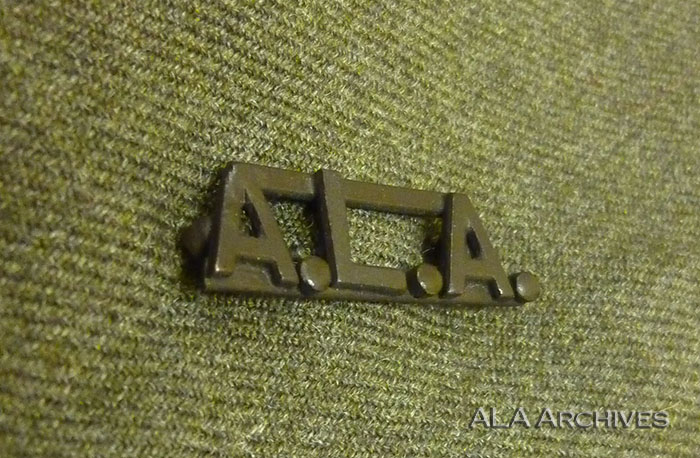
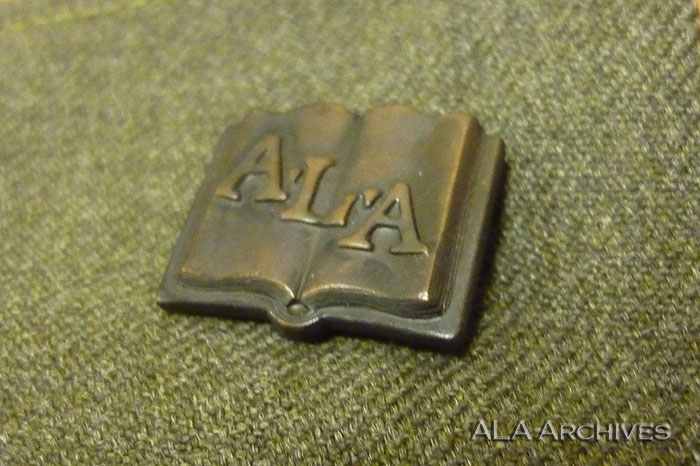
As the American Library Association (ALA) launched its Library War Service during World War I, the first of many ALA logos appears. Created for librarian uniforms, a simple A.L.A. insignia pin was used by camp librarians and representatives. In a March 1918 circular letter, Library War Service director, Herbert Putnam, announced the distribution of the bronze insignia pins for use.[1] By November of the same year, the simple A.L.A. design was replaced with an open book with “A.L.A.” inside.[2] Even after the war, this design would be used in ALA publications, conference programs, and letterhead for matters unconnected to the Library War Service. Even the ALA Board of Education for Librarianship would use the logo in its correspondence.

Original version of the pin, replaced by open-book style in 1918.
Final version of the official librarian pin used on uniforms.

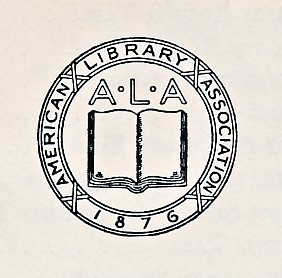
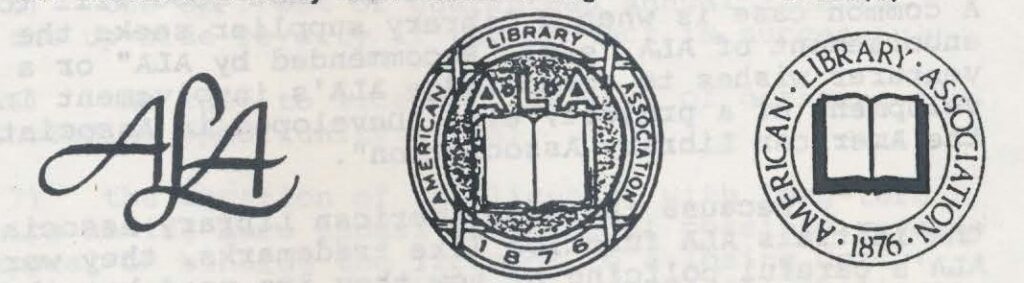
In 1923 and 1924, ALA investigated getting the insignia registered in the patent office.[3] However, it seems that nothing came of that venture and by 1926, ALA’s fiftieth anniversary, a new seal was created for the association. Reminiscent of its WWI origins, the new logo featured the same open book motif, but this time with the “A.L.A” above it instead of within. It was also encircled with the words “American Library Association 1876.” Unfortunately, the original drawings for the logo were unsigned and it is unknown who designed the seal. A 1934 letter from the ALA Editor of Publications speculates that “it must have been ordered through some printing house.”[4]

The ALA logo designed in 1926.

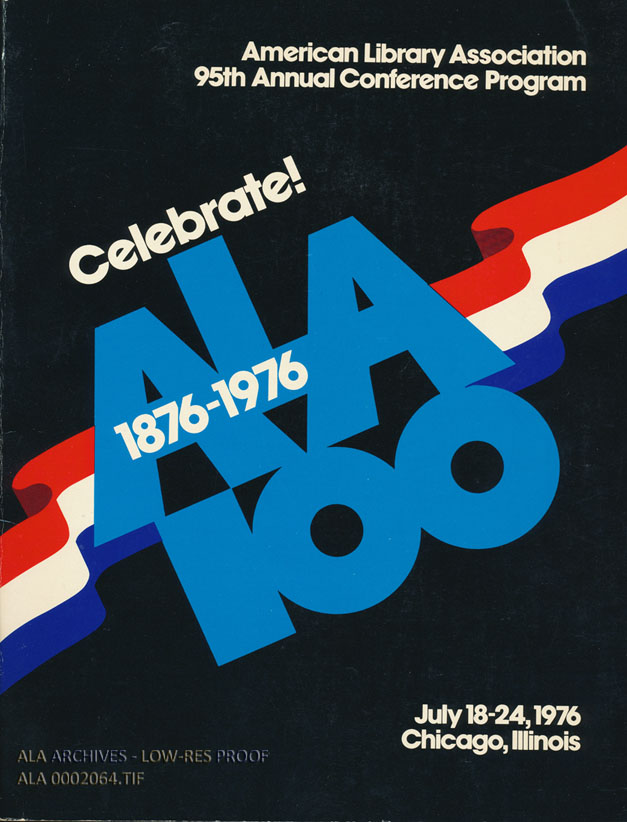
A special logo was designed for ALA’s centennial celebrations in 1976. The ALA Centennial Committee held a contest and in 1973, Sandra J. Beeson of Catholic University of America was declared the winner with her design selected. Beeson was awarded an expense-paid trip to that year’s annual conference in Las Vegas for the official unveiling of the logo. The logo was used widely in the branding for the celebration and featured prominently on the conference program for the centennial conference in Chicago.

1976 ALA Conference – 100th Anniversary

Besides the centennial logo, the 1926 seal remained in continuous use, though in 1980, a stylized “ALA” logo started to appear in publications and letterhead. However, the 1926 seal would still appear on official ALA letterhead and items up into the 1990s. By 1990, a simplified version of the 1926 logo came into circulation, appearing in the 1990-1991 Handbook of Organization and Member Directory. It still contained the open book motif used back during WWI, but it dropped the “A.L.A.” above the open book.

The 1980s, 1926, and 1990s ALA logos.

In the late 1990s, the bolded ALA followed by “American Library Association” text logo started appearing within Handbooks of Organization and Member Directories. By 2010, the enduring seal logo was officially phased out, and the text logo has been in use ever since.[5]


[1] Herbert Putnam, March 16, 1918, War Service Correspondence, 1917-1923, Record Series 89/1/5.

[2] George Utley, November 20, 1918, War Service Correspondence, 1917-1923, Record Series 89/1/5.

[3] Meeting of the Executive Board, December 31, 1923 and Meeting of the Executive Board, June 29, 1924, Transcripts of Proceedings, 1909-46, 1951-2002, Record Series 2/1/1, Box 1, Volume 2, page 378 and 440.

[4] Emily V. D. Miller to Miriam Roe, October 29, 1934, Executive Director Subject File, 1904-2017, Record Series 2/4/6, Box 2, Folder: American Library Association – Miscellaneous, 1920-1936.

[5] American Library Association, “Flashback Friday,” Instagram photo, January 16, 2026, https://www.instagram.com/p/DTlqYcxjGDl/.

150 YEARS STRONG

THE OFFICIAL ANNIVERSARY BLOG

The conference program for the ALA Annual Conference at Lakewood, New Jersey, Baltimore, Maryland, and Washington, D. C., in 1892.

Library History and Women’s History: An Ongoing Convergence

The Woman’s Building Library at the 1893 World’s Columbian Exposition achieved a milestone and was an impressive harbinger for the intersection of librarianship, women’s history, community service, public policy, and international relations. And it was only the beginning.

ALA Members participating in a 1980 Equal Rights Amendment march in Chicago

ALA’s Committee on the Status of Women in Librarianship

The 1960s and 1970s were a time of great societal change in the U.S., and especially so for women. The rebirth of feminism led to a greater desire to invest in a thorough examination of women and their erasure within the historical canon. These ideals spread to librarianship and ALA, where the Feminist Task Force was established in 1970, Women Library Workers in 1975, and the creation of the ALA Committee on the Status of Women in Librarianship in 1976.

(Left to right) Teri Moncure Mojgani, Joan Mattison Daniel, Ethel Adolphe, Shirley Wiegand, Ibrahim Mumin, and Wayne Wiegand at the panel discussion on “Hidden Figures in American Library History: The Desegregation of Public Libraries in the Jim Crow South,” New Orleans Public Library, June 24, 2018.

Desegregating Public Libraries: The Untold Stories of Civil Rights Heroes in the Jim Crow South

On Sunday, June 24, 2018, the governing Council of American Library Association passed a historic resolution that “apologizes to African Americans for wrongs committed against them in segregated public libraries” and commends those “who risked their lives to integrate public libraries for their bravery and courage in challenging segregation in public libraries and in forcing public libraries to live up to the rhetoric of their ideals.”

Jesse Jackson speaking at the Rally for America's Libraries in front of a large crowd

Jesse Jackson and a Legacy of Library Activism

Throughout his life of activism and public service, Rev. Jesse Jackson consistently championed libraries as centers of knowledge where individuals and communities can learn about their past, present, and future.

Clara Jones embracing Virginia L. Jones, after V. Jones received an Honorary Membership of ALA during the 1976 ALA Conference.

Clara S. Jones: ‘Awareness is Not Burdened with Repression; It Is Liberating’

During the 1975 American Library Association Annual Conference, Clara Stanton Jones was announced as the vice president and president-elect of the American Library Association. Her term as president would start during ALA’s 1976 Centennial Conference, a fitting celebration for the first African American President of the Association.

Action, Not Reaction: Integrating the Library Profession

In the midst of the Civil Rights era in America, librarians were battling for and against segregated libraries in the South, however they were also battling over integration within their own ranks. Integration of the library profession was a long process that started in the early 20th century.