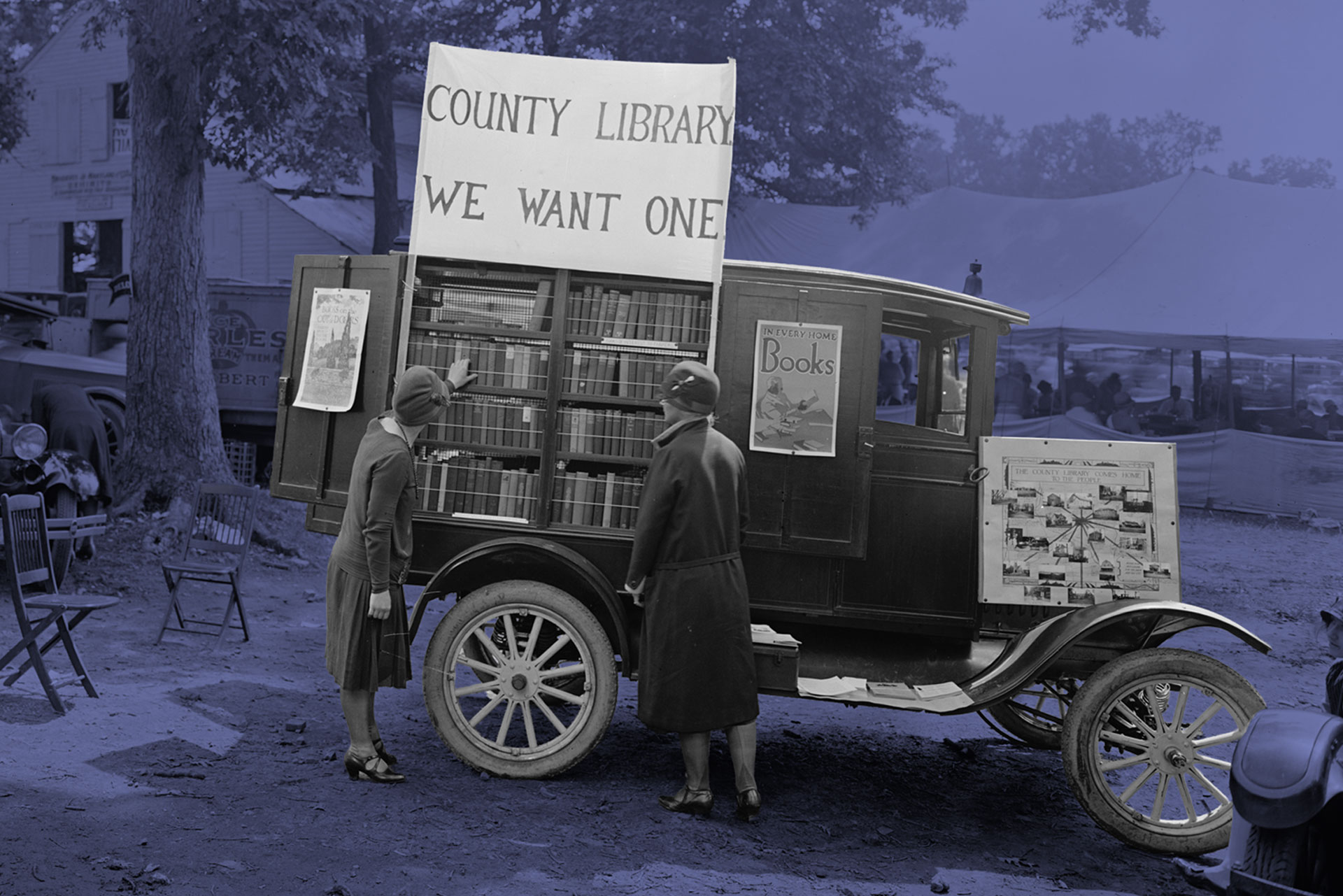
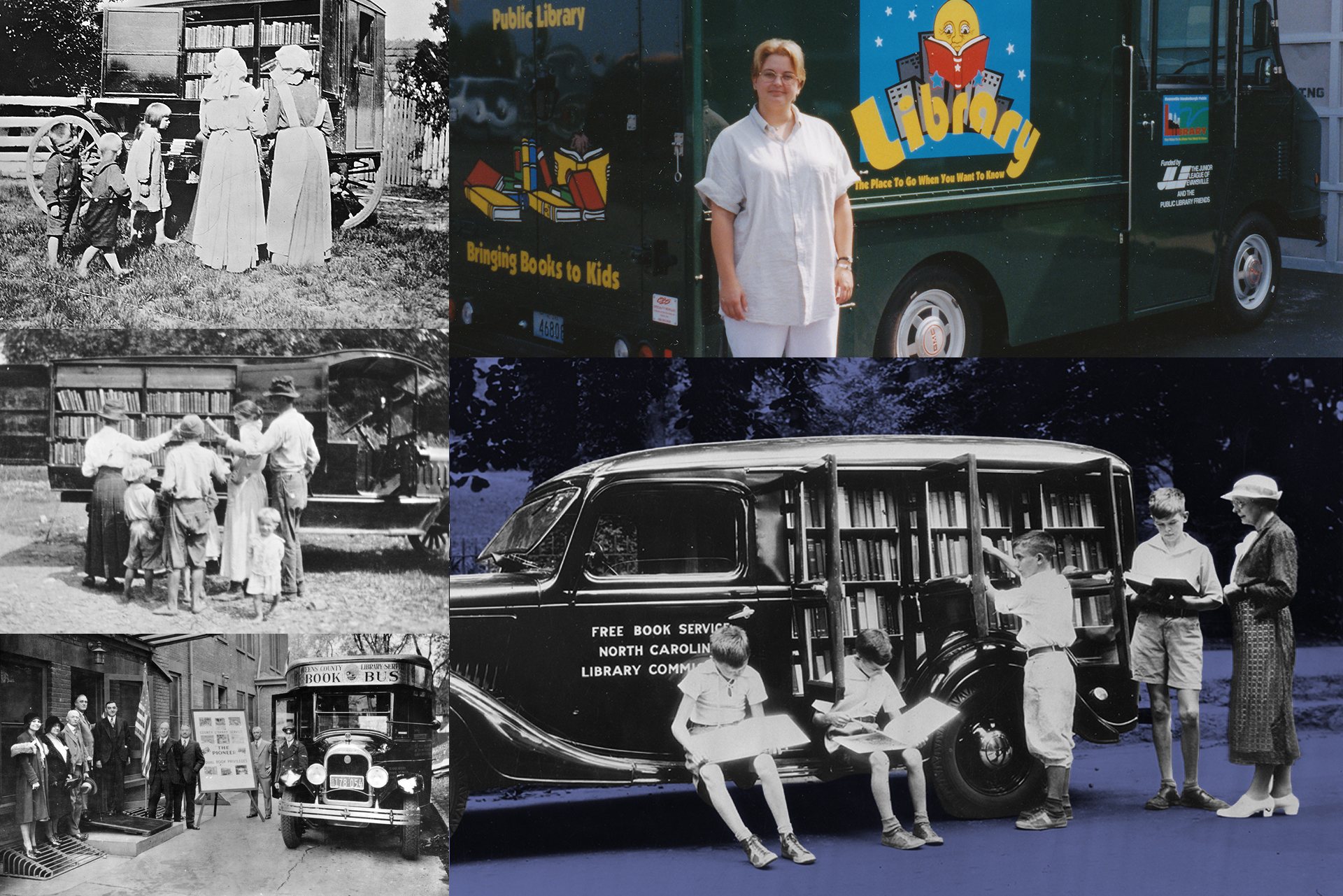
Mary Titcomb, a librarian and ALA member at the Washington County Free Library in Hagerstown, Maryland, helped establish the country’s first bookmobile—a horsedrawn wagon carrying upwards of 200 books to community members in remote areas.
Though the county already had a permanent library building, which opened as the second working county library in the nation in 1901, Titcomb recognized that expanding access to library materials was paramount to increasing the accessibility of books, library services, and knowledge within the rural community. Through the dedication and efforts of Titcomb and other volunteers, the bookmobile system became a successful icon that has expanded and undergone several iterations throughout the decades—evolving from horsedrawn carriages to early automobiles and big buses. Today, bookmobiles across the country continue to serve various rural, urban, suburban, and tribal areas to provide outreach services and improve accessibility to as many areas as possible.
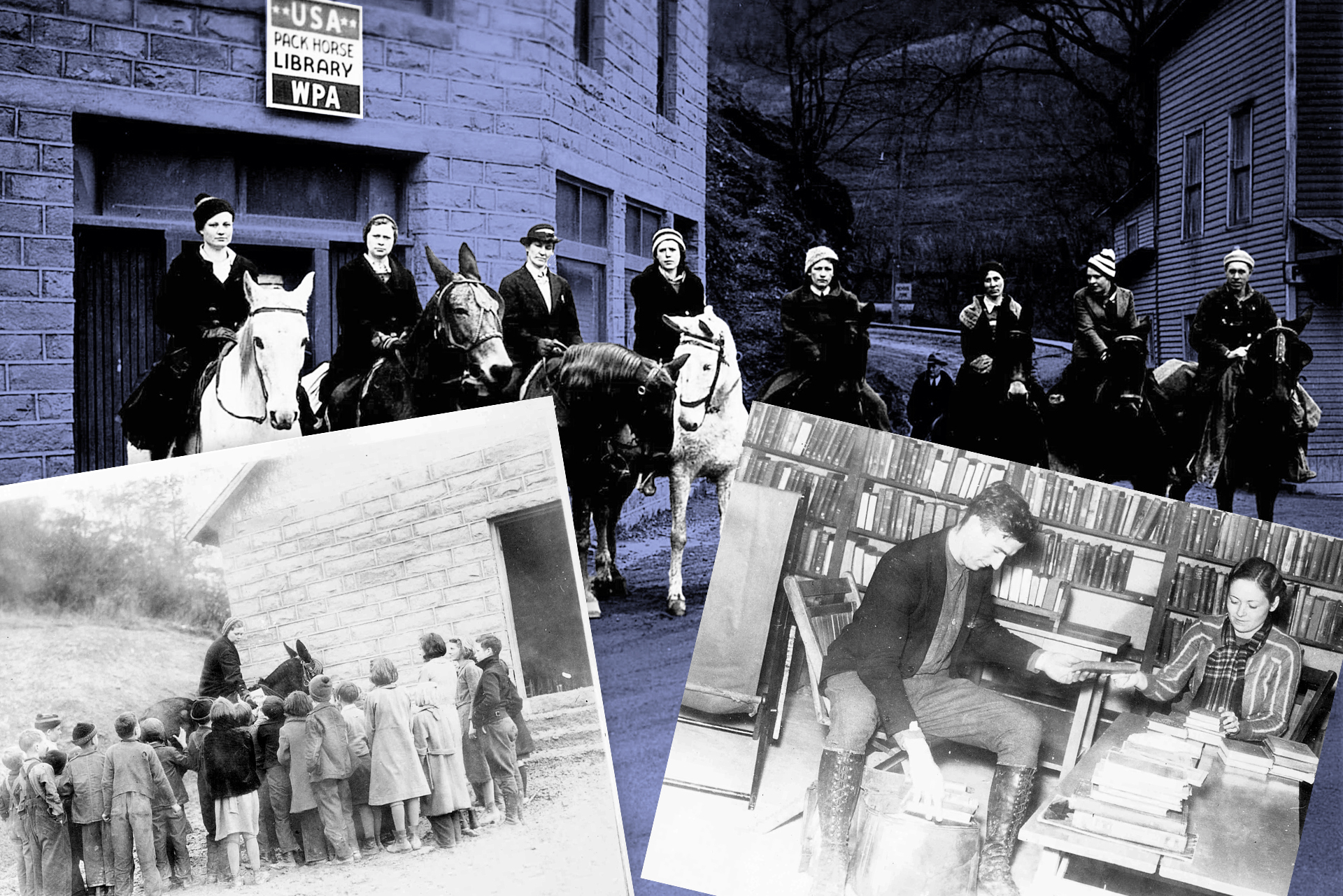
In 1925, the ALA Council established the Library Extension Committee (later the Library Extension Board) to assist in developing libraries for millions of underserved communities. The Committee worked to identify these communities and prepared recommendations for ALA to bring library services into far reaching localities. Committed to continue expanding library access, the ALA Council established the Office for Library Service to the Disadvantaged and Unserved in 1970—which operates today as the Office for Diversity, Literacy, and Outreach Services (ODLOS). This office works to support the libraries of underserved populations by decentering power and focusing on accessibility through the frameworks of diversity, cultural competency, and social justice. Additionally, the ALA proudly works in partnership with the Association of Bookmobile and Outreach Services to continue providing resources and services to communities across the country.
“Much more is accomplished also than the mere circulation of books. Human relations are established. The visit of the Book Wagon Woman is an event. Really she is the liaison officer between each family, the public health nurse, the dietitian and all organizations for family welfare…Confidence once established not only books for the children and adult education progress, but in countless ways, the visit of the wagon becomes a blessing. To drive a Book Wagon is an all round job, but one that brings its own reward in the respect and affection won.” – Mary Titcomb, Story of the Washington County Free Library.
IMAGE: (Left-Top) Patrons visiting the Washington County Hagerstown bookmobile in 1907. The caption on the back of the photo reads: “The Washington County, Maryland, Free Library[,] by delivering good reading matter to the door[,] adds another element to the joys of country living.” (Left-Middle) The first bookmobile in the United States, originally pulled by two horses named Black Beauty and Dandy, serving Washington County, Maryland around 1905. The Washington County Hagerstown Bookmobile expanded access to reading materials to the then-rural county and served as the blueprint for other bookmobile services across the nation. (Left-Bottom) Franklin D. Roosevelt stands with the Queens Borough Public Library book bus in 1930. Originally inspired by the first bookmobiles in Maryland, the Queens Public Library still provides library services through Mobile Libraries today, offering books, movies, magazines, and Wi-Fi to residents of the borough. (Right-Top) Librarian Lola Snyder stands with the Evansville, Indiana, Vanderburgh Public Library’s modern bookmobile in October 1998. The bookmobile, which ran from 1923 to 2018, circulated books around the city and provided library services to local daycares and schools. (Right-Bottom) A Works Progress Administration (WPA) bookmobile in North Carolina, 1937. Throughout the 1930s, the WPA and ALA Library Extension Board established bookmobiles in areas that did not have access to libraries, which included many rural counties and towns.