
150 YEARS STRONG

Jesse Jackson and a Legacy of Library Activism

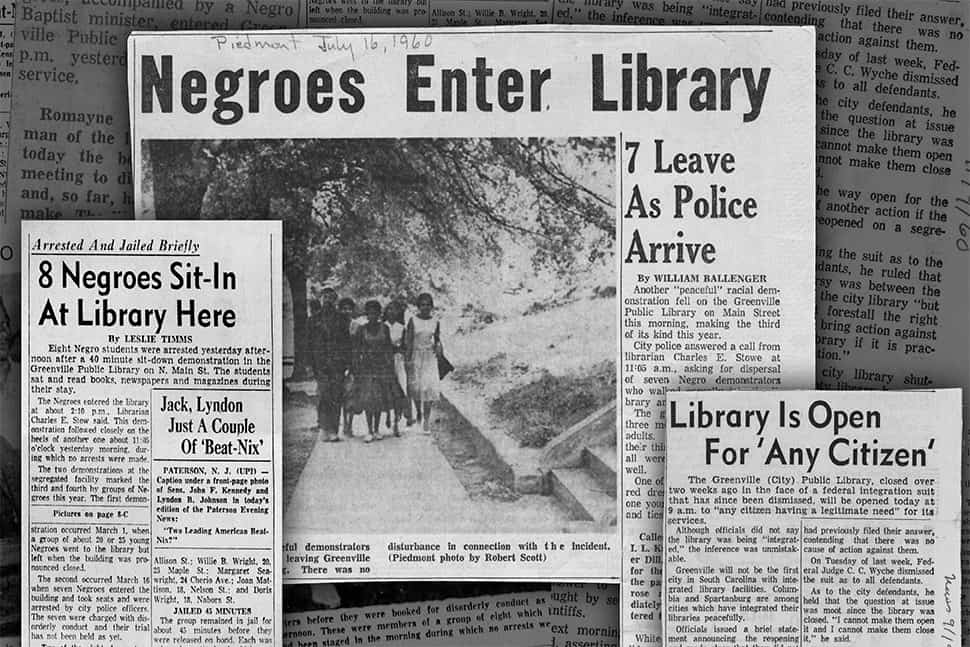
In 1960, on a visit home to Greenville, South Carolina, during a college break, 18-year-old freshman Jesse Jackson entered the whites-only Greenville County Public Library, accompanied by a group of African American high school and college students. Jackson and his group started browsing, sat down, and began to read, as should be the right of any community member. A few minutes later, the police arrived to arrest them for “disorderly conduct.”

Though he would become known internationally for an extraordinary and broad career as a movement leader and advocate for racial and economic justice, Rev. Jesse Jackson has long occupied an essential place in the history of America’s libraries as one of the Greenville Eight, arrested for demanding dignity and respect in his community’s public library.

Three newspaper clippings. Headlines from left to right read: "8 Negroes Sit-In At Library Here", "Negroes Enter Library: 7 Leave as Police Arrive", "Library Is Open For 'Any Citizen'"
Clippings from The Greenville News and The Piedmont, courtesy of the Greenville (S.C.) County Library System

The 18-year-old Jackson and his fellow students were instrumental in pressing for the desegregation of Greenville’s public libraries, an outcome achieved through litigation and public pressure in the months following their arrest. The American Library Association deeply mourns Rev. Jackson’s passing and celebrates the legacy he created.

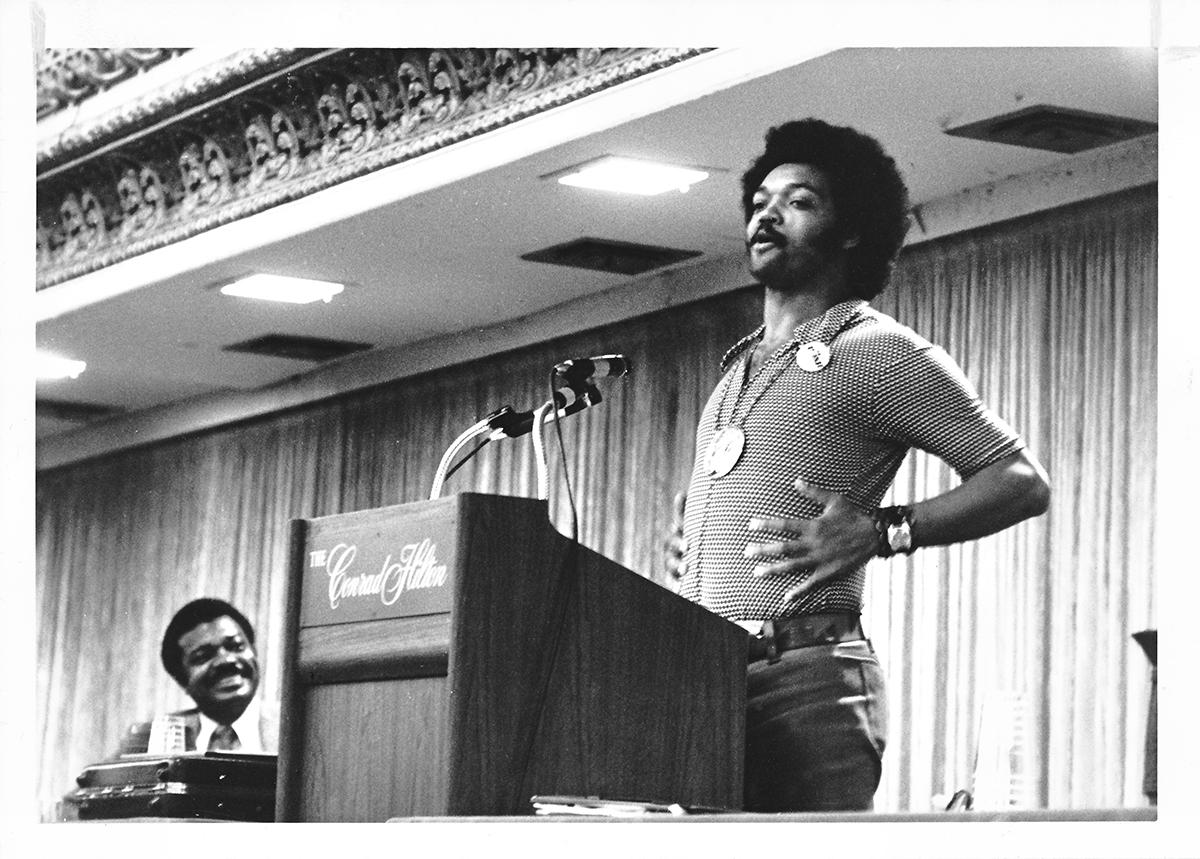
Throughout his remarkable life of activism and public service, Rev. Jackson consistently championed libraries as centers of knowledge where individuals and communities can learn about their past, present, and future. In 1972, Rev. Jackson, then involved with Operation PUSH (Program to Save Humanity), was presented with the Black Caucus Award for Distinguished Service to Humanity by past Black Caucus chairman E. J. Josey at the ALA Annual Conference in Chicago, where he spoke to a filled ballroom of attendees about the need for change in the library.

Black and white archival photo of a young Rev. Jesse Jackson standing at a podium
Jesse Jackson speaks during the 1972 ALA Annual Conference in Chicago.

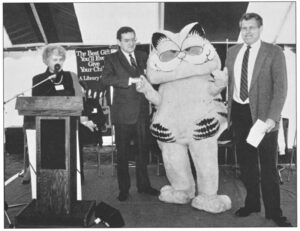
Jackson would continue his work supporting libraries alongside ALA for years. In 1991, he shared the stage with authors Judy Blume and Michael Blake, then-House Minority Whip Newt Gingrich, and Kansas City Chiefs linebacker Derrick Thomas at ALA’s 1991 Rally for America’s Libraries in Atlanta. And in 2009, he joined ALA’s executive director Keith Michael Fiels for a reading event to kick off National Library Week, discussing libraries’ role as community hubs of literacy and learning.

From his earliest foundational activism that helped change America—and America’s libraries—in profoundly important ways, to his lifelong dedication to empowering everyone who calls this country home, Rev. Jackson did not stray from his basic demands of dignity and equality.

150 YEARS STRONG

THE OFFICIAL ANNIVERSARY BLOG

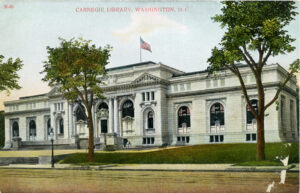
1907 postmarked postcard of the Chicago Public Library

Why Chicago? ALA Headquarters, 1909

Ask most ALA members why the Association’s headquarters is in Chicago, they’re likely to guess “center of the country.” Not so. ALA headquarters is in Chicago because in 1909 a group of Midwest librarians representing the interests of small public libraries outmaneuvered eastern librarians representing large library interests to wrest control of the Association the latter had held since 1876.

oral histories at the ala archive graphic

Oral Histories at the ALA Archives

Alongside written records, photographs, and publications, the American Library Association Archives also holds more than 150 interviews of librarians and library workers. These stories provide context to their lives and careers, how their experiences and education shaped their librarianship, and how certain events shaped their personal and professional lives.

Detail from National Climate Action Strategy

How Sustainability Became a Core Value of ALA

The adoption of sustainability as a core value shows what’s possible when dedicated ALA members take the time to listen, learn, evolve, and chart a new path forward, strengthening our ability to remain relevant and responsive for another 150 years.

Theresa West Elmendorf. Photo courtesy of the ALA Archive.

Madam President

Before women were allowed to vote in U.S. elections, the American Library Association (ALA) found its leadership in Theresa West Elmendorf. In 1911, more than 30 years after the founding of ALA, Elmendorf was elected the first female president of the Association.

How I Library podcast with Wayne Wiegand

Explore ALA and Library History with Wayne Wiegand

In a special episode of ALA’s “How I Library” podcast, show host and I Love Libraries editor Phil Morehart speaks with library historian and author Wayne Wiegand about the beginnings of ALA as the Association celebrates its 150th anniversary.

Carrie Robinson

ALA Hidden Figures: Carrie Robinson

On May 14, 1969, Carrie Coleman Robinson, a Black school librarian in Alabama, brought a landmark case to the US District Court. After being passed over for a promotion, Robinson sued Alabama’s Department of Education alleging that she had been denied equal protection as a department employee because of her race. Robinson’s case, and long career as a librarian, reveals much about the Jim Crow South and librarianship in the civil rights era.