
150 YEARS STRONG

It’s Not Just Book Clubs Anymore: A Brief History of ALA’s Public Programs Office

In 1982, the American Library Association (ALA) launched Let’s Talk About It, a reading and book discussion program designed to spark thoughtful conversations about contemporary life and culture through literature. At the time, this theme-based book club model was new and innovative. Over the past 44 years, more than 30 themes have been developed, engaging more than 4 million participants nationwide and laying the groundwork for something even bigger.

Eight years later, a 1990 National Center for Education Statistics survey reported 507 million annual visits to public libraries nationwide. What were all those people doing? They were likely doing more than just browsing the shelves. Libraries were evolving into dynamic community spaces, positioning themselves as third spaces not just for children but also for adult literary and humanities programming.

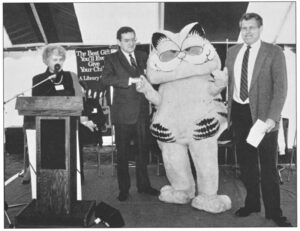
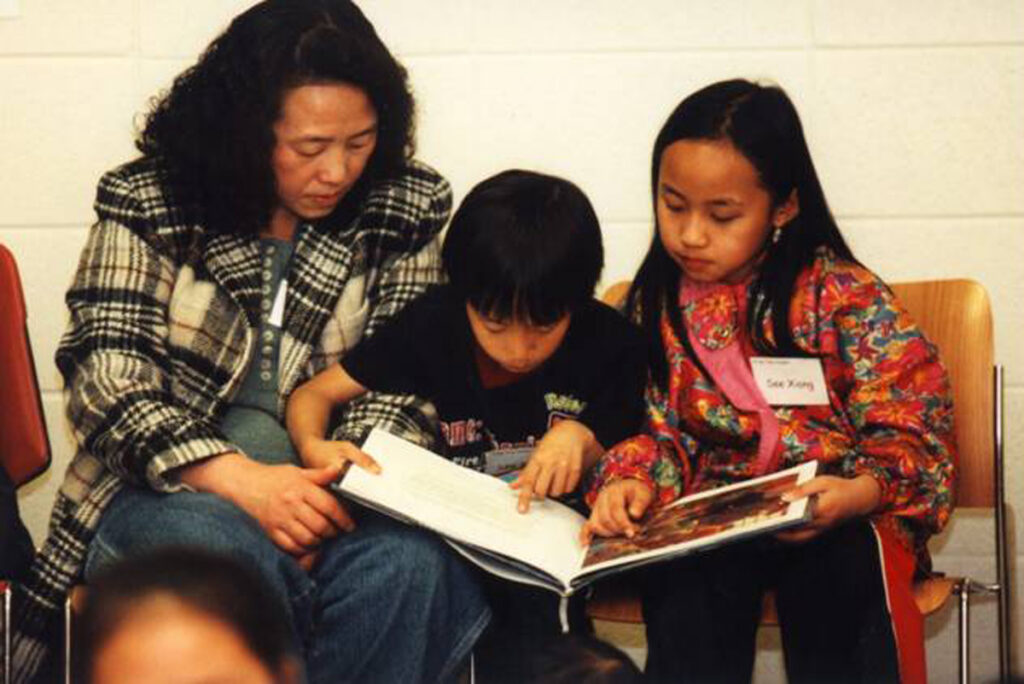
Prime Time Family Reading Time
Participants in the PPO program, "Prime Time Family Reading Time" (2003)

Inspired by this large number of library users and the potential of library programming to shape civic and cultural life, ALA’s Public Programs Office (PPO) was founded in 1992 by Deb Robertson.

“Up until the 1980s and 1990s, children’s programming was the norm in libraries, while adult programming was a rarity,” Robertson says. “But adult programming, in particular, offers libraries a way to reflect and support communities, and serve a mission of lifelong learning. It can bring library collections to life and offers ways for individuals to explore ideas together.”

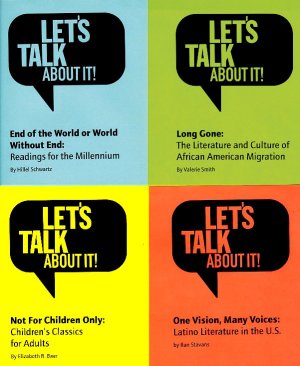
Themes for "Let's Talk About It," a reading and book discussion program model launched on a nationwide level for libraries by the American Library Association in 1982, for the year 2000.
Themes for "Let's Talk About It," a reading and book discussion program model launched on a nationwide level for libraries by the American Library Association in 1982, for the year 2000

The Public Programs Office encouraged libraries to think beyond the status quo—and gave them the resources to do just that. For the past 34 years, the Public Programs Office has remained committed to its mission of empowering libraries to create vibrant hubs of learning, conversation, and connection in communities of all types. When library programming was once seen as book clubs and author talks, PPO has helped shift the vision of what library programs can be. Today, it’s common to enter a library of any size in the United States and see everything from prom dress swaps, citizenship classes, game nights, themed parties, Death Cafés, bike repairs, bread making, sensory rooms, job search help, and the list goes on. What was once seen as innovative is now everyday library work.

Though it represents less than a quarter of ALA’s life, the impact of the Public Programs Office has been transformative. From ambitious traveling exhibits like “Alexander Hamilton: The Man Who Made Modern America” (2004), “Harry Potter’s World: Renaissance Science, Magic, and Medicine” (2009), and “Changing America: The Emancipation Proclamation, 1863 and the March on Washington, 1963” (2014), libraries can bring world-class museum exhibits to their communities. PPO has also led some of ALA’s most recognizable initiatives, like “Libraries Transforming Communities:”“Picturing America”“Media Literacy for Adults”“Thinking Money for Kids”, and the “Great Stories Club”. The Public Programs Office has continuously produced a diverse range of opportunities for all library types.

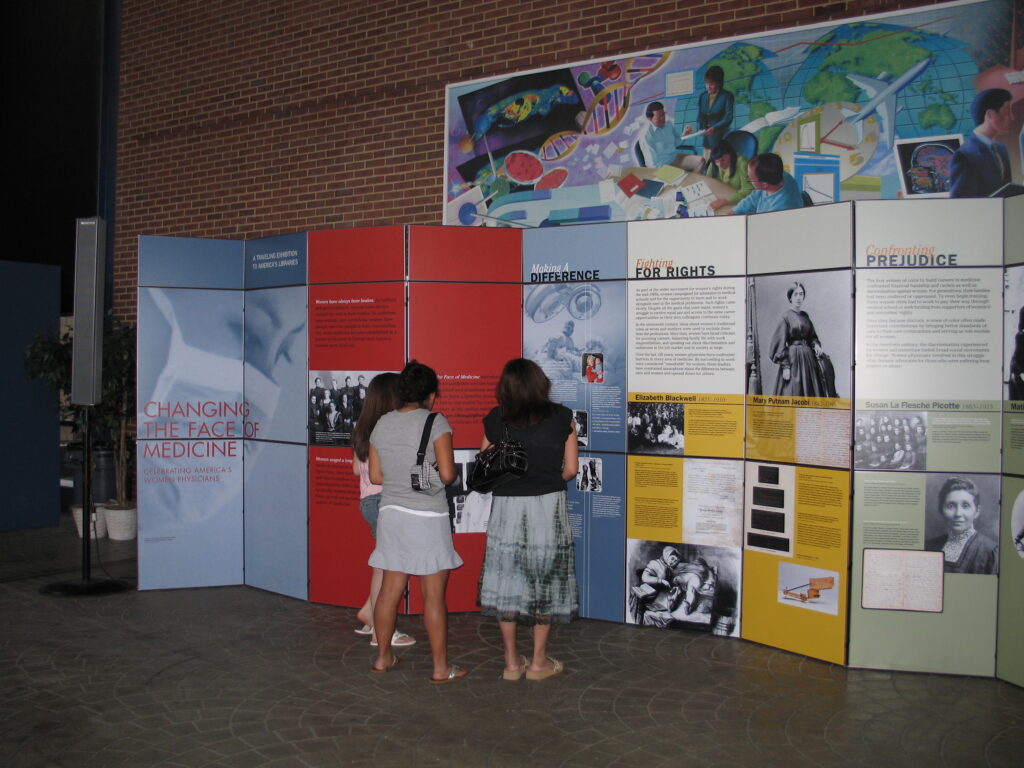
People enjoying the traveling exhibition, "Changing the Face of Medicine: Celebrating America’s Women Physicians," in 2005.
People enjoying the traveling exhibition, "Changing the Face of Medicine: Celebrating America’s Women Physicians," in 2005

It’s not just resources, programs, and exhibits either. PPO has distributed millions of dollars in grants and awards to libraries to better serve their communities, including $3.6 million in 2025 alone.

The Cultural Communities Fund, created in 2004 with a challenge grant from the National Endowment for the Humanities, was an investment indicating the importance of this work. Over the years, PPO has partnered with an extensive network of supporters, partners, and funders including the Institute of Museum and Library Services, the National Science Foundation, the National Library of Medicine, The Smithsonian’s National Museum of African American History and Culture, Wallace Foundation, FINRA Investor Education Foundation, Dollar General Literacy Foundation, NASA, Folger Shakespeare Library, W.K. Kellogg Foundation, Capital One, the United States Holocaust Memorial Museum, the Ford Foundation, The John A. Hartford Foundation, and The Pulitzer Prizes, among many others. 

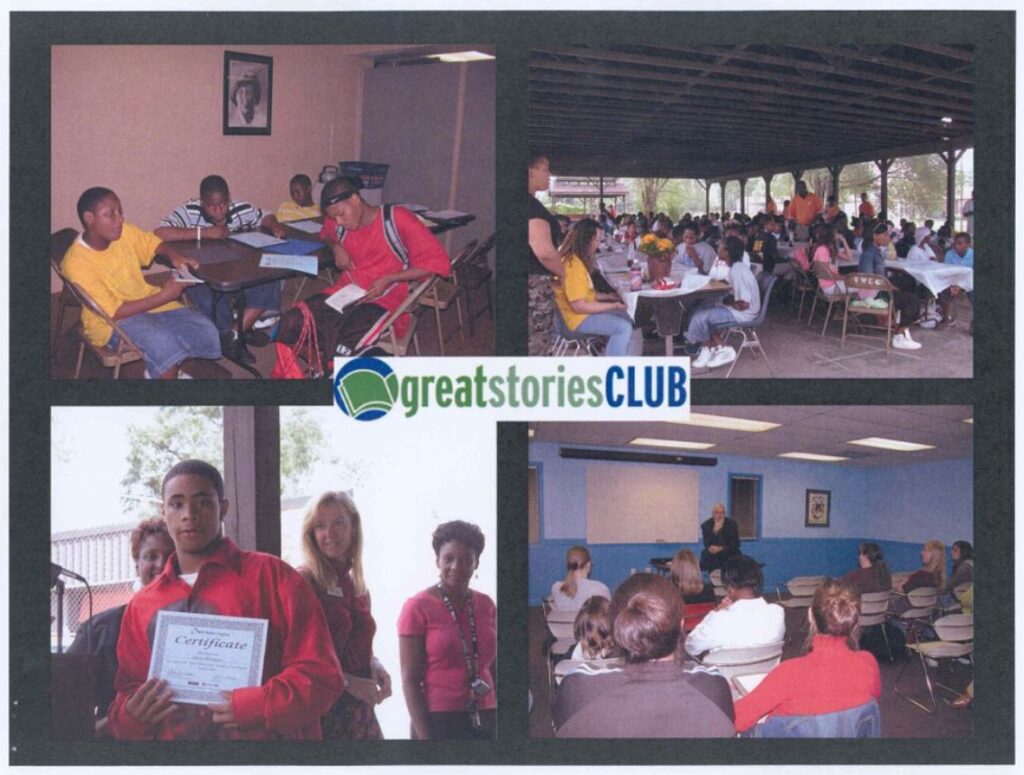
"Great Stories Club" participants in Saginaw, Michigan, in 2006.
"Great Stories Club" participants in Saginaw, Michigan, in 2006

Aside from PPO’s endless list of projects and thousands of libraries touched by the office’s work, the most important outcome has been empowering libraries to be more than a place for books, but a place for someone to find and be within their community. PPO has helped redefine the library not just as a place for books, but a place where people gather, learn, celebrate, debate, create, and connect. From baby STEM programs to older adult fitness classes, its work has shaped how libraries support patrons at every stage of life.

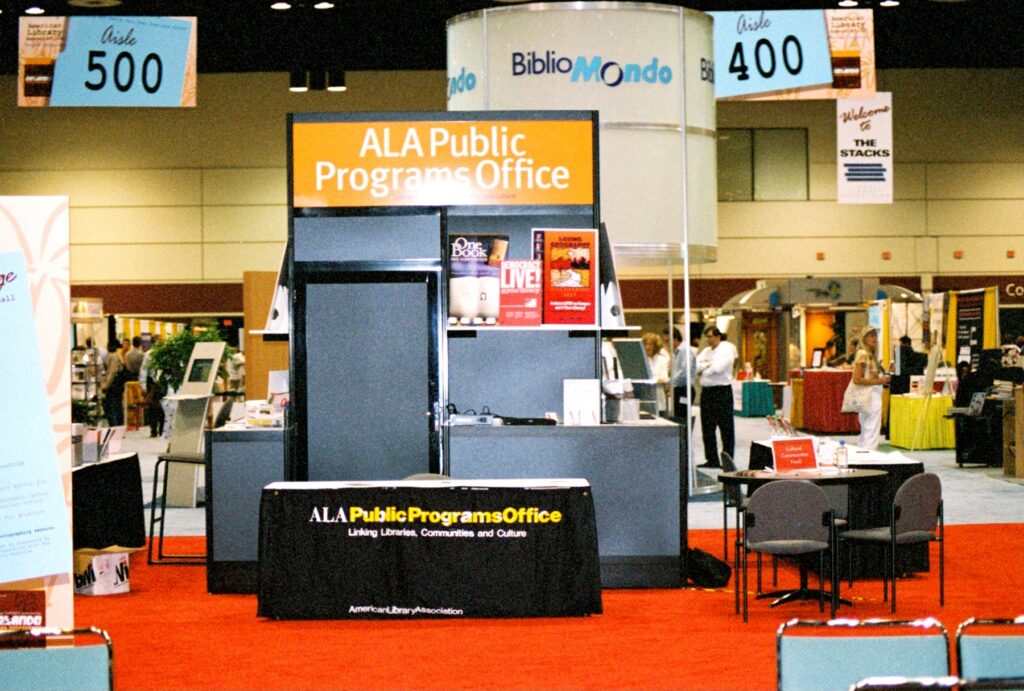
PPO's booth at the 2004 ALA Annual Conference.
PPO's booth at the 2004 ALA Annual Conference

In just 34 years, the Public Programs Office has helped reimagine what library programming can be. Imagine what the next 150 years might hold.

For more on PPO’s history, visit the timeline of programming on the ALA website.


This story first appeared in Programming Librarian on February 25, 2026.

150 YEARS STRONG

THE OFFICIAL ANNIVERSARY BLOG

1907 postmarked postcard of the Chicago Public Library

Why Chicago? ALA Headquarters, 1909

Ask most ALA members why the Association’s headquarters is in Chicago, they’re likely to guess “center of the country.” Not so. ALA headquarters is in Chicago because in 1909 a group of Midwest librarians representing the interests of small public libraries outmaneuvered eastern librarians representing large library interests to wrest control of the Association the latter had held since 1876.

oral histories at the ala archive graphic

Oral Histories at the ALA Archives

Alongside written records, photographs, and publications, the American Library Association Archives also holds more than 150 interviews of librarians and library workers. These stories provide context to their lives and careers, how their experiences and education shaped their librarianship, and how certain events shaped their personal and professional lives.

Detail from National Climate Action Strategy

How Sustainability Became a Core Value of ALA

The adoption of sustainability as a core value shows what’s possible when dedicated ALA members take the time to listen, learn, evolve, and chart a new path forward, strengthening our ability to remain relevant and responsive for another 150 years.

Theresa West Elmendorf. Photo courtesy of the ALA Archive.

Madam President

Before women were allowed to vote in U.S. elections, the American Library Association (ALA) found its leadership in Theresa West Elmendorf. In 1911, more than 30 years after the founding of ALA, Elmendorf was elected the first female president of the Association.

How I Library podcast with Wayne Wiegand

Explore ALA and Library History with Wayne Wiegand

In a special episode of ALA’s “How I Library” podcast, show host and I Love Libraries editor Phil Morehart speaks with library historian and author Wayne Wiegand about the beginnings of ALA as the Association celebrates its 150th anniversary.

Carrie Robinson

ALA Hidden Figures: Carrie Robinson

On May 14, 1969, Carrie Coleman Robinson, a Black school librarian in Alabama, brought a landmark case to the US District Court. After being passed over for a promotion, Robinson sued Alabama’s Department of Education alleging that she had been denied equal protection as a department employee because of her race. Robinson’s case, and long career as a librarian, reveals much about the Jim Crow South and librarianship in the civil rights era.