Ask most American Library Association (ALA) members why the Association’s headquarters is in Chicago, they’re likely to guess “center of the country.” Not so. ALA headquarters is in Chicago because in 1909 a group of Midwest librarians representing the interests of small public libraries outmaneuvered eastern librarians representing large library interests to wrest control of the Association the latter had held since 1876.
The story begins with a $100,000 endowment Andrew Carnegie gave the ALA Publishing Board in 1900 that not only increased possibilities for funding library publications, it also magnified the need for a permanent association headquarters. At their 1903 conference members discussed the subject; they agreed it should be near a “great library,” preferably in New York or Washington. “A million dollars would provide a suitable site, building and equipment,” one member opined. The appeal to Carnegie was unmistakable. Shortly thereafter, the Executive Board appointed a committee of five “to formulate a plan for permanent headquarters.” All but one were from the East.
In 1904 state library commissions dedicated to helping small rural Carnegie libraries popping up by the hundreds across the Midwest formed themselves into a League of Library Commissions (LLC). From the outset, the League was skeptical of ALA’s Publishing Board priorities. LLC President and Wisconsin Free Library Commission (WFLC) Secretary Henry Legler wrote to Board Secretary William Coolidge Lane (Harvard University Library Director) that he welcomed the prospect of a bibliographical periodical the Board was considering but worried about its ability to review titles as rapidly as small Midwest libraries needed. When Lane assured him the new periodical could meet LLC needs, Legler promised the League would pay for hundreds of subscriptions for the small public libraries it advised.
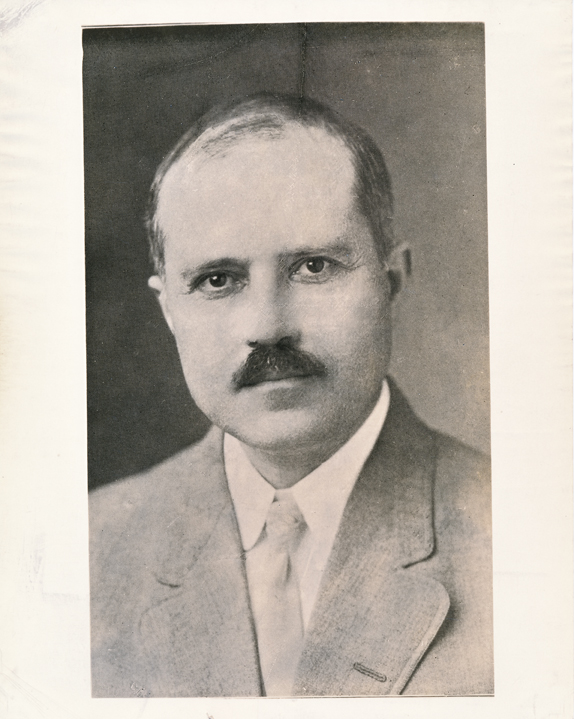
Booklist’s first number came out in February, 1905. “We are very much pleased” with it, Legler wrote Lane, “but disappointed … in some particulars.” Editors covered too many books “too expensive” or of “limited interest” for small public libraries, and because they did not “grade” selections Midwest librarians could not use Booklist to prioritize acquisitions. The message was clear: If the Publishing Board would not comply with League wishes, the latter might cancel the hundreds of subscriptions that made Booklist possible.
On April 1, 1905, Council voted to establish a “headquarters” at the Publishing Board’s Boston offices and directed the Executive Board to appoint someone Executive Secretary. Most understood it was an experiment, a feeble beginning lasting only as long as ALA could afford it. The Executive Board subsequently selected E. C. Hovey, a Brookline (Mass.) Public Library trustee, to the position.
At the 1905 conference, Legler delivered a League report that addressed its testy relations with the Publishing Board. The League should have been given “an opportunity to approve the selection of [the Booklist] editor,” Legler argued. If the Board could not conform to League needs, he announced, it might have to pursue its own publication program. The threat had the desired impact: Within days the Executive Board filled the two Publishing Board vacancies with “westerners”—Legler and Electra Doren, director of Cleveland’s Western Reserve Library School. “ALA responded to the wishes of the western librarians,” Legler wrote a friend. The League now had “to frankly and fully state to the Publishing Board where they have failed in the past to meet the needs of the western commissions, and how they can supply these needs at the present time.”
On September 28, Publishing Board members elected Legler chairman, andhe quickly got the board to agree to “accept and print any manuscript” the League submitted. League pressure also impacted discussions concerning the location of ALA Headquarters. That fall the Executive Board asked Library Journal (LJ) editor R. R. Bowker and Columbia University Library Director James Canfield to find space in Manhattan. They did locate one possibility, but the lease was too expensive for ALA.
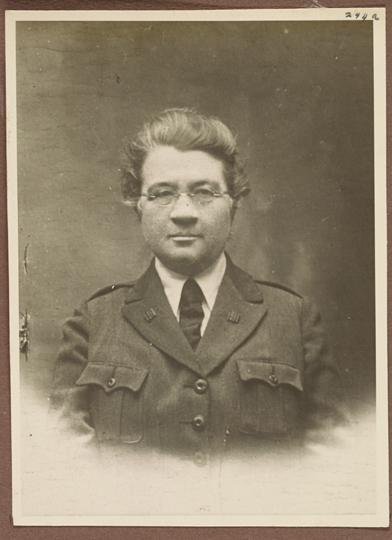
Failure to locate a suitable headquarters site worried eastern librarians: “If we do not take immediate action,” one wrote Bowker, “the national association will be weakened.” He had reason to worry. In December 1905, the Tennessee Library Association president openly discussed forming a Southern Library Association because ALA was “a mutual admiration society and junketing party, a northern organization unable to discuss or handle” southern problems.
When the Boston-based Booklist editor said at the 1906 conference that she no longer wanted to continue without a salary increase, Legler offered to move Booklist offices to Madison and cover half the salary of a new editor. Seeing this as a substantial cost savings, the Board accepted.
Like Midwest librarians, Bowker decided to reconfigure his own relationship with the Publishing Board. On August 15, he said he would no longer publish ALA’s conference proceedings as an LJ issue. In response, the Board decided to start its own periodical and sever its relationship with LJ. The ALA Bulletin published its first issue in January 1907.
The 1907 conference erupted into a brouhaha over Hovey’s position as ALA Executive Director. To a motion that ALA keep Hovey and ALA’s current headquarters location Ahern asked for an amendment adding “two words, and that is for establishing Headquarters at Boston ‘at present.’” Her amendment passed. This preceded a rift occasioned by the Nominating Committee. Because eastern librarians thought the slate the committee presented had too many westerners, they decided to force a second slate with more eastern librarians. It was the first time ALA members were asked to choose between opposing forces in an open election. Ultimately, the western slate won—except for the presidency, which went to New York Public Library’s Arthur Bostwick.
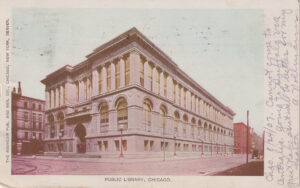
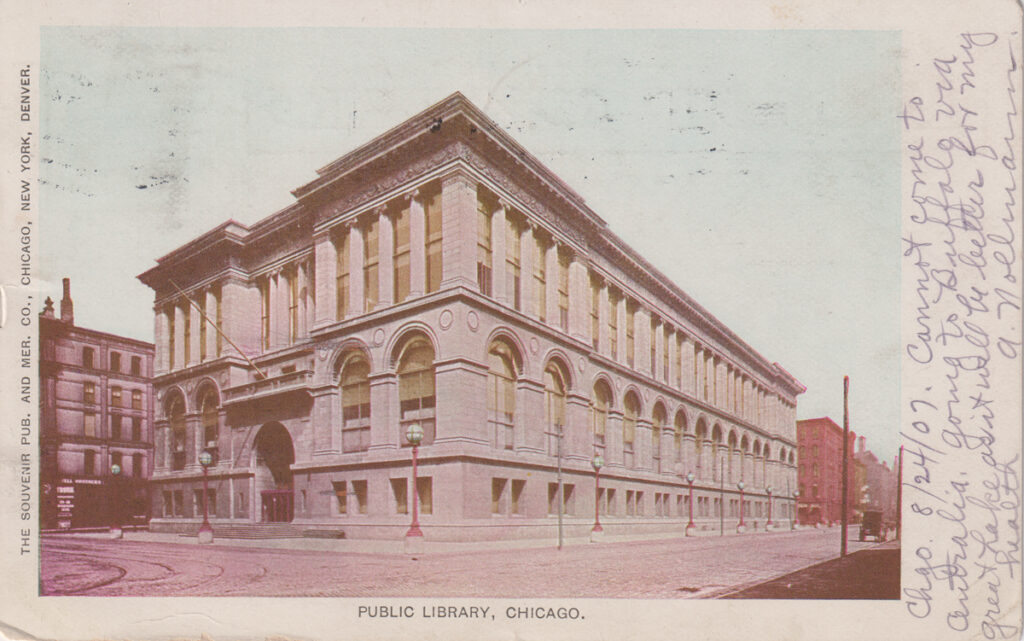
In fall 1907, the ALA Treasurer determined ALA could not afford Headquarters beyond January 1, 1908. On January 2, League officials met at the Chicago Public Library (CPL). At Ahern’s urging, it passed a resolution. Because “headquarters ought to be located … in those sections of the country where efforts promised the greatest possibilities,” ALA had to consider Chicago. The resolution ushered in a flurry of activity. Ahern asked Newberry Library trustees about space for ALA headquarters. When the Newberry turned her down she approached the A.C. McClurg Company, a Chicago book jobber that had warehouse space available, free of charge. However, the Executive Board’s eastern members rejected the offer because it would tie ALA directly to a company whose profits depended on libraries.
As the 1908 Minnetonka, Minnesota, conference drew near, the three major library periodicals focused their attention on headquarters. LJ favored New York, Public Libraries favored Chicago. The Bulletin equivocated. “These are matters of great moment which can scarcely be rightly determined from personal or even sectional considerations.” The conference itself was dominated by Midwest librarians. With only five of the nineteen members present from eastern states, Council recommended Chicago sixteen to two over Washington, then passed the matter back to the Executive Committee. Shortly thereafter, ALA members elected a slate of western candidates, except for incoming President Bostwick. After 34 years, ALA was no longer in control of Northeast librarians. On June 27, the Executive Board appointed Cincinnati Public Library Director Clement W. Andrews, Legler, and Ahern to explore Chicago as location of headquarters.
At this point the situation became confusing. On July 11, Andrews recommended accepting an offer of free space from the Chicago Chamber of Commerce (CAC). When one eastern librarian found out a week later that it was the same space McClurg had offered earlier, he concluded the CAC “must be intervening in name only.” He was right. When eastern librarians rejected the offer, western librarians bristled. Much of the animosity was cast in sectionalist feelings, but competition between small and large library interests that had preoccupied ALA in recent years accelerated the discord.
About this time a seemingly unrelated event took place that eventually settled the headquarters question. On April 12, CPL trustees asked for Director Frederick Hild’s resignation. When Hild refused, the board fired him. Three days later Ahern wrote Legler: “I have just been talking with C.P.L. authorities and they are interested.” A week later CPL offered ALA free space for its headquarters. Ahern later explained why the CPL had not come forward sooner. In April, 1908, the Chicago Library Club asked Hild to approach his trustees about headquarters. Several months later Hild reported his trustees acted upon the suggestion “unfavorably,” but it was not until Hild was fired that the Club found out he had never even brought the subject to trustee attention, in large part because he had harbored anti-ALA feelings dating back to 1893.
On June 28, 1909, the Executive Board accepted CPL’s offer, and selected Indiana State Library Commission Secretary Chalmers Hadley as its first full-time, salaried executive officer. The event proved to be a watershed event in ALA history. The politics recounted here had threatened to splinter ALA on numerous occasions, but by adjusting to the challenges and agreeing to locate its headquarters in Chicago, ALA allowed its leadership to become more geographically and professionally representative.
Information taken from Wayne A. Wiegand, “The Politics of an Emerging Profession: The American Library Association, 1876-1917” (New York: Greenwood Press, 1986), pp. 121-201. See also Virgil F. Massman, From Out of a Desk Drawer… The Beginnings of ALA Headquarters,” ALA Bulletin, 63 (April, 1969): 475-481.
Wayne A. Wiegand is F. William Summers Emeritus Professor of Library and Information Studies at Florida State University