
An interesting look at the early days of American Library Association (ALA) conferences is now online thanks to the Falvey Library at Villanova University.
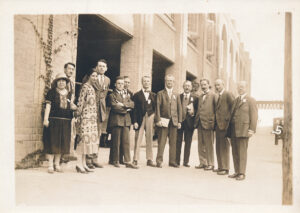
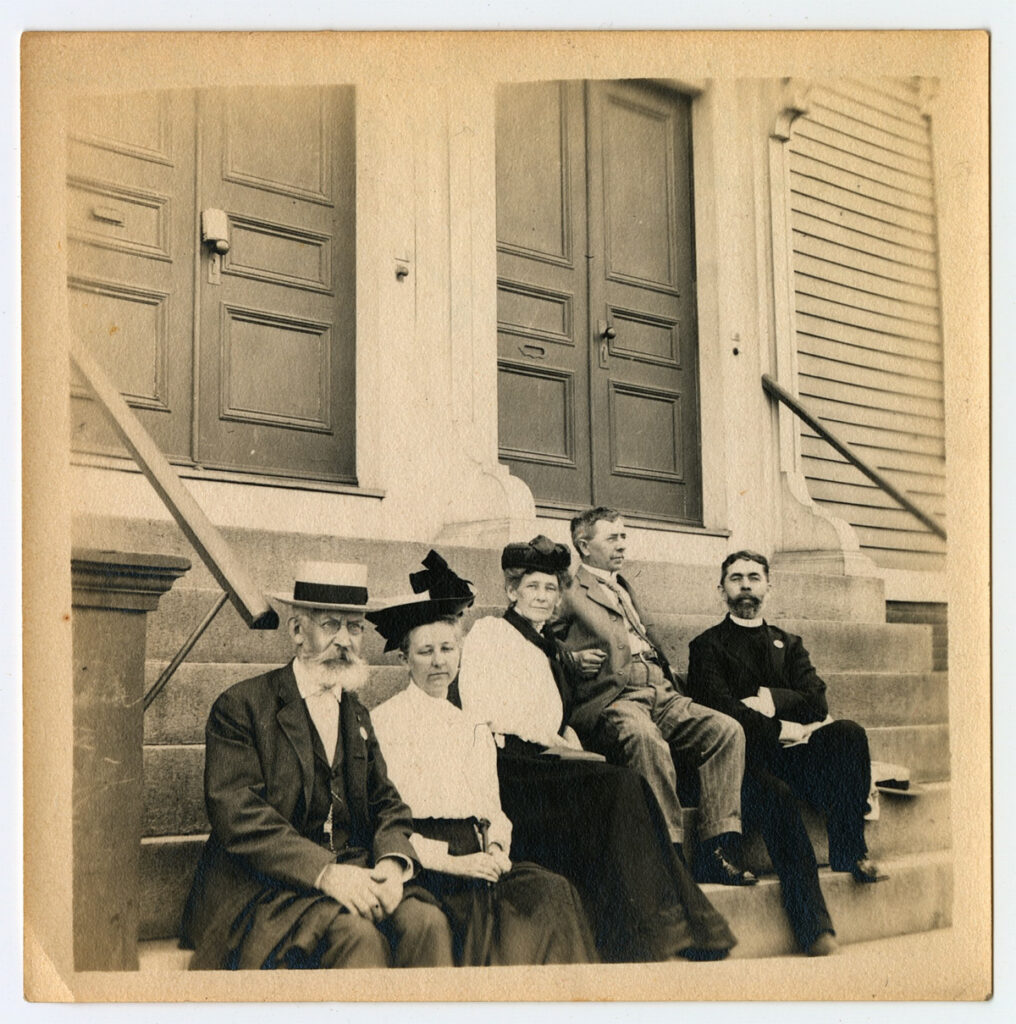
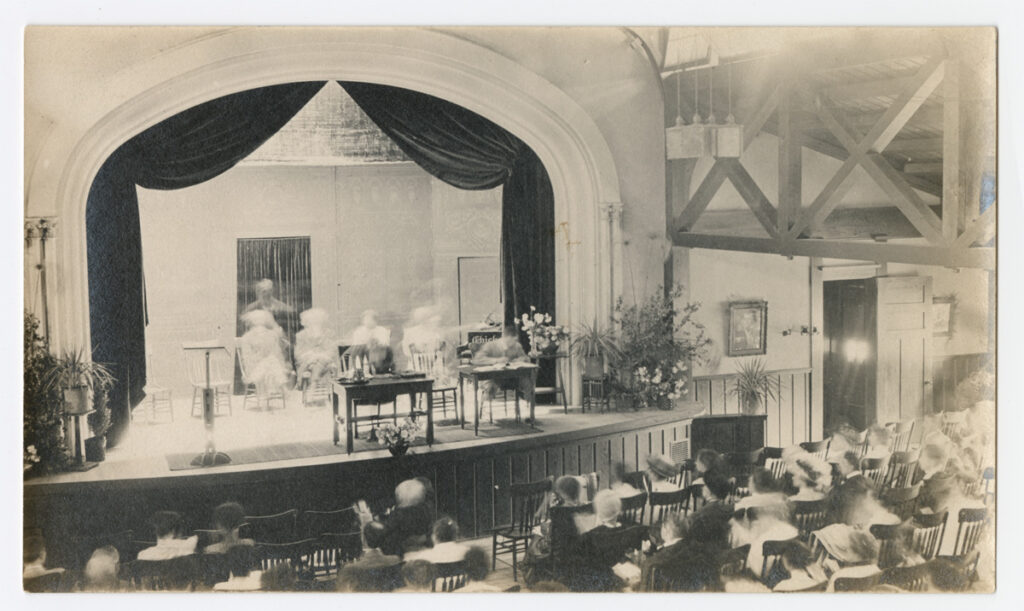
In December 2024, the library acquired an album of photographs that chronicles ALA Annual Conferences between 1894 and 1912. The photos capture librarians enjoying the conferences and some of the places visited during excursions to nearby sights. The album’s provenance is unknown, but the library claims it is likely that the photographs were all taken by ALA members who doubled as amateur photographers. Unbeknownst to them, these photographers captured historic snapshots of the early days of American librarianship and an Association dedicated to championing and developing the profession.
To celebrate and acknowledge the significance of the photos, Falvey Library has created “‘From Duluth we journey to the copper country’: The American Library Association Annual Conferences in the Late Nineteenth and Early Twentieth Centuries,” an online exhibit that brings together many of the album’s photographs and contextualizes them in their respective conferences.
The exhibit is divided into sections based on conference year, covering most years between 1894 and 1912 depending on availability of photographs inside the album. Much of the exhibit’s information is derived from published conference proceedings and conference programs that are digitally available on ALA’s website, according to Christoforos Sassaris, Distinctive Collections Coordinator at Falvey Library.
The exhibit is full of fascinating snapshots in history.
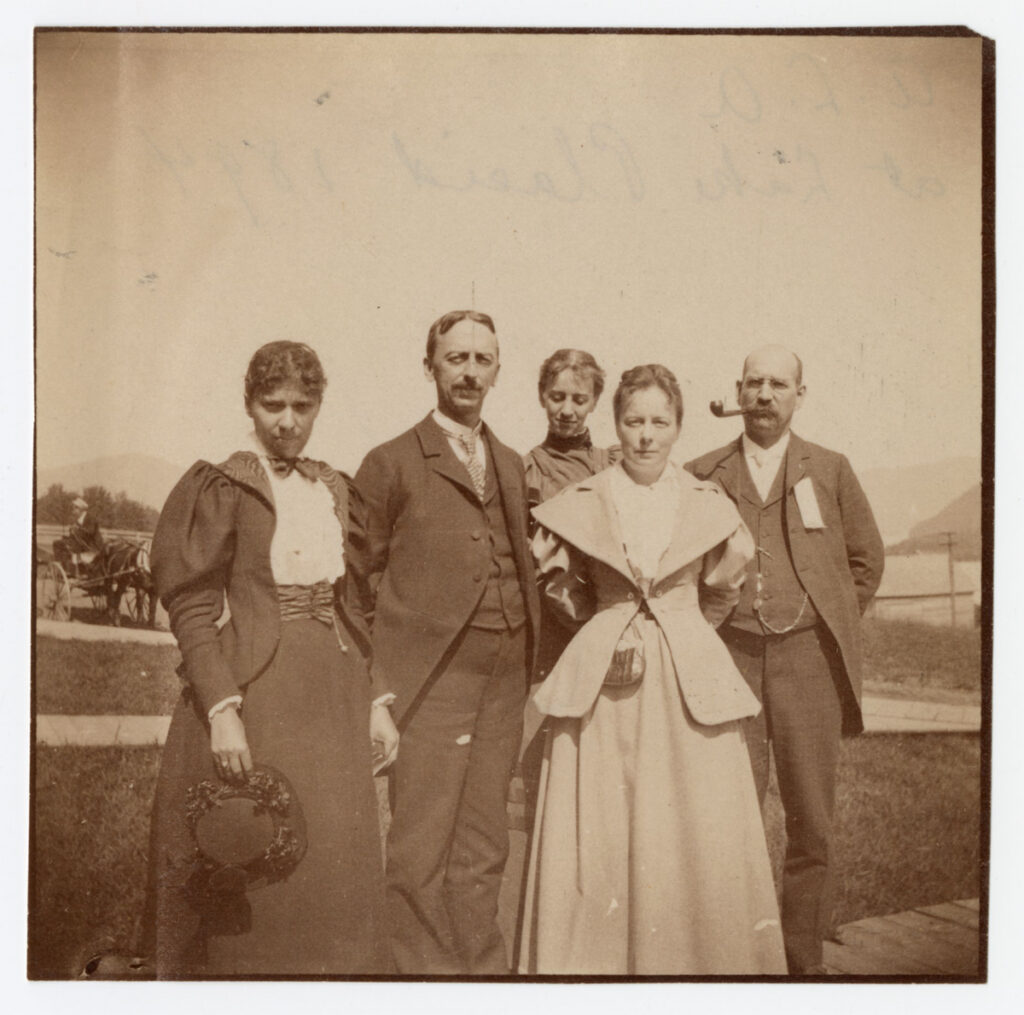
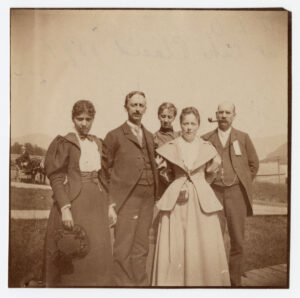
The earliest year recorded in the album is from 1894, when ALA visited Lake Placid in New York’s Adirondack Mountains between September 17-22. The pictures depict a lake near which the conference took place, as well as a group of several librarians, including Henry James Carr, who would later become ALA president.
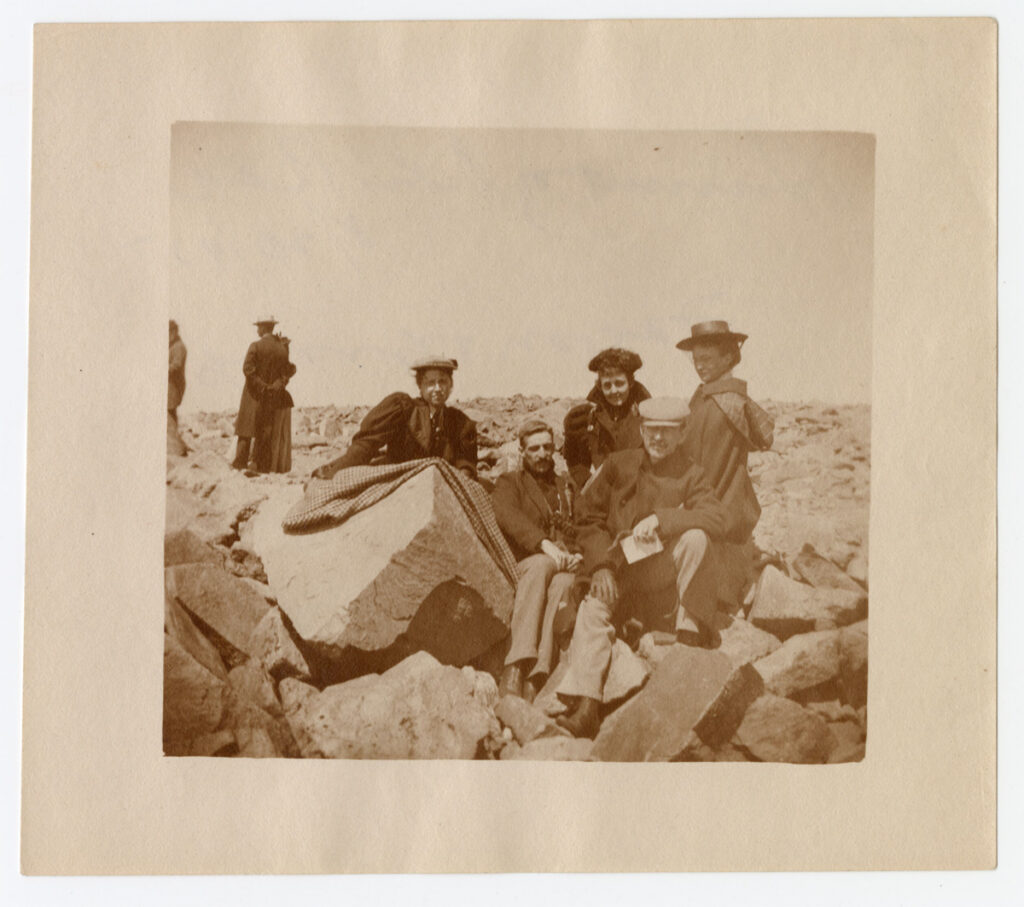
The 1895 ALA Conference took place in Colorado from January 23–28. According to the handbook for that year, the itinerary included visits to several areas in the greater area surrounding Denver and Colorado Springs. A notable part of the conference was a mountain excursion, which started at Denver and traveled by train and carriage through several locations before landing at Glenwood Springs, where the conference party stayed at the Hotel Colorado. There are several photographs of ALA members, such as Frederick Winthrop Faxon and Isaac S. Bradley, hiking the summit of Pike’s Peak in Colorado, named after Lieutenant Zebulon Pike of the U.S. Army, who led expeditions in the regions acquired by the U.S. through the Louisiana Purchase.
The 1897 conference took place in Philadelphia from June 21–July 1 and included an excursion to the Pennsylvanian countryside. According to the conference program, the conference began on the morning of June 21 with a “social gathering at the University of Pennsylvania” before proceeding to a series of committee reports and talks on a variety of subjects ranging from the care of manuscripts and special collections to “aims and personal attitude toward the work.”
The exhibit includes photos from several places that ALA members visited in Philadelphia, namely the Drexel Institute (later Drexel University) and the Liberty Bell. Also pictured are librarians traveling through various parts of the Pennsylvanian countryside, including the Pocono Mountains and the Delaware Water Gap (including areas such as Kittatinny Mountain and Minsi Mountain).
For its 1898 conference, ALA visited New York’s Chautauqua County, including the town of Lakewood, from July 4–9. Beyond the typical conference talks and papers, a standout aspect of the 1898 conference was the number of exhibits on practical topics relating to librarianship.
According to the conference program, “an unusually large exhibit” was curated on the topic of library appliances, including “working models or other tangible illustrations of devices, inventions, labor savers, blanks, forms, improved methods, and in short anything which can be illustrated and which will interest other librarians.” Another exhibit focused on library buildings, including “a selection of 100 interior and exterior views.”
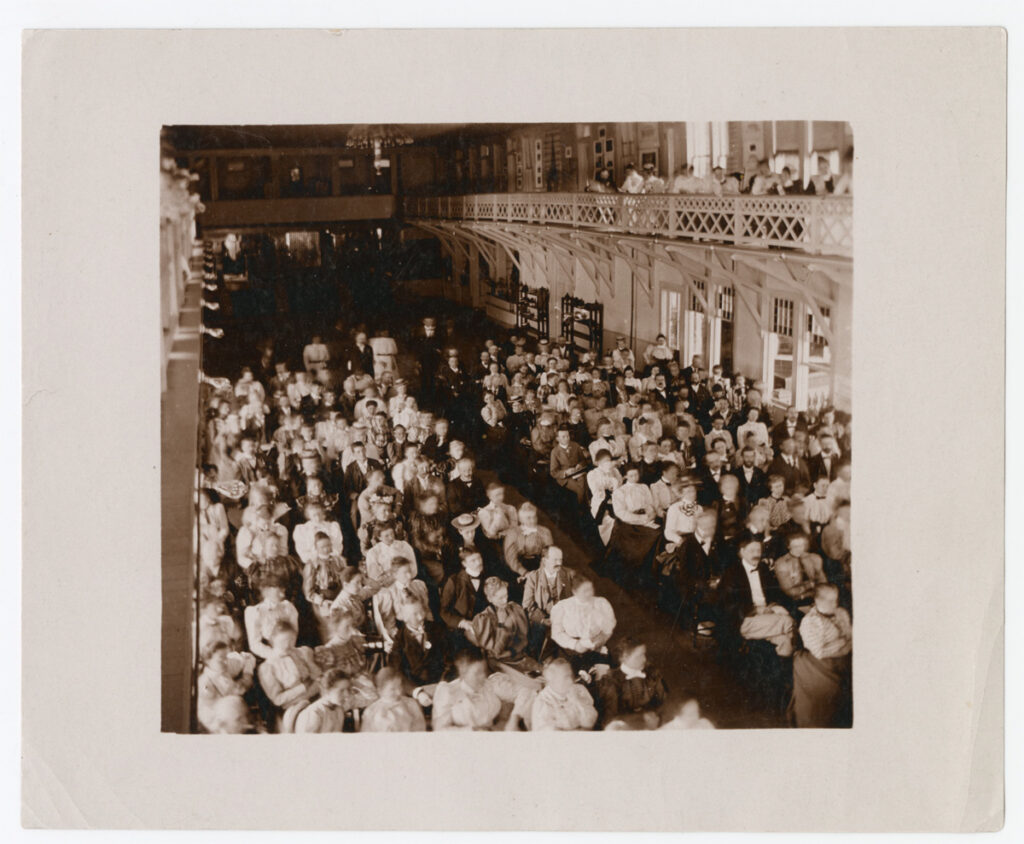
Another notable aspect of the 1898 conference was the “rest week” that followed the conference itself. According to the program, “The local committee has arranged instead of the usual post-conference, a rest week in the delightful surrounding of Lakewood.” Several exhibit photos depict groups of librarians participating in the conference and the subsequent rest week; they are pictured socializing, hiking in the countryside, and strolling near the lake.
inscriptions on several photos provide further context. The back of a photo depicting a large group of librarians sitting in the conference hall notes the “sessions were well attended. It is unfortunate that the hat rack by the dining hall door shows [us] plainly that nearly a dozen people would rather eat than attend sessions.”
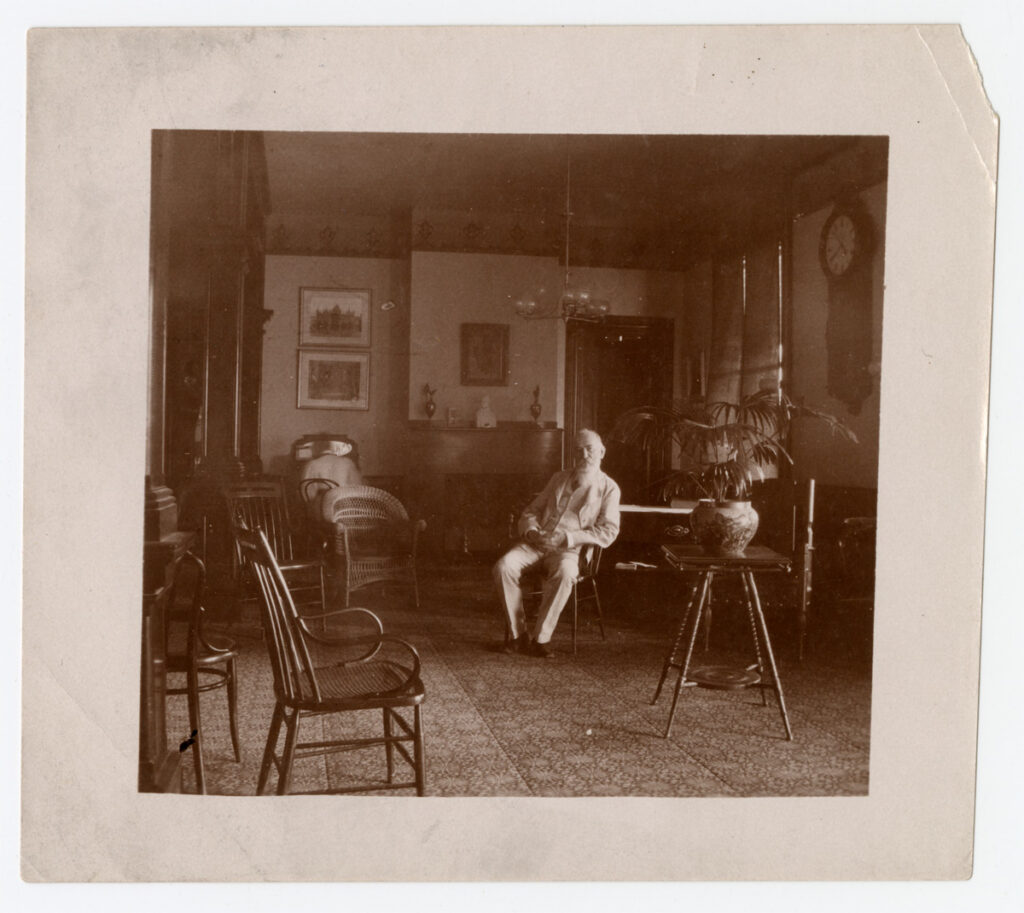
Between June 29 and June 6, 1906, ALA held its annual conference in Narragansett Pier, Rhode Island. The Mathewson House served as the conference headquarters and housed most of the general sessions.
According to the published conference proceedings, the 1906 president’s address, delivered by Frank Perce Hill of Brooklyn (N.Y.) Public Library, addressed a variety of topics including a historical examination of the role of the librarian, noting the close relation between the development of the U.S. public school system and the U.S. public library system. He also expresses several grievances shared by librarians, several of which relate to librarians becoming distant from books and the knowledge contained within.
Exhibit photos from this conference include images of ALA members in Providence, Rhode Island, and traditional clam bake in Rocky Point, Rhode Island.
Pasadena, California, hosted the 1911 ALA Annual Conference on May 18–24. The conference’s first general session was held at the Shakespeare Club House, where Henry E. Legler, temporary chairman of the ALA Executive Board, expressed regret over ALA President James I. Wyer, Jr.’s inability to attend the conference. In introducing the conference, Legler spoke alongside Pasadena’s Shakespeare club president Anna L. Meeker.
According to the conference proceedings, session topics from this year included—among other things—“municipal civil service as affecting libraries,” “California county free libraries,” “Increasing the educational efficiency of the library,” and “Humors and horrors of municipal civil service.” The conference also included a three-part exhibit on the topic of children’s literature, curated by Frances J. Olcott of the Carnegie Library in Pittsburgh. The exhibit consisted of three parts: “Mediocre and harmful fiction,” “Some good popular books which may take the place of mediocre and harmful fiction,” and “Editions of some classic and standard books for children.”
The ALA photo album only contains one confirmed photograph from the 1911 conference, which shows ALA members in session.
To view more photos from “‘From Duluth we journey to the copper country’: The American Library Association Annual Conferences in the Late Nineteenth and Early Twentieth Centuries,” visit Falvey Library at Villanova University online.