150 YEARS STRONG

Newbery: The First Medal

In 1921, Frederic Melcher, a publisher, bookseller, and chairman of the Children’s Book Week Committee, proposed the idea of a medal to be awarded in recognition of children’s literature and for it to be named after John Newbery, an 18th century British bookseller and children’s books publisher. With a growing audience for children’s books, more librarians being trained in children services, and the emergence of children’s book departments in publishing companies, the time seemed right for such an award and the idea gained traction.(1) Melcher paid to have the medal struck, while the Children’s Librarians Section (predecessor to the Association for Library Service to Children) organized the selection of the first winner through a vote of children’s librarians from across the country.
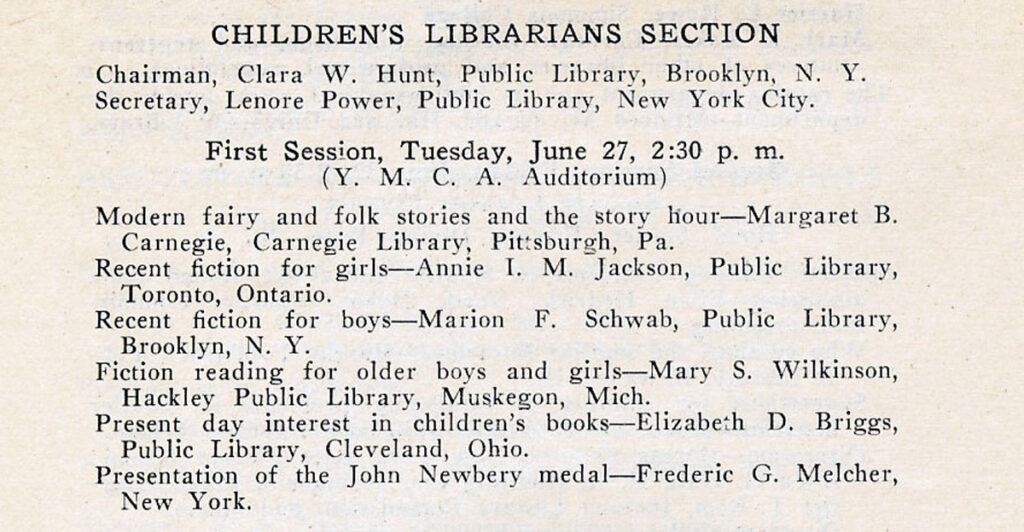
Agenda for the Children’s Librarians Section on June 27, 1922, including the first presentation of the John Newbery Medal.

The first John Newbery Medal was awarded to Hendrik Willem van Loon for his book, “The Story of Mankind,” in 1922 at the ALA Annual Conference in Detroit, Michigan. While the ALA Archives unfortunately does not have many records from the early days of the Newbery Medal, conference records provide an insight into how the first award ceremony went.

The Newbery was presented on June 27, 1922, during the Children’s Librarians Section’s session at the conference and was listed as the last item on the section’s agenda for the day. Despite the lack of a banquet or formal event, the presentation drew a crowd. The conference proceedings on the event open with: “Interest in awarding the John Newbery medal brought a big audience to the first session of the Children’s Librarians Section. The hall was full to capacity, many people were turned away.”(2)

At the ceremony, Clara W. Hunt, chair of the Children’s Librarians Section, expressed the gratitude of the section to Melcher for his donation of the medal:

“I would I had the ability to express adequately the gratitude which we children’s librarians feel for the inspiration which prompted you to make this gift to the cause we love … We feel strong and powerful because you believe in us and you are putting in our hands a weapon, one of the most potent of our times—publicity of the best kind.”(3)

The description of the event closes with: “The enthusiastic applause which greeted Dr. Van Loon gave evidence of the appreciation and interest of the large audience.”(4) As seen from the conference proceedings, the Newbery was instantly well regarded, and the excitement of children’s librarians was obvious. Its initial acclaim was well deserved as the Newbery Medal has proven to be an enduring honor.
150 YEARS STRONG

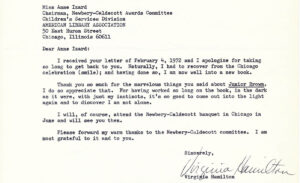
Detail of letter from Virginia Hamilton to Anne Izard, February 24, 1972.

Newbery: Letters from the Authors

For more than a century, the American Library Association has honored children’s authors with the John Newbery Medal. From the earliest years of the award, its prestige was not lost upon the authors who received it. Letters written by awardees to the Newbery Medal Committee chairs reveal their excitement upon receiving the news.

Agenda for the Children’s Librarians Section on June 27, 1922, including the first presentation of the John Newbery Medal.

Newbery: The First Medal

In 1921, Frederic Melcher, a publisher, bookseller, and chairman of the Children’s Book Week Committee, proposed the idea of a medal to be awarded in recognition of children’s literature and for it to be named after John Newbery, an 18th century British bookseller and children’s books publisher. With a growing audience for children’s books, more librarians being trained in children services, and the emergence of children’s book departments in publishing companies, the time seemed right for such an award and the idea gained traction.

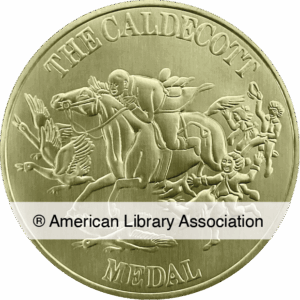
Caldecott Award Seal

The Caldecott Medal: ‘A Hasty Idea Thrown Out’

The Caldecott Medal is of one of the most prestigious children’s book awards in the world. Established in 1937 to recognize the most distinguished American picture book for children, the first medal was awarded in 1938 to Dorothy P. Lathrop for the book, “Animals of the Bible.” However, the idea was first presented in 1935 in a letter by Frederic G. Melcher.

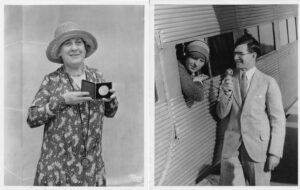
Left: Effie Power with Newbery medal, Los Angeles, 1930. Right: Rachel Field and Milton J. Ferguson. Ferguson announced to Field that “Hitty” was chosen to receive the Newbery Medal. Los Angeles Conference, 1930.

Celebrating the Newbery: ‘Publicity of the Best Kind’

Publicity around the Newbery Medal has drummed up excitement amongst librarians, readers, and the public for the past century. Often this has meant events, press releases, newsletters, radio programming, television broadcasts, and newspaper and magazine articles. However, some publicity ideas were more daring than press conferences and radio programs.

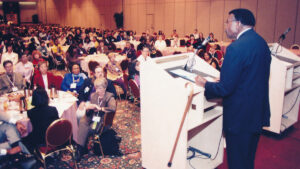
Keynote speaker E.J. Josey speaking at the Martin Luther King, Jr. Holiday Observation and Sunrise Celebration at the 2000 ALA Midwinter Meeting in San Antonio.

‘The Spiritual High Point’: The Dr. MLK Holiday Observation and Sunrise Celebration

The Dr. Martin Luther King, Jr. Holiday Observation and Sunrise Celebration celebrates the life and legacy of Dr. King, featuring a keynote speaker, representatives from National Associations of Librarians of Color, the ALA President, and the singing of “We Shall Overcome.” The celebration started in 2000, but efforts to observe the MLK Jr. Holiday during ALA’s Midwinter Meeting started long before.

Sibert Medal

Twenty-Five Years of the Sibert Medal

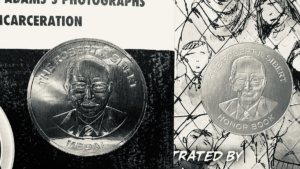
As the American Library Association celebrates its 150th birthday this year, one of the Association’s prestigious book awards also reaches a milestone anniversary. For 25 years, the Robert F. Sibert International Book Medal has been awarded annually to the author(s) and illustrator(s) of the most distinguished non-fiction informational book published in the United States in English during the preceding year.