
150 YEARS STRONG

Librarians on the March

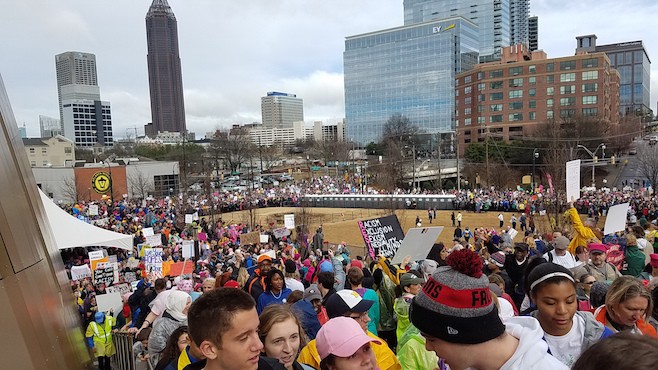
Crowd at the Atlanta March for Social Justice and Women. Photo: George M. Eberhart/American Libraries
The crowd at the Atlanta March for Social Justice and Women. Photo: George M. Eberhart/American Libraries

A mass of enthusiastic demonstrators took part in the Atlanta March for Social Justice and Women held on Saturday, January 21, [2017], during the ALA Midwinter Meeting and Exhibits. A contingent of at least 200 librarians participated, many dressed in pink pussyhats and Nasty Women t-shirts, brandishing signs like “Make America read again” and “Keep your hands off my area studies.” The demonstration was one of hundreds held in all 50 states and dozens of countries to show opposition to the policies of the Trump administration on immigration, women’s rights, health care, climate change, choice, diversity, and equality.

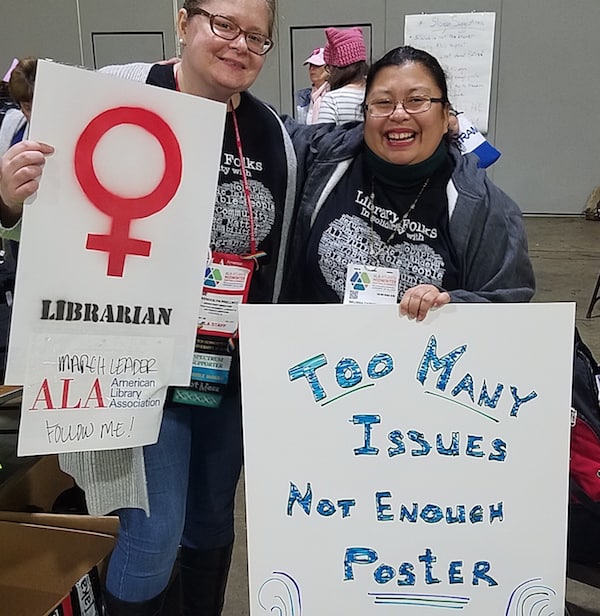
Midwinter Meeting attendees gathered in a hall of the Georgia World Congress Center to create posters, distribute “Radical Militant Librarian” pins, and generate some LIS energy for the march. A sign on the wall suggested some slogans the librarian contingent could use: “Silence is not the answer,” “Libraries are the key to freedom,” and “Too many issues­—not enough poster.”

Bedeviled by heavy rains at the beginning of the march, only about 18,000 assembled at the Atlanta Center for Civil and Human Rights (CCHR), but by the time the march ended at the gold-domed Georgia State Capitol nearly a mile away, the crowd had swelled to nearly 63,000, according to police estimates. There was a wide age range as well, from infants held by their mothers to senior citizens who may have been involved in Vietnam War protests. Black men and women, Hispanics, Muslims, and whites were all well-represented.

To some observers, it seemed as if the sun broke through the clouds when Rep. John Lewis (D-Ga.) took the makeshift stage at the CCHR around 2 p.m. A much-venerated leader from the civil rights movement of the 1960s, Lewis said, “I know something about marching, and I’m ready to march again.” He said that when you see something is wrong, you have a mandate to oppose it. “We cannot afford to be silent,” he said. “We should be standing up, getting in the way, and getting into good trouble, necessary trouble.” He added, “Don’t let anybody turn you around,” reminding the marchers that he has been arrested 45 times in his life, five of those after he was elected to Congress.

Despite the intimations of trouble, the march was well organized and the marchers were on their best behavior. The feeling of unity and respect was palpable. The Atlanta police, who were blocking off the streets along the march path, were cheered periodically by the passing crowds.

Lewis also gave a pep talk at the end of the march at the Capitol, which you can hear on the video, shot by American Libraries then-Associate Editor Phil Morehart. Another video shows marchers on their way to the Capitol.

Wendy Prellwitz, left, formerly of ALA’s Office for Diversity, Literacy, and Outreach Services, helped Midwinter attendees make posters for the march. Photo: George M. Eberhart/American Libraries

150 YEARS STRONG

THE OFFICIAL ANNIVERSARY BLOG

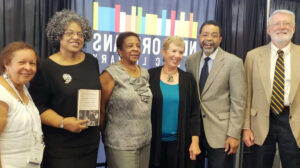
(Left to right) Teri Moncure Mojgani, Joan Mattison Daniel, Ethel Adolphe, Shirley Wiegand, Ibrahim Mumin, and Wayne Wiegand at the panel discussion on “Hidden Figures in American Library History: The Desegregation of Public Libraries in the Jim Crow South,” New Orleans Public Library, June 24, 2018.

Desegregating Public Libraries: The Untold Stories of Civil Rights Heroes in the Jim Crow South

On Sunday, June 24, 2018, the governing Council of American Library Association passed a historic resolution that “apologizes to African Americans for wrongs committed against them in segregated public libraries” and commends those “who risked their lives to integrate public libraries for their bravery and courage in challenging segregation in public libraries and in forcing public libraries to live up to the rhetoric of their ideals.”
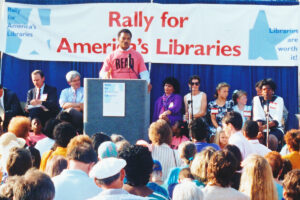
Jesse Jackson speaking at the Rally for America's Libraries in front of a large crowd

Jesse Jackson and a Legacy of Library Activism

Throughout his life of activism and public service, Rev. Jesse Jackson consistently championed libraries as centers of knowledge where individuals and communities can learn about their past, present, and future.
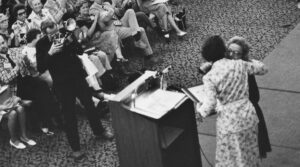
Clara Jones embracing Virginia L. Jones, after V. Jones received an Honorary Membership of ALA during the 1976 ALA Conference.

Clara S. Jones: ‘Awareness is Not Burdened with Repression; It Is Liberating’

During the 1975 American Library Association Annual Conference, Clara Stanton Jones was announced as the vice president and president-elect of the American Library Association. Her term as president would start during ALA’s 1976 Centennial Conference, a fitting celebration for the first African American President of the Association.
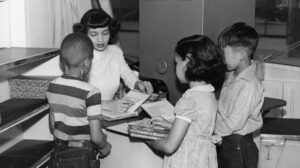
Action, Not Reaction: Integrating the Library Profession

In the midst of the Civil Rights era in America, librarians were battling for and against segregated libraries in the South, however they were also battling over integration within their own ranks. Integration of the library profession was a long process that started in the early 20th century.
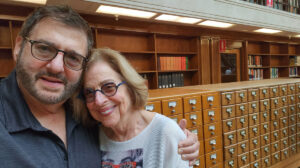
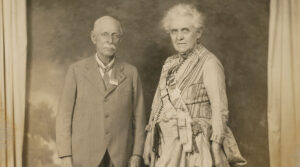
Henry and Edith Carr

Henry and Edith Carr, ALA’s Golden Couple

With Valentine’s Day approaching, we remember possibly the most famous ALA couple of all time, Henry and Edith Wallbridge Carr. Married for 43 years and active in ALA for even longer, the Carrs were well-known within the library community of the late 19th and early 20th century. Where did their romance begin? At an ALA conference, of course!