

150 YEARS STRONG

“Give the Next Man a Chance!” The Circulating Books of World War I

During World War I, the American Library Association (ALA) sent more than 10 million books and magazines to camp libraries and overseas for the use of servicemen. The collection development of these libraries was focused on having material that could help the men prepare for a job back home, such as books about business, engines, plumbing, carpentry, cement, and trains, but they also recognized that the servicemen needed entertainment, and stocked the libraries with magazines and “good, live fiction.” These library services still supported the servicemen after the armistice as well.

But what happened to all those books when the servicemen came home? The post-war life of the War Service books was very practical: ALA-managed libraries were transformed into military-managed libraries after the war. And as these military librarians eventually weeded them out of the collection or otherwise discarded them, War Service books were sold into private hands or distributed to public libraries for further use.

The ALA Archives holds a small selection of former War Service books as examples of how these books were marked and circulated during this important early ALA campaign. Here are a few pictures from the books in the collection:

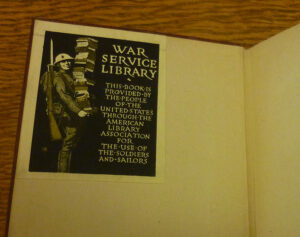
This full color bookplate featuring a Marine was the most popular one pasted into War Service books.

You may recognize this book-loving Marine from this poster soliciting book donations featuring the same artwork!

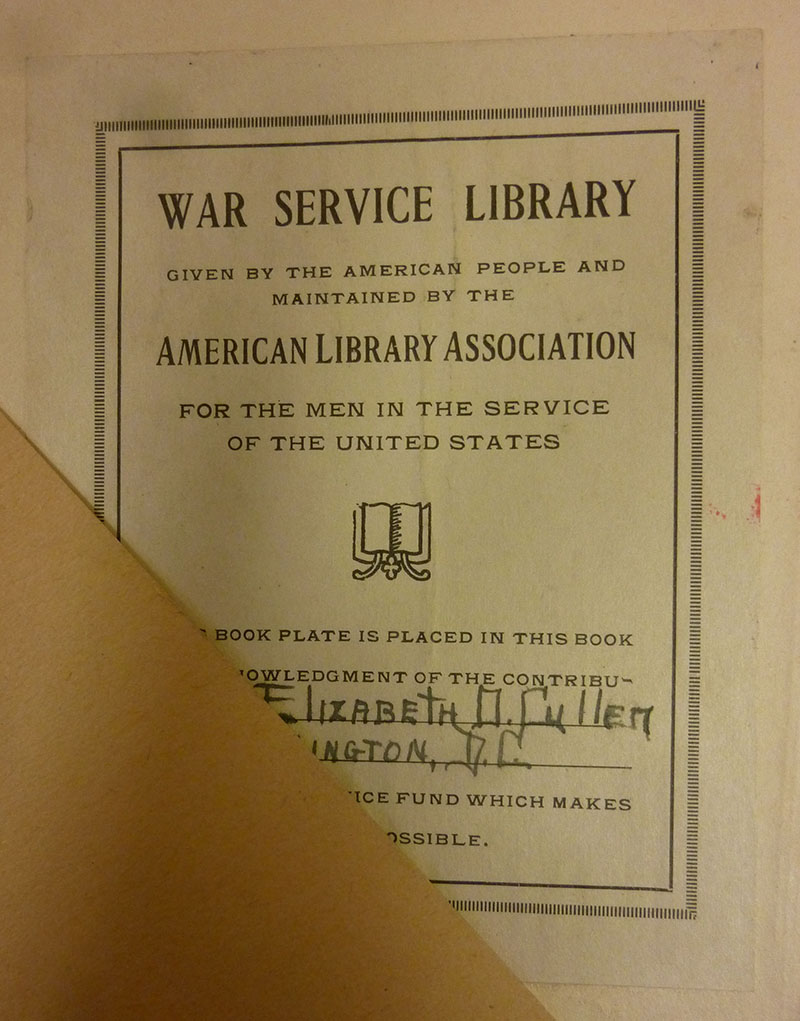
This alternate bookplate is in black and white and has the name of the person who donated the book.
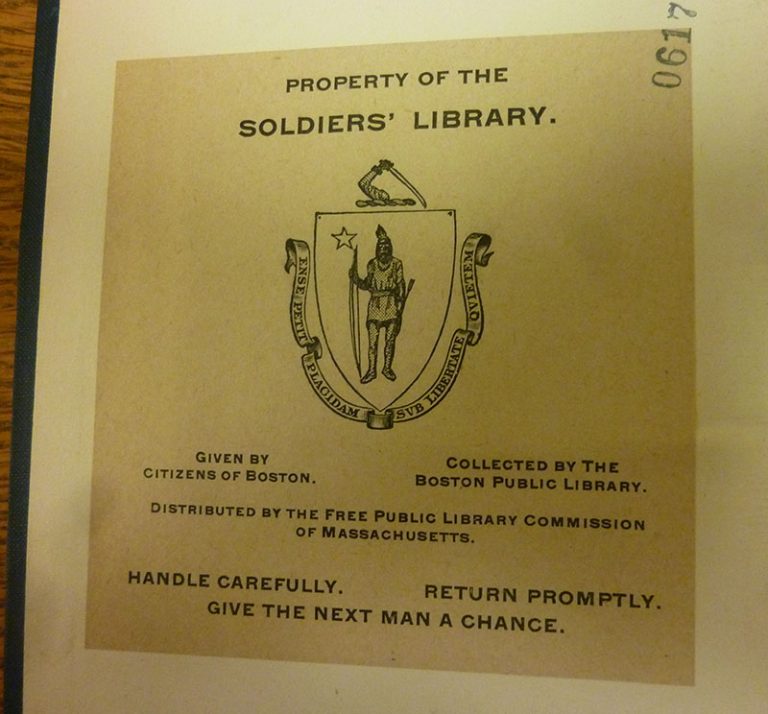
This unique bookplate says that the book was donated by the citizens of Boston via the Boston Public Library.

The books also show how the books were circulated to soldiers:

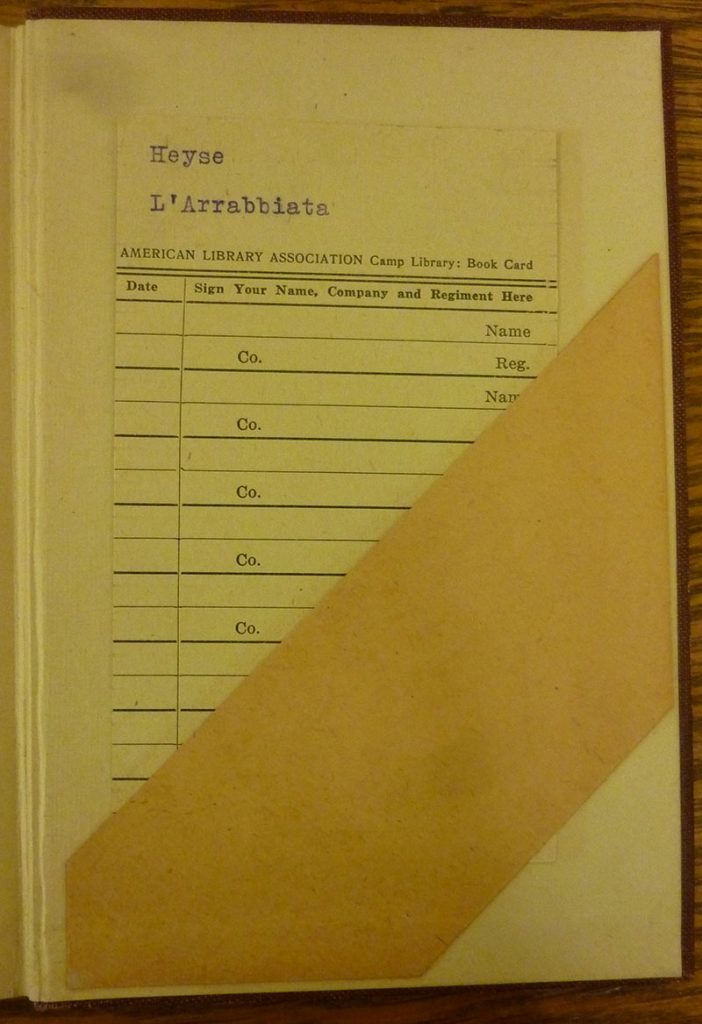
The librarians decided to use a slanting piece of cardstock glued to the book on the right and left edges to hold the circulation card instead of the more typical sleeves.
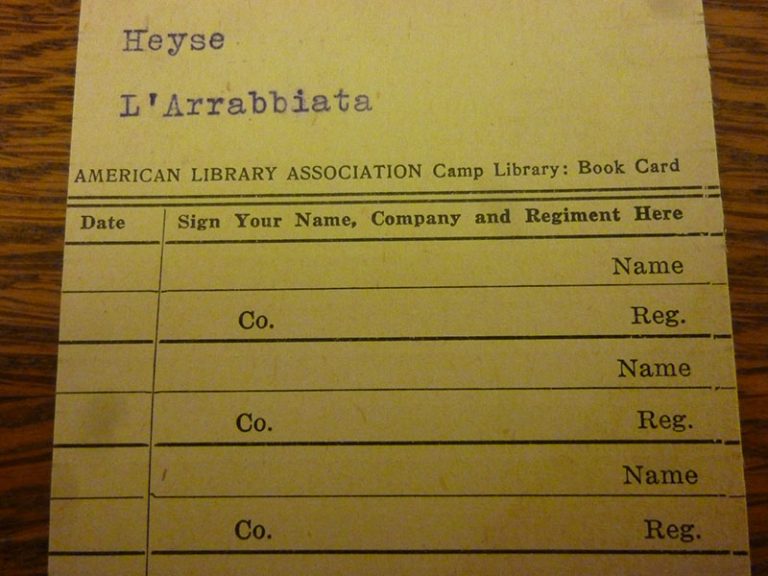
The circulation cards were unique to the project and asked for your name, company and regiment. This book (a text for learning German) appears to have never been checked out!

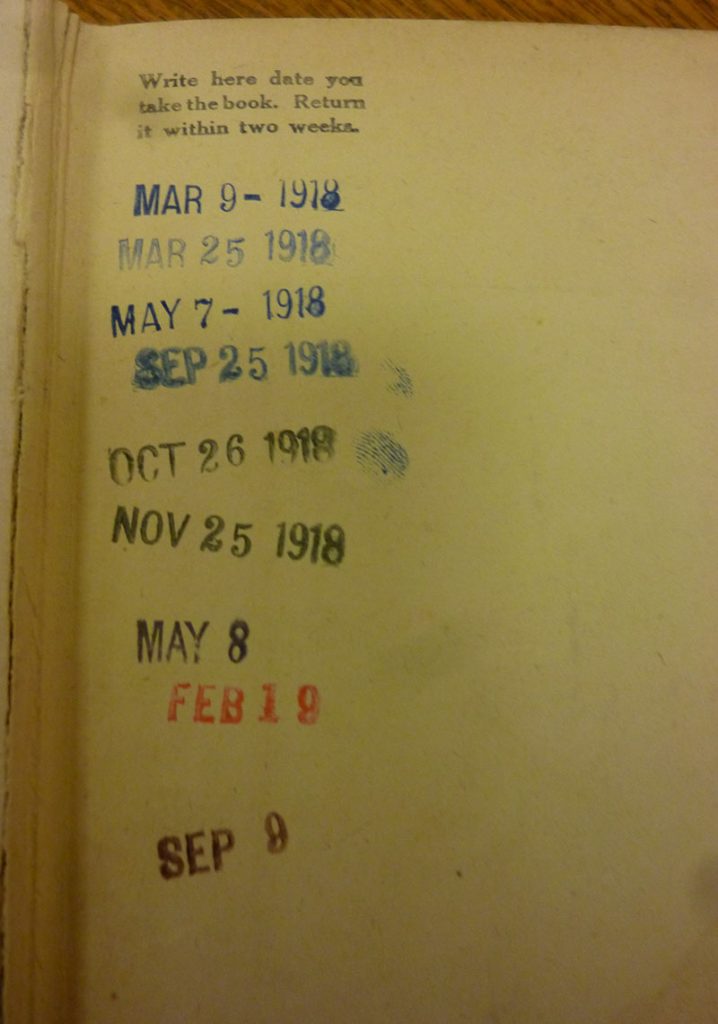
Some other libraries didn’t bother with circulation cards:

Here the check-out dates are stamped directly on the book’s endpaper.

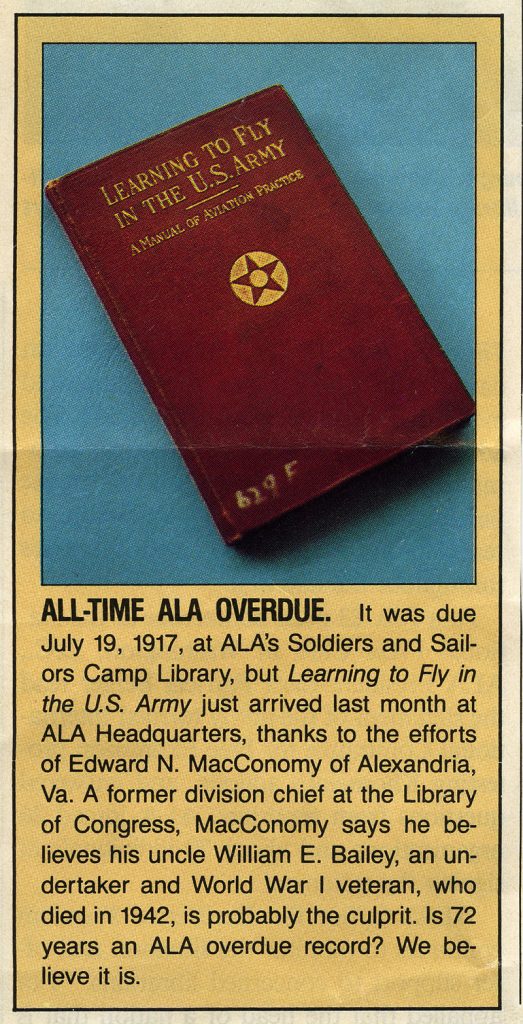
One book in our collection came into the hands of the archives in a particularly interesting way:  it was sent to the ALA in 1989, and got a small write-up in the April 1989 issue of American Libraries as being extremely overdue!

(But if you happen to have a Library War Service book in your hands at this time, don’t worry, there’s no fine and ALA doesn’t want it back!)

These particular War Service books are available for use at the ALA Archives, Record Series 89/1/60, but other “veterans” of this war effort are still commonly available in used books shops and other places antiques are sold.

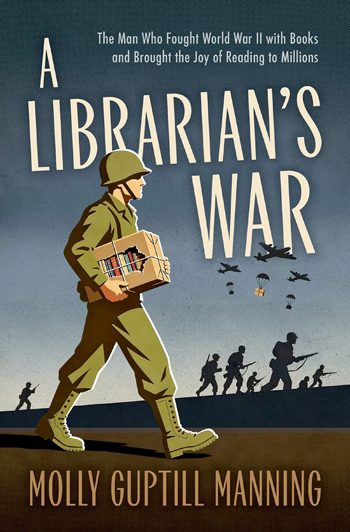
If you’d like to learn more about book use during wartime, check out Episode 37 of ALA’s “How I Library” podcast featuring Molly Guptill Manning, author of “A Librarian’s War: The Man Who Fought World War II with Books and Brought the Joy of Reading to Millions,” which tells the incredible story of Ray Trautman, the Chief Librarian of the U.S. Army during WWII.

A lifelong champion of books and literacy who moved in the same circles as Ernest Hemingway, Eleanor Roosevelt, and Presidents Roosevelt, Eisenhower, and Truman, Trautman put nearly half a billion books and other reading materials into the hands of U.S. military members serving around the world during WWII. It can be argued that no one in American history has made a greater contribution to the reading habits of Americans than Trautman, and the ripple effects of his work can still be felt today.

“A Librarian’s War” is also a riveting look at a world torn apart by war and how books and reading helped boost morale both on the battlefield and on the homefront. It also examines ALA’s work with Trautman extensively.

“How I Library” is available for download or streaming on Soundcloud, Spotify, Apple Podcasts, or wherever you listen to podcasts. Or listen below.

150 YEARS STRONG

THE OFFICIAL ANNIVERSARY BLOG

This full color bookplate featuring a Marine was the most popular one pasted into War Service books.

“Give the Next Man a Chance!” The Circulating Books of World War I

During World War I, the American Library Association (ALA) sent more than 10 million books and magazines to camp libraries and overseas for the use of servicemen. But what happened to all those books when the servicemen came home? The ALA Archives holds a small selection of former War Service books as examples of how these books were marked and circulated during this important early ALA campaign.
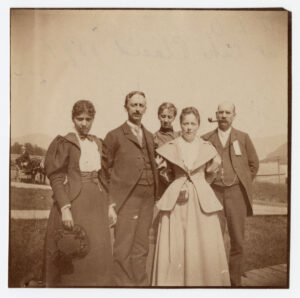
"ALA at Lake Placid, 1894." From the Falvey Library.

Villanova Library Explores Early Days of ALA Conferences

In 2024, Falvey Library at Villanova University acquired an album of historic photographs chronicling ALA Annual Conferences between 1894 and 1912. To celebrate and acknowledge the significance of the acquisition, the library has created an online exhibit that brings together many of the album’s photographs and contextualizes them in their respective conferences.
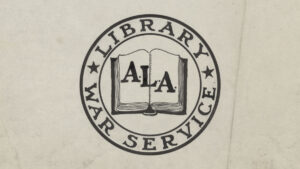
ALA Library War Service book plate design draft.

Reading for the Future: Looking Back on the Library War Service and 150 Years of ALA

In 1919, Herbert Hoover founded the Hoover War Library at Stanford University in response to the devastation he witnessed in Europe. Today, as archivists at the Hoover Institution Library & Archives, we encounter many collections related to World War I, but the dynamic photographs of librarians distributing reading materials to soldiers in our American Library Association War Service records caught our attention and led us on an unexpected and informative journey.
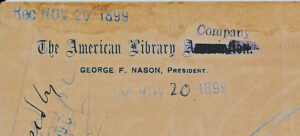
Stationary used by George Nason with “Association” blotted out. From the ALA Archives,

The Curious Case of the Two American Library Associations

In 1899, the American Library Association was notified that a small commercial traveling library was operating under the name “The American Library Association” under the tutelage of “a person of questionable character and unsavory reputation.” Thus began the curious case of the two American Library Associations.
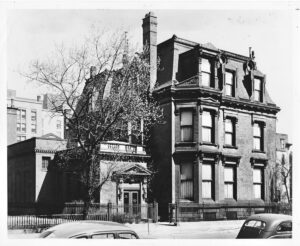
The exterior of the McCormick Mansion. An inconvenient office space or a mansion overrun by ghosts? From the ALA Archives.

Was ALA’s McCormick Mansion Haunted?

Halloween is approaching and during this spooky season, the ALA Archives has been meditating upon one of ALA’s old headquarters, the McCormick Mansion. Why would ALA want to move out of the McCormick Mansion so quickly and destroy it? Was it because the mansion was … haunted?
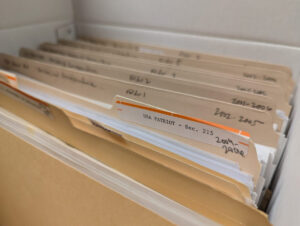
USA PATRIOT Act files in the Office for Intellectual Freedom Subject File at the ALA Archives.

15 Years of Fear: ALA and the Patriot Act

October 26, 2001, marked the beginning of a 15-year-long struggle for the privacy rights of library users as a result of the USA PATRIOT Act being signed into law by President Bush. Prompted by the possibility of government agents ordering libraries to turn over patron information, ALA’s Washington Office created the “Guidelines for Librarians on the U.S.A. PATRIOT Act: What to do before, during and after a ‘knock at the door?’” which provided guidance on consulting legal counsel and reviewing policies.