
150 YEARS STRONG

Villanova Library Explores Early Days of ALA Conferences

An interesting look at the early days of American Library Association (ALA) conferences is now online thanks to the Falvey Library at Villanova University.

In December 2024, the library acquired an album of photographs that chronicles ALA Annual Conferences between 1894 and 1912. The photos capture librarians enjoying the conferences and some of the places visited during excursions to nearby sights. The album’s provenance is unknown, but the library claims it is likely that the photographs were all taken by ALA members who doubled as amateur photographers. Unbeknownst to them, these photographers captured historic snapshots of the early days of American librarianship and an Association dedicated to championing and developing the profession.

To celebrate and acknowledge the significance of the photos, Falvey Library has created “­‘From Duluth we journey to the copper country’: The American Library Association Annual Conferences in the Late Nineteenth and Early Twentieth Centuries,” an online exhibit that brings together many of the album’s photographs and contextualizes them in their respective conferences.
The exhibit is divided into sections based on conference year, covering most years between 1894 and 1912 depending on availability of photographs inside the album. Much of the exhibit’s information is derived from published conference proceedings and conference programs that are digitally available on ALA’s website, according to Christoforos Sassaris, Distinctive Collections Coordinator at Falvey Library.

The exhibit is full of fascinating snapshots in history.

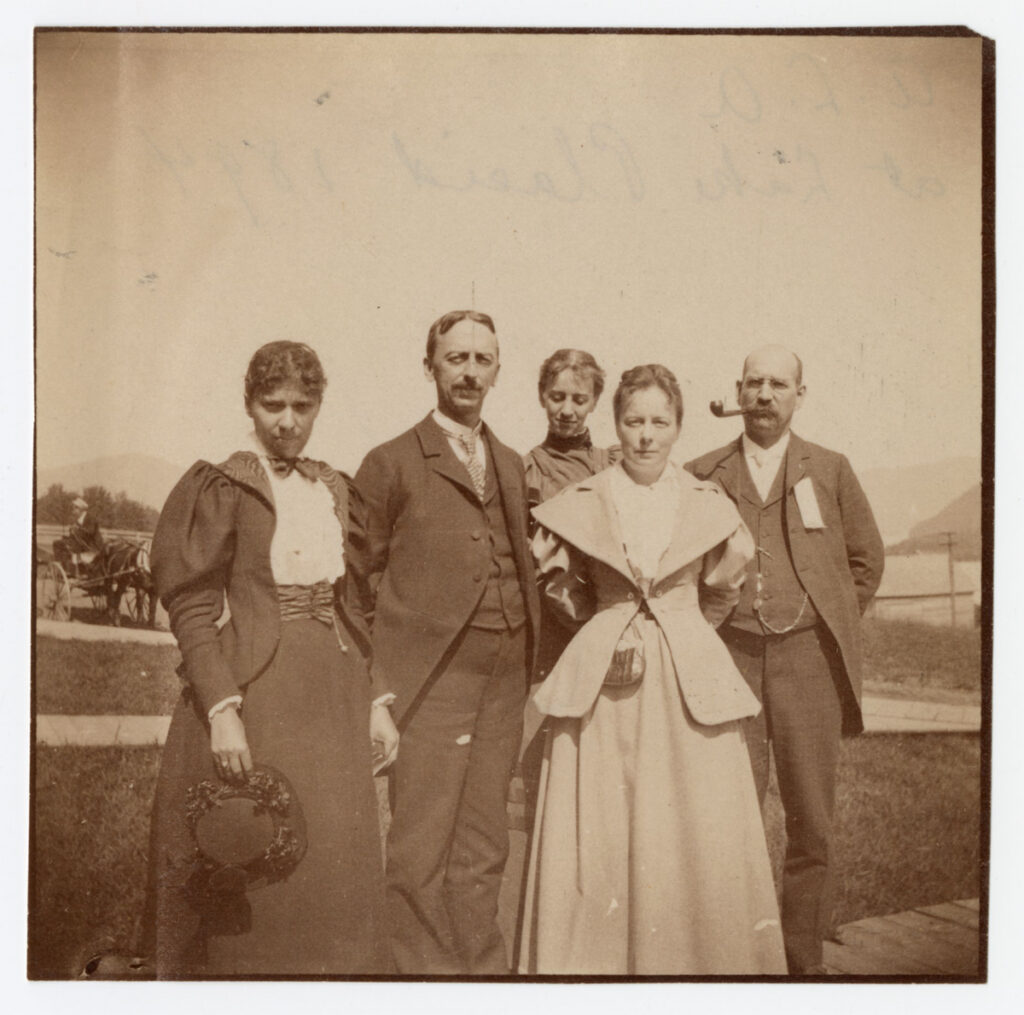
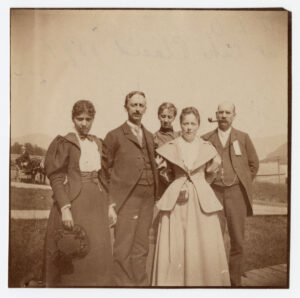
The earliest year recorded in the album is from 1894, when ALA visited Lake Placid in New York’s Adirondack Mountains between September 17-22. The pictures depict a lake near which the conference took place, as well as a group of several librarians, including Henry James Carr, who would later become ALA president.

"ALA at Lake Placid, 1894." From the Falvey Library.
"ALA at Lake Placid," 1894. From the Falvey Library.

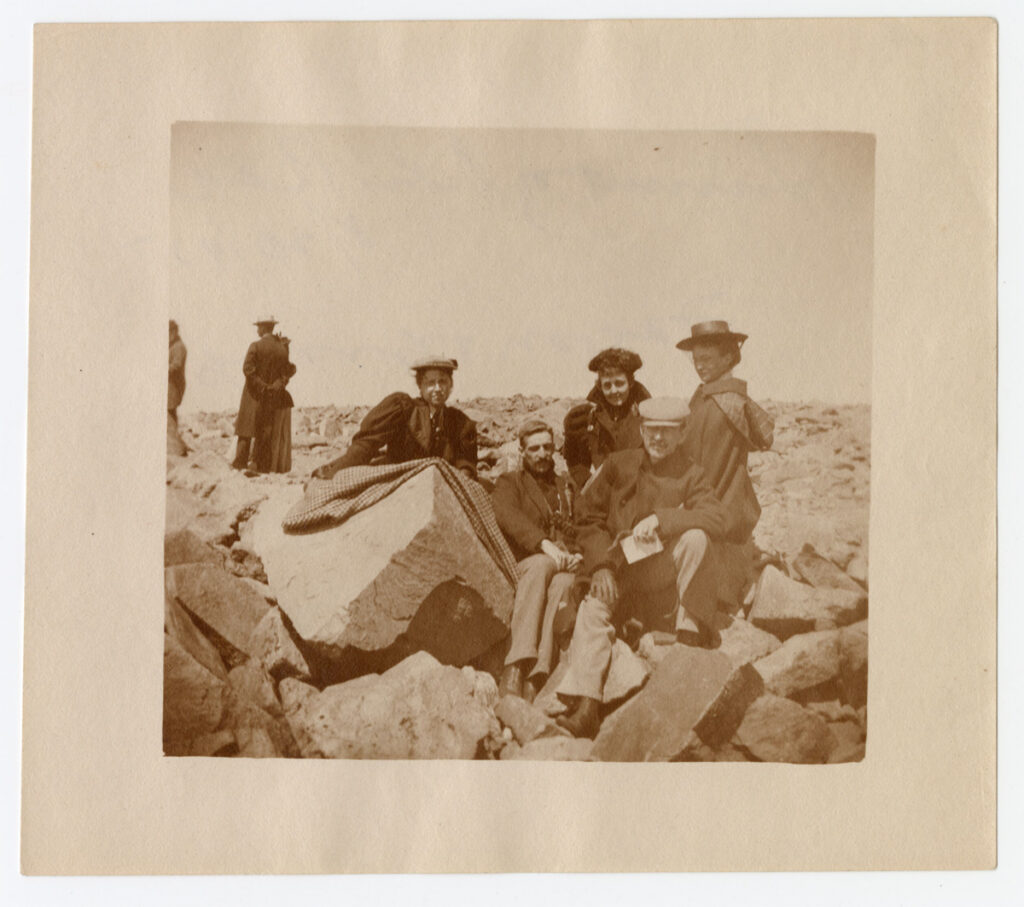
The 1895 ALA Conference took place in Colorado from January 23–28. According to the handbook for that year, the itinerary included visits to several areas in the greater area surrounding Denver and Colorado Springs. A notable part of the conference was a mountain excursion, which started at Denver and traveled by train and carriage through several locations before landing at Glenwood Springs, where the conference party stayed at the Hotel Colorado. There are several photographs of ALA members, such as Frederick Winthrop Faxon and Isaac S. Bradley, hiking the summit of Pike’s Peak in Colorado, named after Lieutenant Zebulon Pike of the U.S. Army, who led expeditions in the regions acquired by the U.S. through the Louisiana Purchase.

"Summit of Pike's Peak ... Faxon group," August 20, 1895. From the Falvey Library.

The 1897 conference took place in Philadelphia from June 21–July 1 and included an excursion to the Pennsylvanian countryside. According to the conference program, the conference began on the morning of June 21 with a “social gathering at the University of Pennsylvania” before proceeding to a series of committee reports and talks on a variety of subjects ranging from the care of manuscripts and special collections to “aims and personal attitude toward the work.” 

The exhibit includes photos from several places that ALA members visited in Philadelphia, namely the Drexel Institute (later Drexel University) and the Liberty Bell. Also pictured are librarians traveling through various parts of the Pennsylvanian countryside, including the Pocono Mountains and the Delaware Water Gap (including areas such as Kittatinny Mountain and Minsi Mountain). 

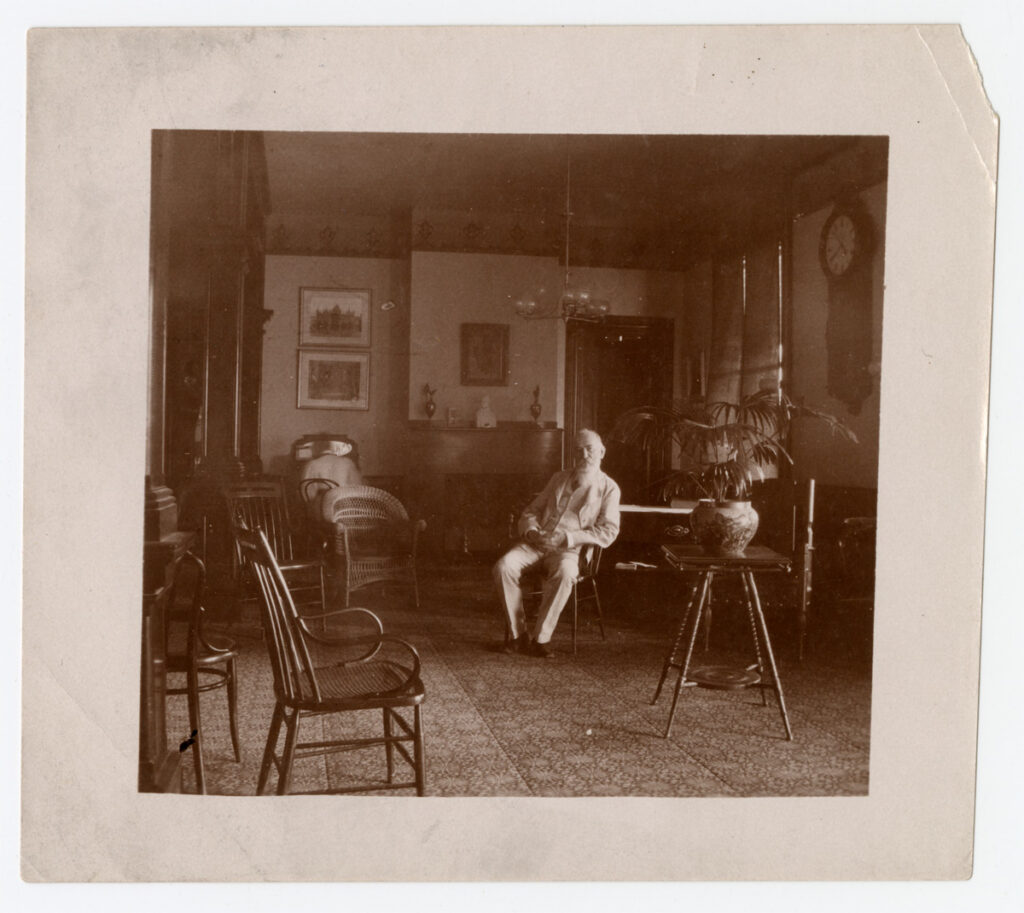
"The office of the Kittatinny", June 1897. From the Falvey Library.

For its 1898 conference, ALA visited New York’s Chautauqua County, including the town of Lakewood, from July 4–9. Beyond the typical conference talks and papers, a standout aspect of the 1898 conference was the number of exhibits on practical topics relating to librarianship.

According to the conference program, “an unusually large exhibit” was curated on the topic of library appliances, including “working models or other tangible illustrations of devices, inventions, labor savers, blanks, forms, improved methods, and in short anything which can be illustrated and which will interest other librarians.” Another exhibit focused on library buildings, including “a selection of 100 interior and exterior views.”

Another notable aspect of the 1898 conference was the “rest week” that followed the conference itself. According to the program, “The local committee has arranged instead of the usual post-conference, a rest week in the delightful surrounding of Lakewood.” Several exhibit photos depict groups of librarians participating in the conference and the subsequent rest week; they are pictured socializing, hiking in the countryside, and strolling near the lake.

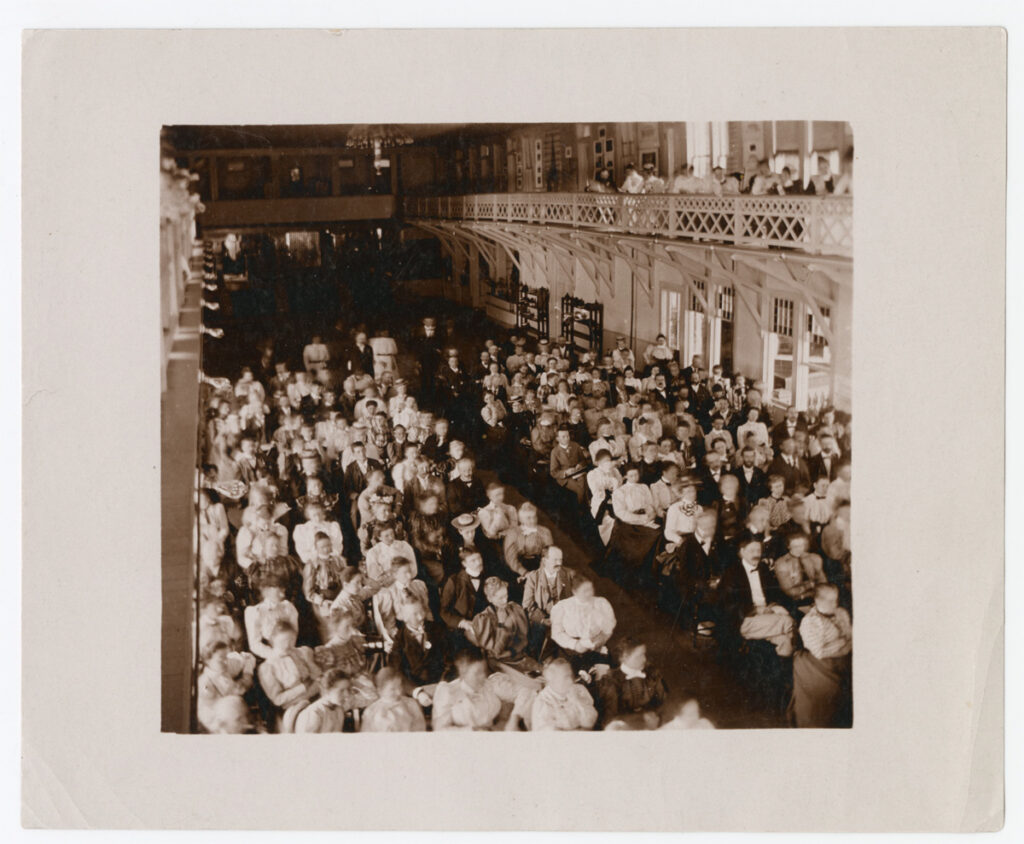
inscriptions on several photos provide further context. The back of a photo depicting a large group of librarians sitting in the conference hall notes the “sessions were well attended. It is unfortunate that the hat rack by the dining hall door shows [us] plainly that nearly a dozen people would rather eat than attend sessions.”

"Lakewood on Chautauqua Conference ... The sessions were well attended", July 1898. From the Falvey Library.

Between June 29 and June 6, 1906, ALA held its annual conference in Narragansett Pier, Rhode Island. The Mathewson House served as the conference headquarters and housed most of the general sessions.

According to the published conference proceedings, the 1906 president’s address, delivered by Frank Perce Hill of Brooklyn (N.Y.) Public Library, addressed a variety of topics including a historical examination of the role of the librarian, noting the close relation between the development of the U.S. public school system and the U.S. public library system. He also expresses several grievances shared by librarians, several of which relate to librarians becoming distant from books and the knowledge contained within.

Exhibit photos from this conference include images of ALA members in Providence, Rhode Island, and traditional clam bake in Rocky Point, Rhode Island.

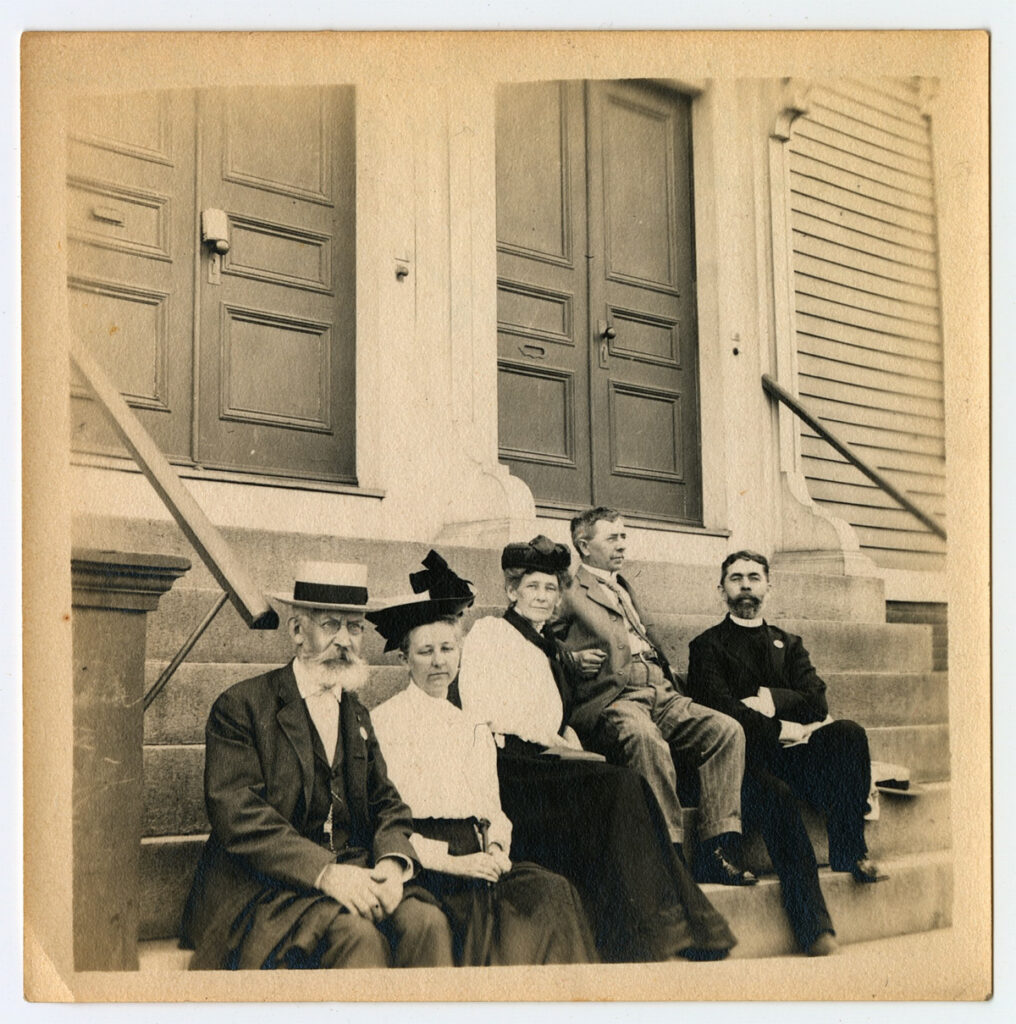
"Mr. Jones, Mrs. Jones, Mrs. Whitney, Mr. Thwaites and Dr. Robinson on steps of capitol at Providence." From the Falvey Library.

Pasadena, California, hosted the 1911 ALA Annual Conference on May 18–24. The conference’s first general session was held at the Shakespeare Club House, where Henry E. Legler, temporary chairman of the ALA Executive Board, expressed regret over ALA President James I. Wyer, Jr.’s inability to attend the conference. In introducing the conference, Legler spoke alongside Pasadena’s Shakespeare club president Anna L. Meeker.

According to the conference proceedings, session topics from this year included—among other things—“municipal civil service as affecting libraries,” “California county free libraries,” “Increasing the educational efficiency of the library,” and “Humors and horrors of municipal civil service.” The conference also included a three-part exhibit on the topic of children’s literature, curated by Frances J. Olcott of the Carnegie Library in Pittsburgh. The exhibit consisted of three parts: “Mediocre and harmful fiction,” “Some good popular books which may take the place of mediocre and harmful fiction,” and “Editions of some classic and standard books for children.”

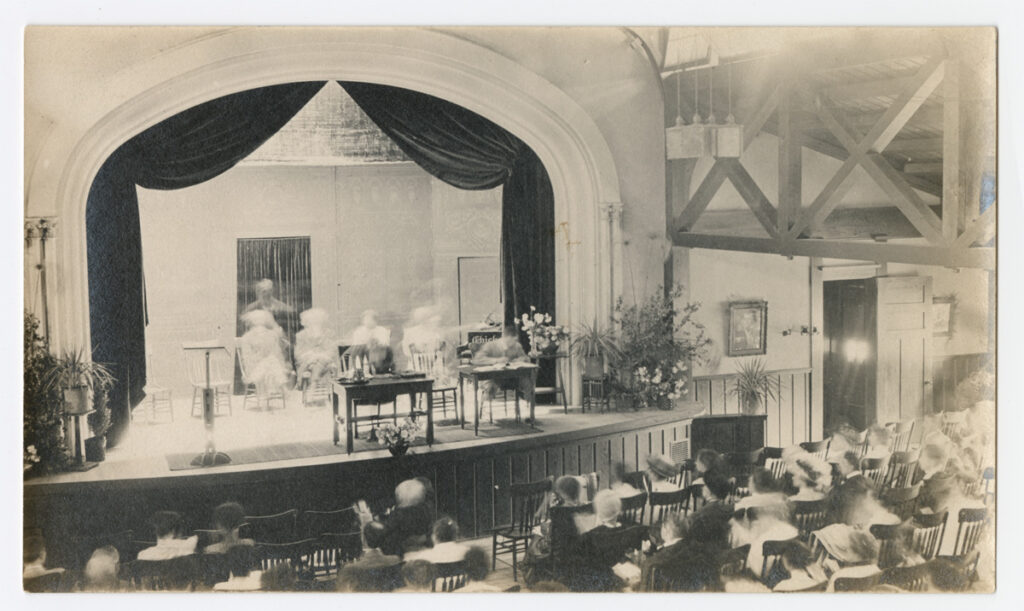
The ALA photo album only contains one confirmed photograph from the 1911 conference, which shows ALA members in session.

"The A.L.A. in session Pasadena," 1911. From the Falvey Library.

To view more photos from “‘From Duluth we journey to the copper country’: The American Library Association Annual Conferences in the Late Nineteenth and Early Twentieth Centuries,” visit Falvey Library at Villanova University online.

150 YEARS STRONG

THE OFFICIAL ANNIVERSARY BLOG

"ALA at Lake Placid, 1894." From the Falvey Library.

Villanova Library Explores Early Days of ALA Conferences

In 2024, Falvey Library at Villanova University acquired an album of historic photographs chronicling ALA Annual Conferences between 1894 and 1912. To celebrate and acknowledge the significance of the acquisition, the library has created an online exhibit that brings together many of the album’s photographs and contextualizes them in their respective conferences.

ALA Library War Service book plate design draft.

Reading for the Future: Looking Back on the Library War Service and 150 Years of ALA

In 1919, Herbert Hoover founded the Hoover War Library at Stanford University in response to the devastation he witnessed in Europe. Today, as archivists at the Hoover Institution Library & Archives, we encounter many collections related to World War I, but the dynamic photographs of librarians distributing reading materials to soldiers in our American Library Association War Service records caught our attention and led us on an unexpected and informative journey.
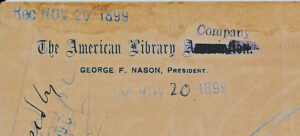
Stationary used by George Nason with “Association” blotted out. From the ALA Archives,

The Curious Case of the Two American Library Associations

In 1899, the American Library Association was notified that a small commercial traveling library was operating under the name “The American Library Association” under the tutelage of “a person of questionable character and unsavory reputation.” Thus began the curious case of the two American Library Associations.
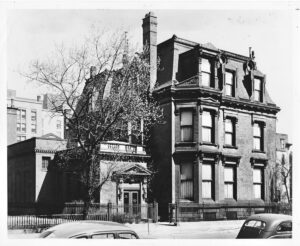
The exterior of the McCormick Mansion. An inconvenient office space or a mansion overrun by ghosts? From the ALA Archives.

Was ALA’s McCormick Mansion Haunted?

Halloween is approaching and during this spooky season, the ALA Archives has been meditating upon one of ALA’s old headquarters, the McCormick Mansion. Why would ALA want to move out of the McCormick Mansion so quickly and destroy it? Was it because the mansion was … haunted?
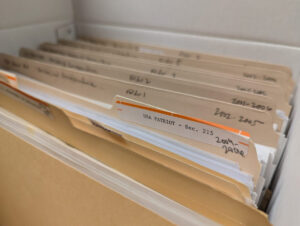
USA PATRIOT Act files in the Office for Intellectual Freedom Subject File at the ALA Archives.

15 Years of Fear: ALA and the Patriot Act

October 26, 2001, marked the beginning of a 15-year-long struggle for the privacy rights of library users as a result of the USA PATRIOT Act being signed into law by President Bush. Prompted by the possibility of government agents ordering libraries to turn over patron information, ALA’s Washington Office created the “Guidelines for Librarians on the U.S.A. PATRIOT Act: What to do before, during and after a ‘knock at the door?’” which provided guidance on consulting legal counsel and reviewing policies.
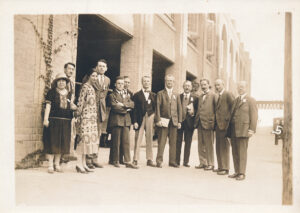
A group of foreign delegates in Atlantic City during the ALA Fiftieth Anniversary Conference, October 1926.

Librarians Go on a Road Trip! The 1926 Foreign Delegate Post-Conference Excursion

In early October 1926, almost 60 librarians from 25 countries gathered in Atlantic City and Philadelphia to celebrate the 50th anniversary of the American Library Association along with more than 2,000 American librarians. By all accounts, the conference was a great success. But the best part of this all-expenses-paid trip to the U.S. didn’t happen during the actual meeting: When the conference ended, about 30 international delegates went on a multi-state excursion, visiting 12 cities in the span of two weeks.