Librarianship is a field that has long been dominated by women. According to a 2025 fact sheet published by the Department for Professional Employees, women compromise 82.5% of enrollment in graduate library science programs, 89.2% of all librarians, and 84.2% of library assistants [8]. However, this dominance in terms of numbers has historically not translated to true equity in other dimensions.
According to a 1967 study of academic librarians, median salary differences between male and female librarians tend to widen as experience in the field increases – even when levels of education between the two groups are equal [4]. This study emerged at a time when roughly four out of five librarians in the United States were female, and the discipline of librarianship was gaining legitimacy, with some concerned that “librarianship cannot upgrade itself without upgrading opportunities for women… Nor should it expect to gain the public esteem that it seeks by tactically endorsing inequality of opportunity, and furthering, by its own inaction, the all-too-familiar image of librarianship as a passive, unchallenging, and low-paid profession” [4].
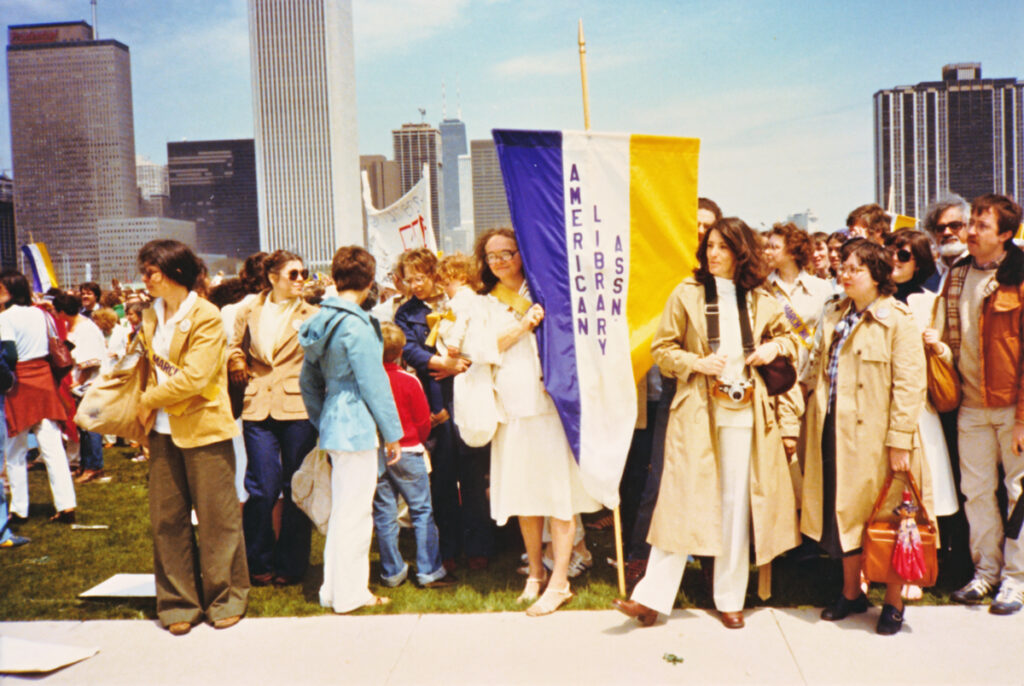
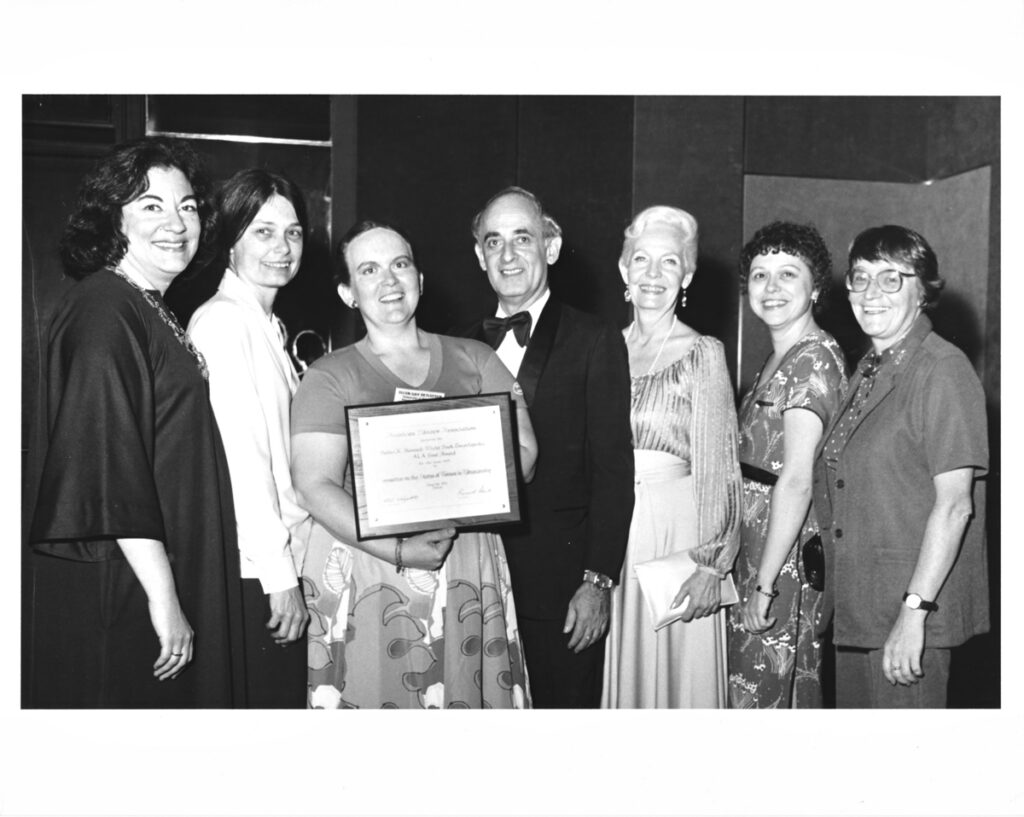
With librarianship being a female-dominated profession, some viewed the findings of this study (among other evidence) as a prime opportunity to strive for full social equity and create a space within the American Library Association (ALA) dedicated to cultivating equality between the sexes and furthering the causes that concern women in librarianship. These musings, among other factors, led to the creation of the ALA Committee on the Status of Women in Librarianship (COSWL), whose important documents can be viewed and studied at the ALA Archives.
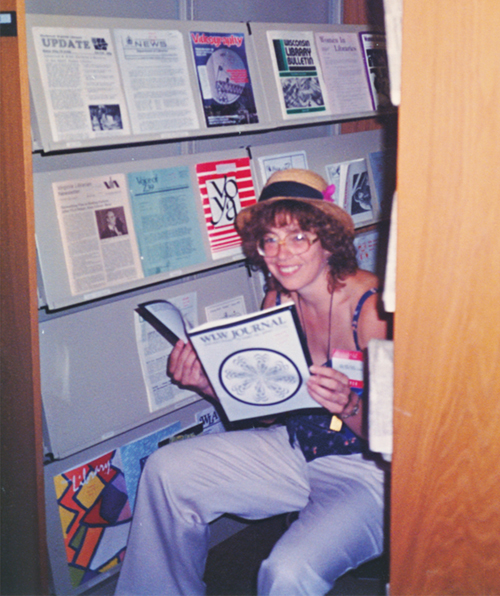
The 1960s and 1970s were a time of great societal change in the United States, and especially so for women. The 1963 publication of Betty Friedan’s “The Feminine Mystique” led to a rebirth of feminism, commonly called the “second wave” [2]. This in turn led to a greater desire to invest in a thorough examination of women and their erasure within the historical canon. These ideals spread to librarianship and the ALA, where the Feminist Task Force was established in 1970, Women Library Workers (WLW) in 1975, and the creation of COSWL in 1976. The issues women face in the field of librarianship and beyond are myriad, but the main functions of the Committee were to be the official representation of those numerous concerns (both within the ALA and to outside partners), along with being instrumental in using data gathered on women in librarianship to create tools and programs to further their advancement within the field [3, 5, 6].
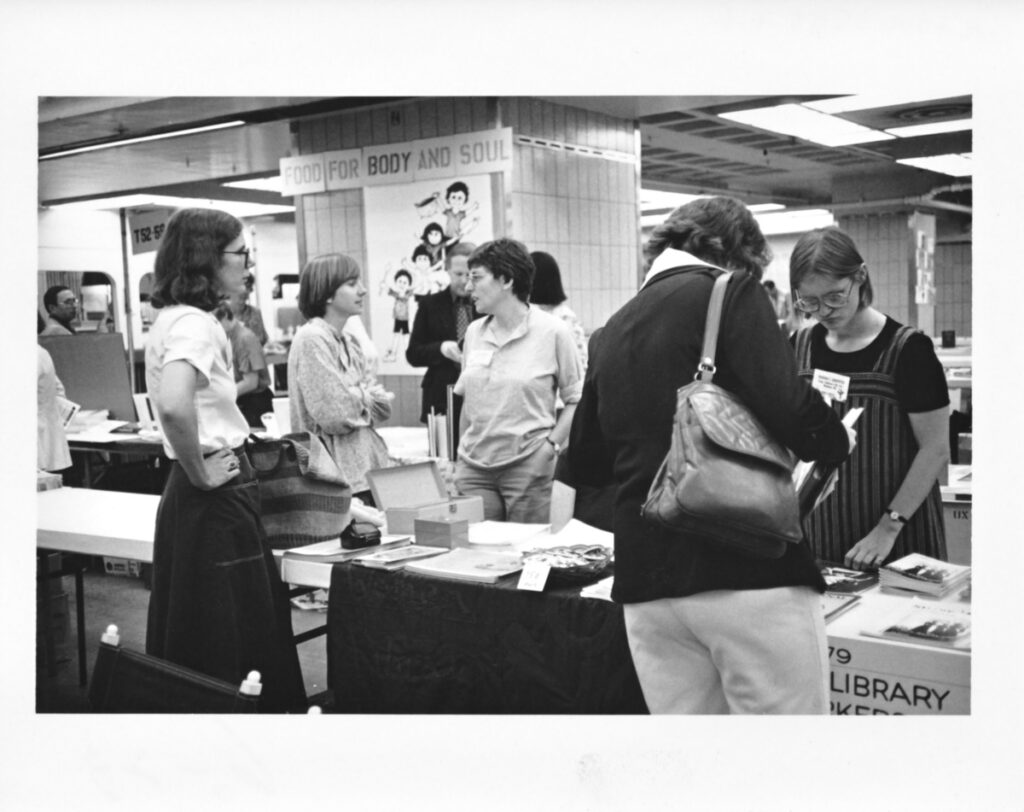
COSWL would also “work to coordinate the activities of ALA units which consider questions of special relevance for women” [6], and would do so in part through several subcommittees, including the Advancing Women in Library Leadership Subcommittee, the Bibliography/Clearinghouse Task Force, and the Research on Women’s Issues Subcommittee. These committees would work in tandem with other divisions of the ALA and work to break down biases stemming from what Rutgers University social historian Dee Garrison refers to as the “inferior and precarious status of the public library as a cultural resource” [2] due to “female dominance” within the profession.
COSWL got to work right away, joining a task force in 1977 that worked with ALA chapters in states that had not yet ratified the Equal Rights Amendment [1]. This was part of a larger ALA resolution that called for future conferences to be held only in states that had ratified the ERA, starting with the 1981 conference. Working with the Social Responsibilities Round Table Feminist Task Force, the COSWL would help move the needle toward progress, with task force member Kathleen Heim noting that “funding from the American Library Association acted as a catalyst…While we cannot report a victory in Illinois—yet—we can say that the influx of ALA funds energized parts of the state and lent moral supports to areas in need of solid funding for their effort” [1]. Similar task forces later spread to Florida, Oklahoma, Missouri, North Carolina, and Utah, sharing similar successes.
COSWL also supported a number of publications, including the “Women in Librarianship” bibliography series, “Career Profiles and Sex Discrimination in the Library Profession” in 1983, and “On Account of Sex: An Annotated Bibliography on the Status of Women in Librarianship 1977-1981” in 1984 [3, 5]. These publications, some of which were grant-funded, were part of a larger wave of publication activity centered on the status of women in libraries in the early 1970’s. These studies revealed some key insights, including that women were more often seen in librarian roles at school and public libraries, where men were more prominently featured in academic and special libraries, where pay and prestige are in greater quantities [5].
In addition to pay and prestige, reward structures vary at the different institutions, with public and school libraries prioritizing years of experience and loyalty to the same institution, respectively. At academic and special libraries, education and professional activities were held at a higher value—dimensions of librarianship where women lag due to a variety of factors. These findings illuminate the difficulty women face at climbing to the top ranks of the profession, and even when they reach the top, women faced challenges in holding their own against their male counterparts despite their best efforts.
More recently, COSWL has been instrumental in the 2008 ALA decision to support the National Women’s History Museum’s goal of establishing a permanent home in Washington D.C. (which they have now achieved). The museum, which conducts research on, collects, and exhibits the contributions of women to the social, cultural, and political life of the United States [7], sought the endorsement of COSWL (through then-ALA President Loriene Roy) because of the Committee’s dedication to representing women’s issues in the library profession. The ALA Executive Board voted unanimously in support of the project and made COSWL the official point of contact within the ALA for the museum. Speaking on the endorsement, former ALA President Jim Rettig said, “As a predominantly women’s profession, librarians have contributed a great deal to women’s history. We are pleased to support the effort.”
COSWL continues their fight to this day by voicing concerns about issues like salary ranges, publishing think pieces and brochures about the current status of women in librarianship, and continuously reviewing their initial mission in order to maintain relevancy and anticipate future challenges.
Citations
[1] Cassell, Kay Ann. “ALA and the ERA: Looking Back on the Association’s Political and Fiscal Involvement.” American Libraries. Dec. 1982, https://www.jstor.org/stable/25626172.
[2] Hildenbrand, Suzanne. “Library Feminism and Library Women’s History: Activism and Scholarship, Equity and Culture.” Libraries & Culture. Winter 2000, https://www.jstor.org/stable/25548798?seq=1.
[3] Phenix, K. (1985). Sex as a variable: a bibliography of women in libraries 1975-1985. Library Trends, 34, 169–183.
[4] Schiller, Anita R. “The Disadvantaged Majority: Women Employed in Libraries.” American Libraries. Apr. 1970, https://www.jstor.org/stable/25617879?seq=1.
[5] Phenix, Katharine. “The Status of Women Librarians.” Frontiers: A Journal of Women Studies. 1987, https://www.jstor.org/stable/3346187?seq=1.
[6] “COSWL”, American Library Association, July 26, 2006. http://www.ala.org/aboutala/offices/hrdr/abouthrdr/hrdrliaisoncomm/statusofwomen/committeestatus.
[7] “ALA joins NWHM National Coalition”, American Library Association, November 25, 2008. http://www.ala.org/news/news/pressreleases2008/november2008/alanwhm.
[8] DPE Research Department. “Library Workers: Facts & Figures.” Department for Professional Employees, June 2025. https://www.dpeaflcio.org/factsheets/library-professionals-facts-and-figures
This story first appeared on the ALA Archives blog on July 27, 2021 and has been updated.